What Is a Dark Sky Reserve, and How It Differs From a Dark Sky Park
A dark sky reserve is a large protected area with a dark core and a lit periphery whose lighting rules protect it. Reserves, parks, communities, sanctuaries and preserves explained.
A dark sky reserve is a large area, at least 700 square kilometres, with a dark core zone and a peripheral zone of towns and farms whose lighting rules protect that core. The designation comes from DarkSky International, formerly the International Dark-Sky Association. It is a promise about lighting, not a measurement of the sky.
Book a night in a dark sky reserve →
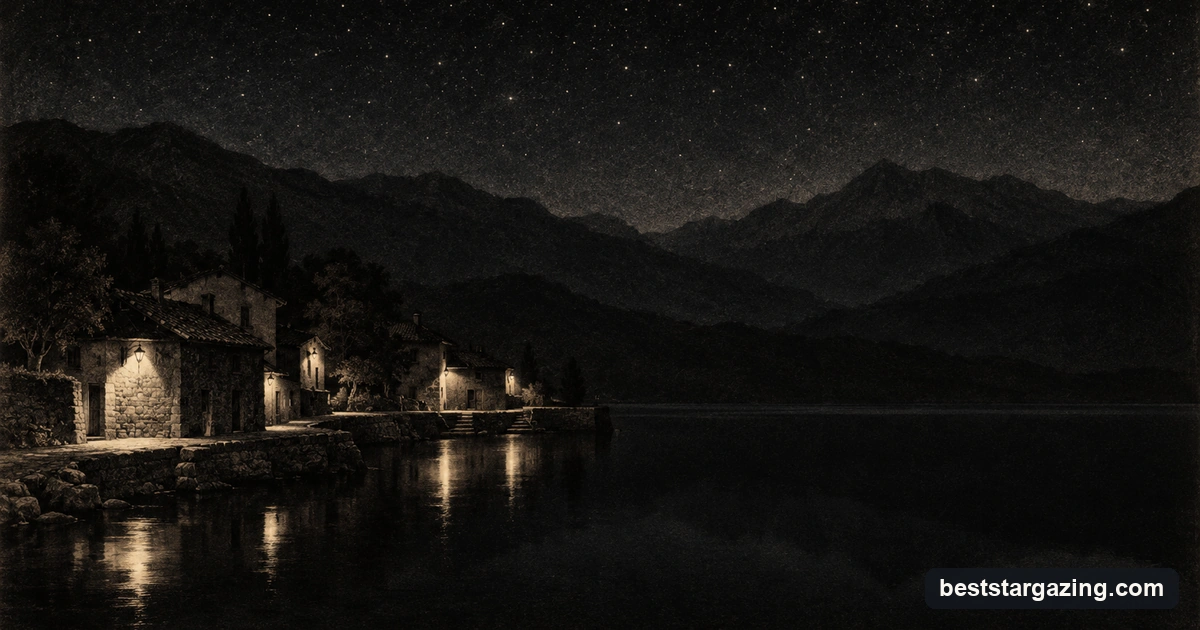
The kinds of dark-sky place
DarkSky International certifies several kinds of place, and Canada has its own program.
| Designation | What it covers | Example on this site |
|---|---|---|
| International Dark Sky Reserve | A large area: a dark core plus a populated periphery | Aoraki Mackenzie, Lake Tekapo (2012) |
| International Dark Sky Park | A park or other protected land | Death Valley (Gold Tier, 2013), Joshua Tree (Silver Tier, 2017) |
| International Dark Sky Community | A town or city that adopts dark-sky lighting | Flagstaff (the first, 2001), Sedona (2014) |
| International Dark Sky Sanctuary | The most remote places, often with no town nearby | Gabriela Mistral, Elqui Valley, Chile (the first, 2015) |
| Starlight Tourist Destination (Starlight Foundation) | A place certified for night-sky quality and astronomy tourism | Teide National Park, Tenerife (2013) |
| Dark-Sky Preserve (RASC, Canada) | A park protected by the Royal Astronomical Society of Canada program | Jasper National Park (2011) |
Reserve versus park
A park is a single protected area run by one land manager, such as a national park. A reserve is bigger and mixed: DarkSky’s guidelines set a minimum of 700 km² and require a partnership of land managers. The core, usually conservation land, meets the sky-quality criteria; the periphery, with its towns, adopts lighting rules that keep the core dark.
That is why Lake Tekapo, a village, sits inside a reserve. The Aoraki Mackenzie International Dark Sky Reserve, designated in June 2012, covers about 4,367 km² across Aoraki/Mount Cook National Park, the Mackenzie Basin and Lakes Tekapo and Pukaki. It was the first in the southern hemisphere.
Parks designated up to 2018 carry a tier, Gold, Silver or Bronze, for how dark and how free of artificial light they are; Death Valley holds the Gold Tier, Joshua Tree the Silver. Later designations carry no tier.
What is the largest dark sky reserve?
The answer changes as new places are designated. Aoraki Mackenzie was described as the largest of its kind when it was designated in 2012. Parks Canada calls Jasper the second-largest dark-sky preserve in the world, at more than 11,000 km².
Dark sky reserves in the US
The first International Dark Sky Reserve in the United States was the Central Idaho Dark Sky Reserve, approved in December 2017. It covers about 1,416 square miles from Ketchum and Sun Valley to Stanley. No tour on this site goes there.
The US has many more dark sky parks: Utah alone counts more than 20 International Dark Sky Places, all five of its national parks among them. See the best stargazing in the US.
Does a designation mean the darkest sky?
Not on its own. A designation rewards lighting policy and a dark-enough sky; it is not a ranking. Two places on this site with no DarkSky designation, Teide and the Atacama, host professional observatories. Teide carries another scheme’s certificate instead: the Starlight Foundation named Teide National Park a Starlight Tourist Destination in 2013, and Spain’s 1988 Sky Law limits outdoor lighting around the Canary Islands observatories. A designated park, meanwhile, can have a bright edge: Joshua Tree’s western side picks up the glow of the Coachella Valley.
For the published sky readings, place by place, see the darkest stargazing destinations, ranked. For the right night to go, see the best time to go stargazing.
Book Your Experience
Check Availability & Prices
Select your preferred date and time. Cancel up to 24 hours in advance for a full refund.
Stargaze Inside a Dark Sky Reserve
The Mount John summit tour at Lake Tekapo, inside the Aoraki Mackenzie International Dark Sky Reserve, with telescopes and an extreme cold weather jacket.
Check Lake Tekapo Tour Dates