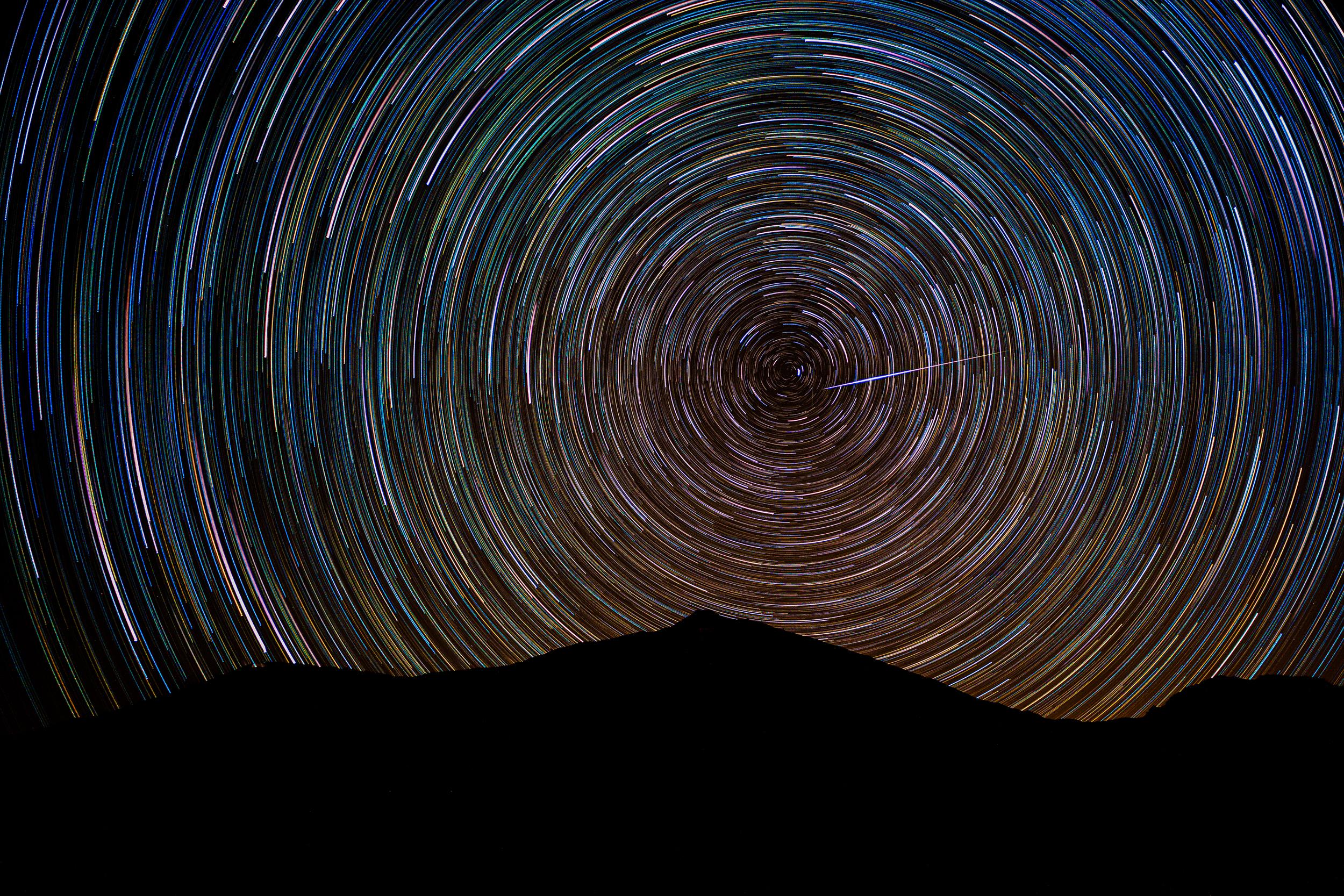
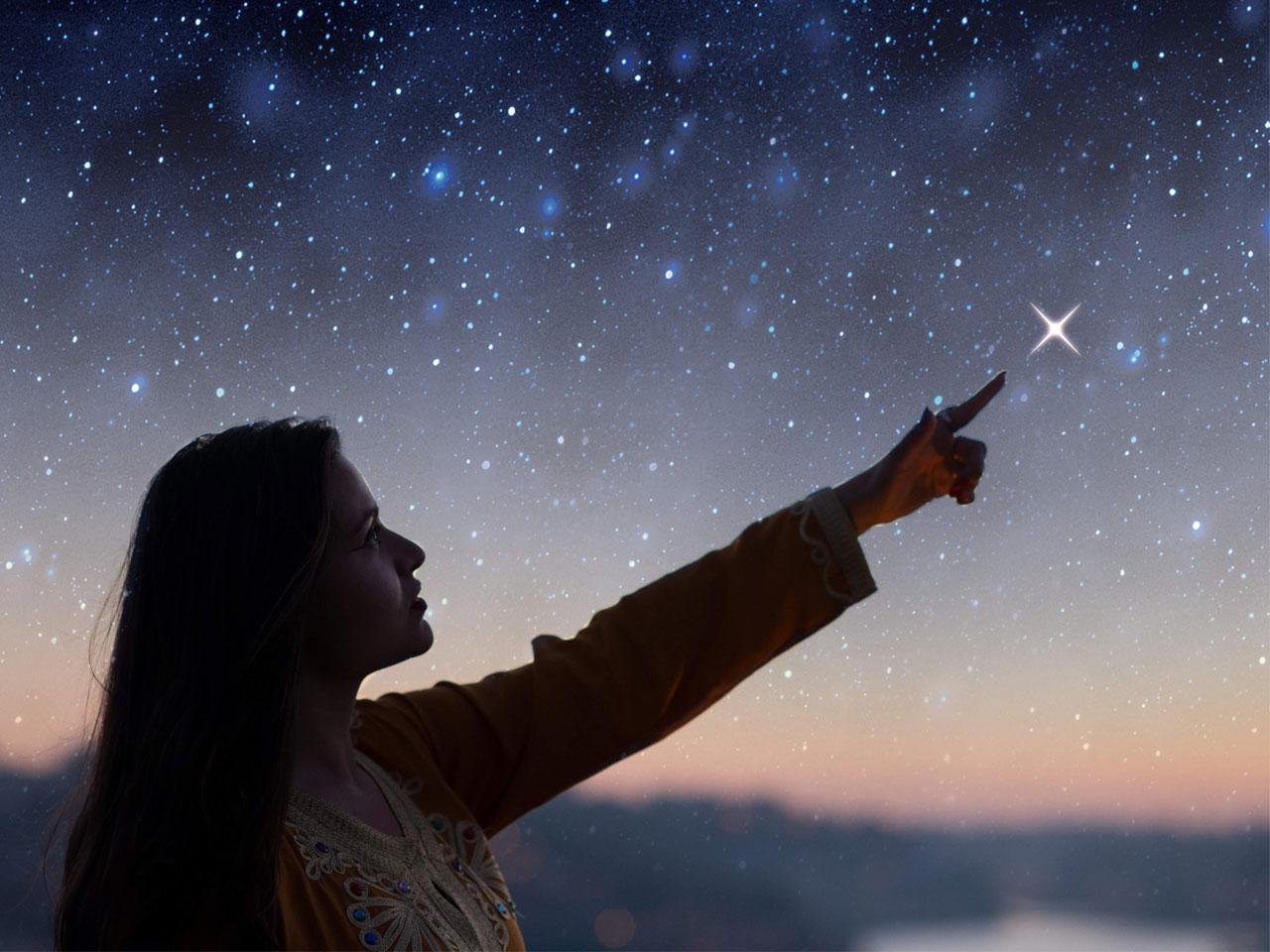
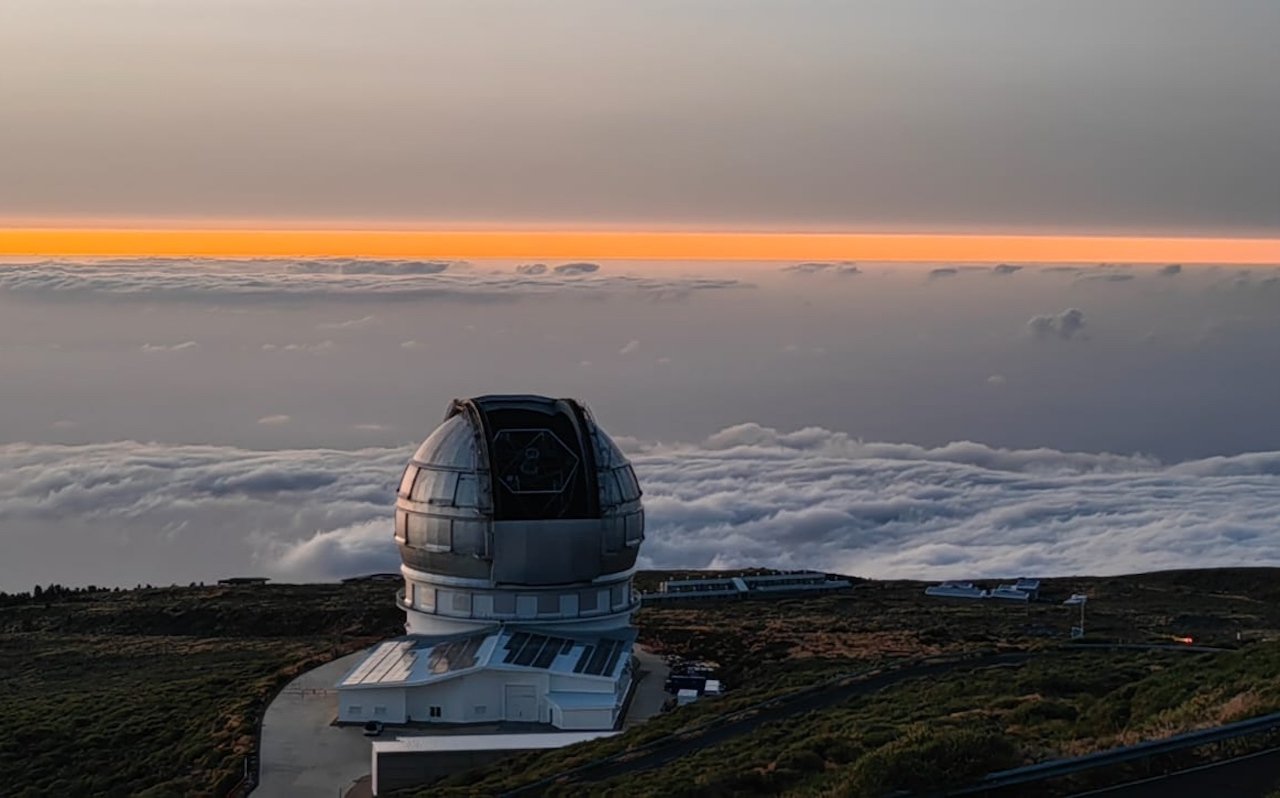
"It was a really cool experience! You get some time at each stop to explore and enjoy the stunning views. You get to see a bit of everything, so it’s a great way to experience Teide for the first time! The best part was definitely the stargazing! The guide was super enthusiastic, and learning about the stars made it even more interesting. Now I just need to find another tour with a bigger telescope so I can see even more!"
CHECK THE SKY
Cloud decides the night
—
Cloud over tonight’s dark hours
—
Moon tonight
—
Full darkness tonight
Forecast cloud for Teide National Park viewpoints (Mirador de Samara area) · month-by-month sky · checked · data from MET Norway
Sky brightness
No published measurement
None published for this site. Checked October 2026.
Bortle class (est.)
Not estimated
No sky-brightness measurement has been published for the Teide National Park viewpoints the tours use. It lies inside Teide National Park, a Starlight Tourist Destination (Starlight Foundation, 2013). The Cumbres de Tenerife around the park are a Starlight Reserve (certified October 2013, still on the foundation's July 2026 list), and Spain's Sky Law (Law 31/1988) limits outdoor lighting around the Canary Islands observatories. No Bortle class is estimated from satellite data.
Dark-sky designation
Starlight Tourist Destination
It lies inside Teide National Park, a Starlight Tourist Destination (Starlight Foundation, 2013). The Cumbres de Tenerife around the park are a Starlight Reserve (certified October 2013, still on the foundation's July 2026 list), and Spain's Sky Law (Law 31/1988) limits outdoor lighting around the Canary Islands observatories. Source, checked October 2026.
Elevation
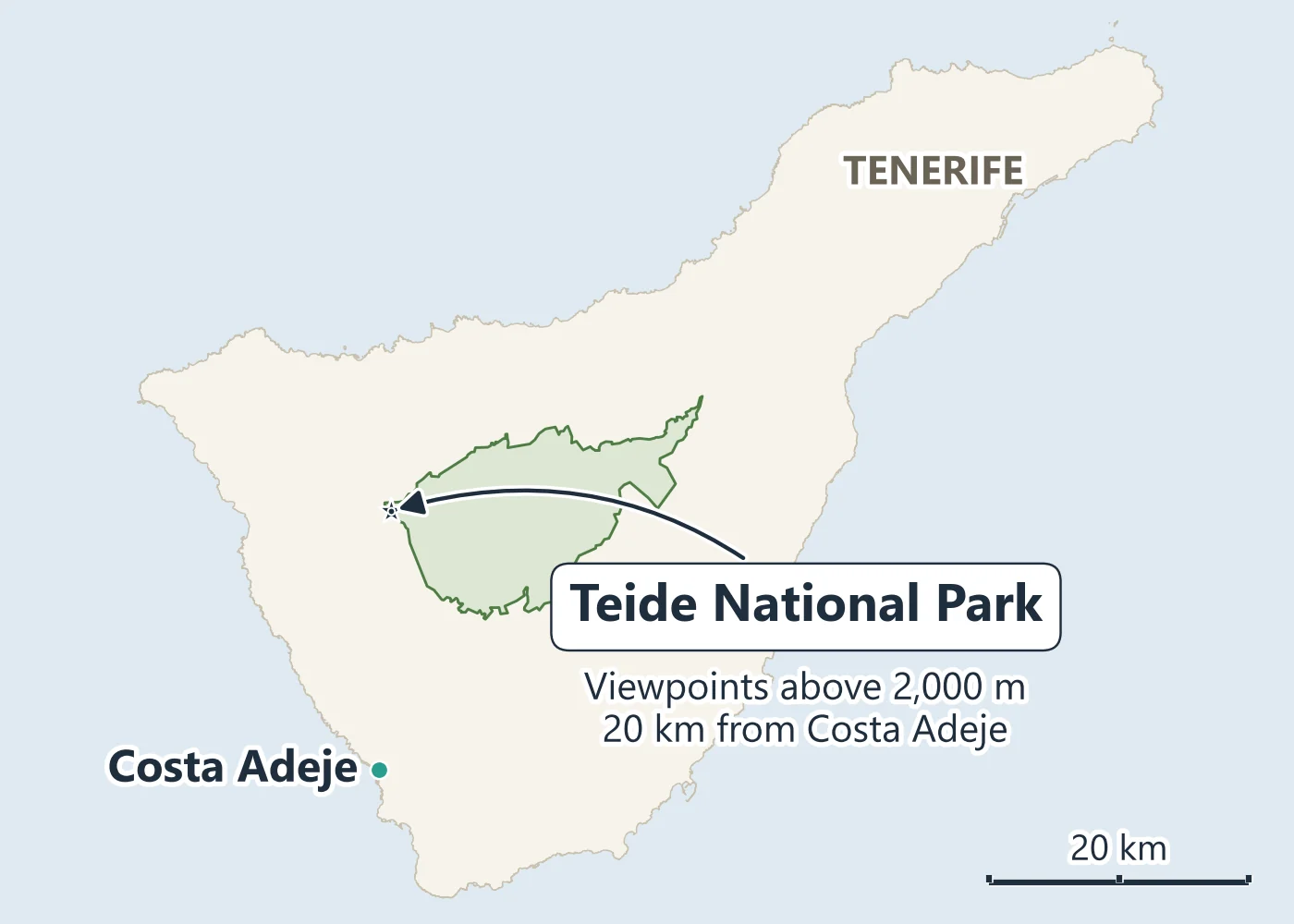
above 2,000 m
MITECO: almost the entire surface of Teide National Park lies above 2,000 m; the viewpoints' own heights are not published. Source, checked October 2026.
Best months for the Milky Way
May, Jun, Jul
Most core hours above 20° in full darkness, weighted by night cloud (core season March to September). Computed with JPL DE421 and NASA POWER, checked October 2026.
Tenerife · Teide National Park · Canary Islands
Tenerife Stargazing Tours: Sunset Above the Clouds, Then the Stars
The tours drive up into Teide National Park for the sunset above the clouds, then set up telescopes at a viewpoint in the park. Pick a cheap two-hour session with a photo, or a whole evening with dinner and hotel pickup.
From
US$100
per person
Free cancellation
- 4.6 / 5 1564+ Reviews
- 10 Dark-Sky Places Compared on This Site
- Free Cancellation
The Experience
What the Volcano Teide Evening Includes
About nine hours door to door. Pickup from Puerto de la Cruz runs on Wednesdays, Fridays and Sundays only.
Highlights
- Sunset in Teide National Park, with time for photos on the way up
- An astronomer guide with lasers and telescopes
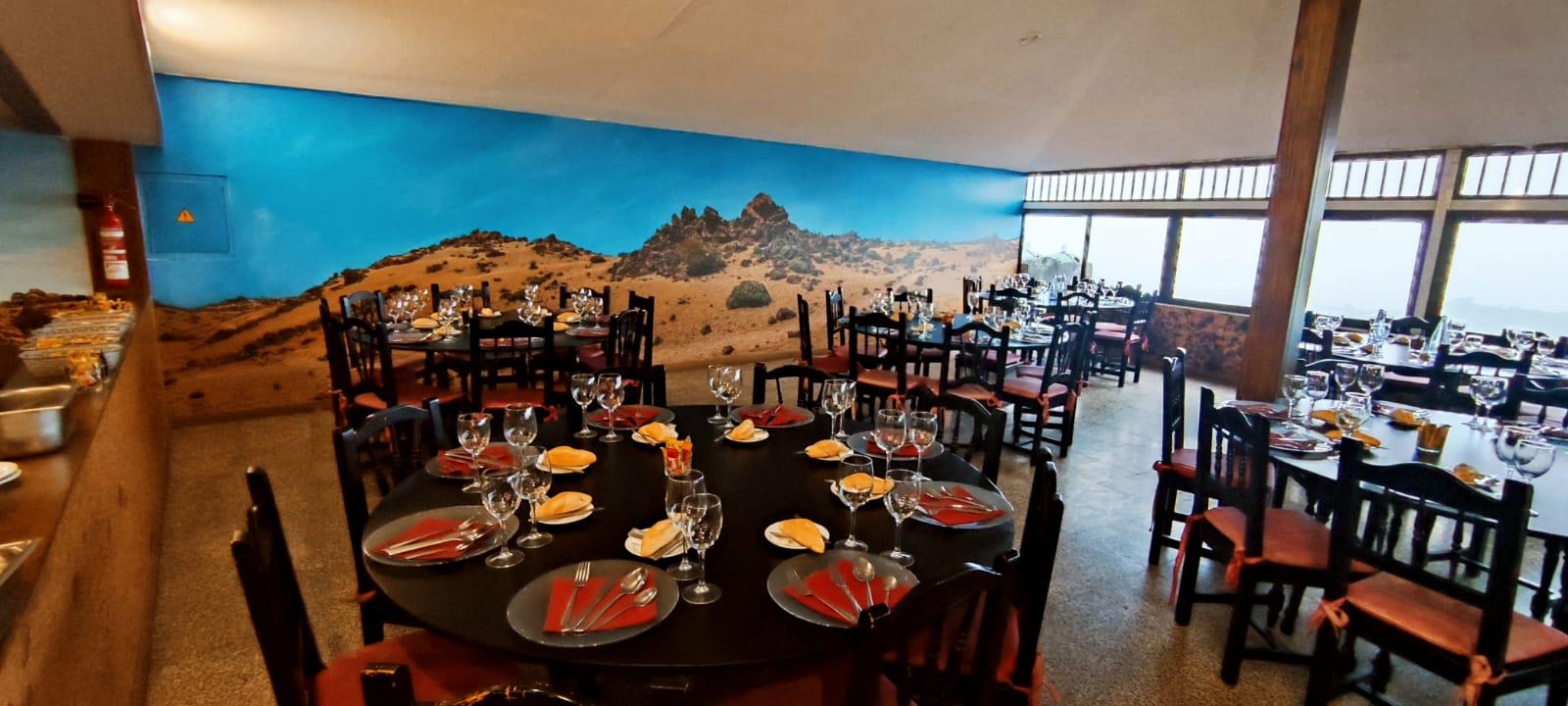
- A three-course dinner with drinks at a restaurant in the park
- Pickup from the south coast, or from Puerto de la Cruz on set days
- One language per coach
What's Included
- Astronomer guide
- Exclusively 1 language per coach
- Pickup from several locations (South, between Los Cristianos and Los Gigantes, or North at Puerto de la Cruz)
- Photo stops in National Park of Mount Teide
- 3-course dinner with drinks at a restaurant
- Sunset experience with non-alcoholic drinks
- Stargazing with lasers and telescopes
How a Teide Stargazing Tour Works
From the hotel pickup to the drive back down after dark.
Pick Your Night
Choose a date early in your stay. If cloud or wind stops the session, the operators reschedule or refund, and an early date leaves room for a second try.
Ride Up for Sunset
Coaches and vans collect guests along the south coast in the afternoon. The pickup time follows the sunset, so it changes through the year.
Watch the Sun Go Down
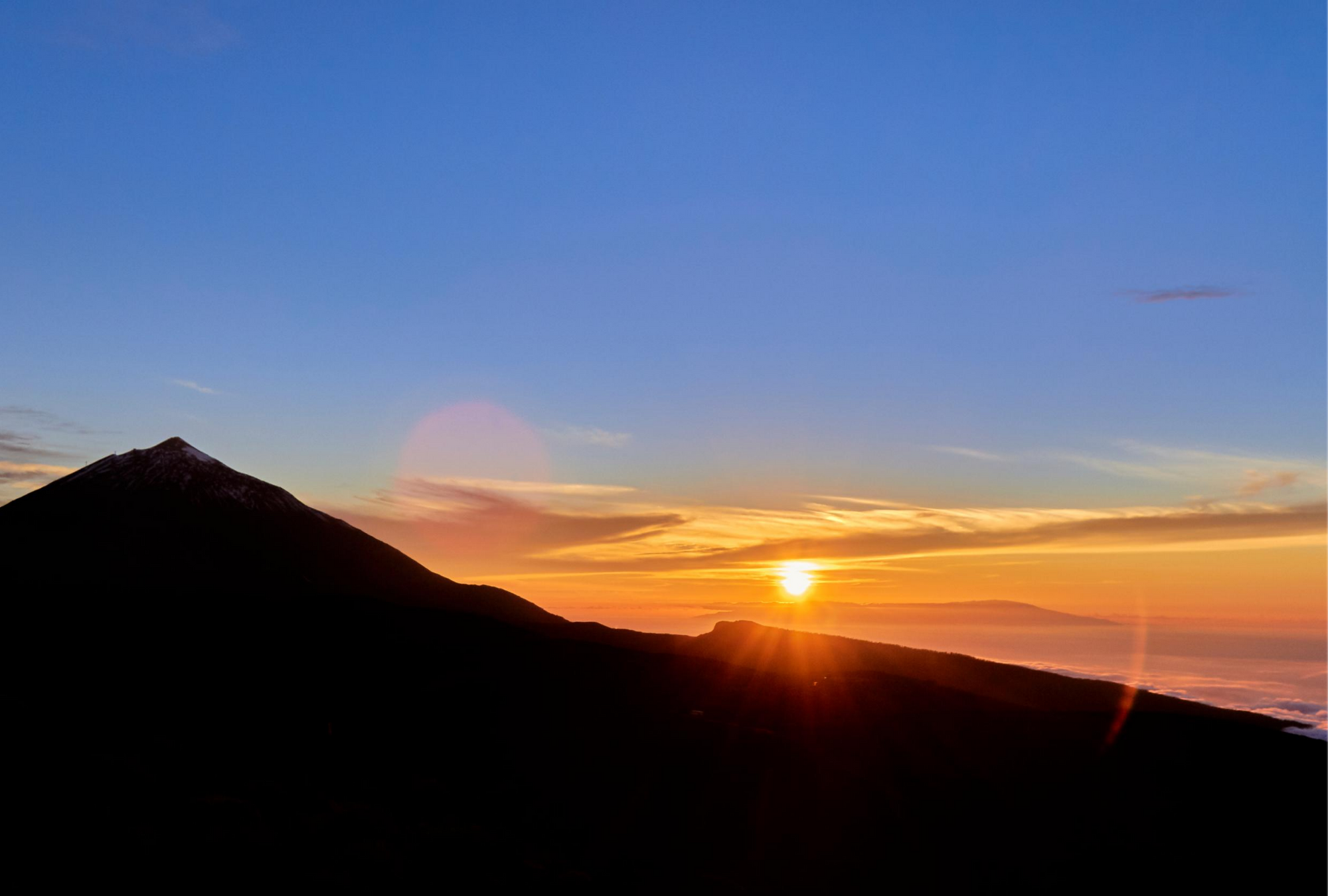
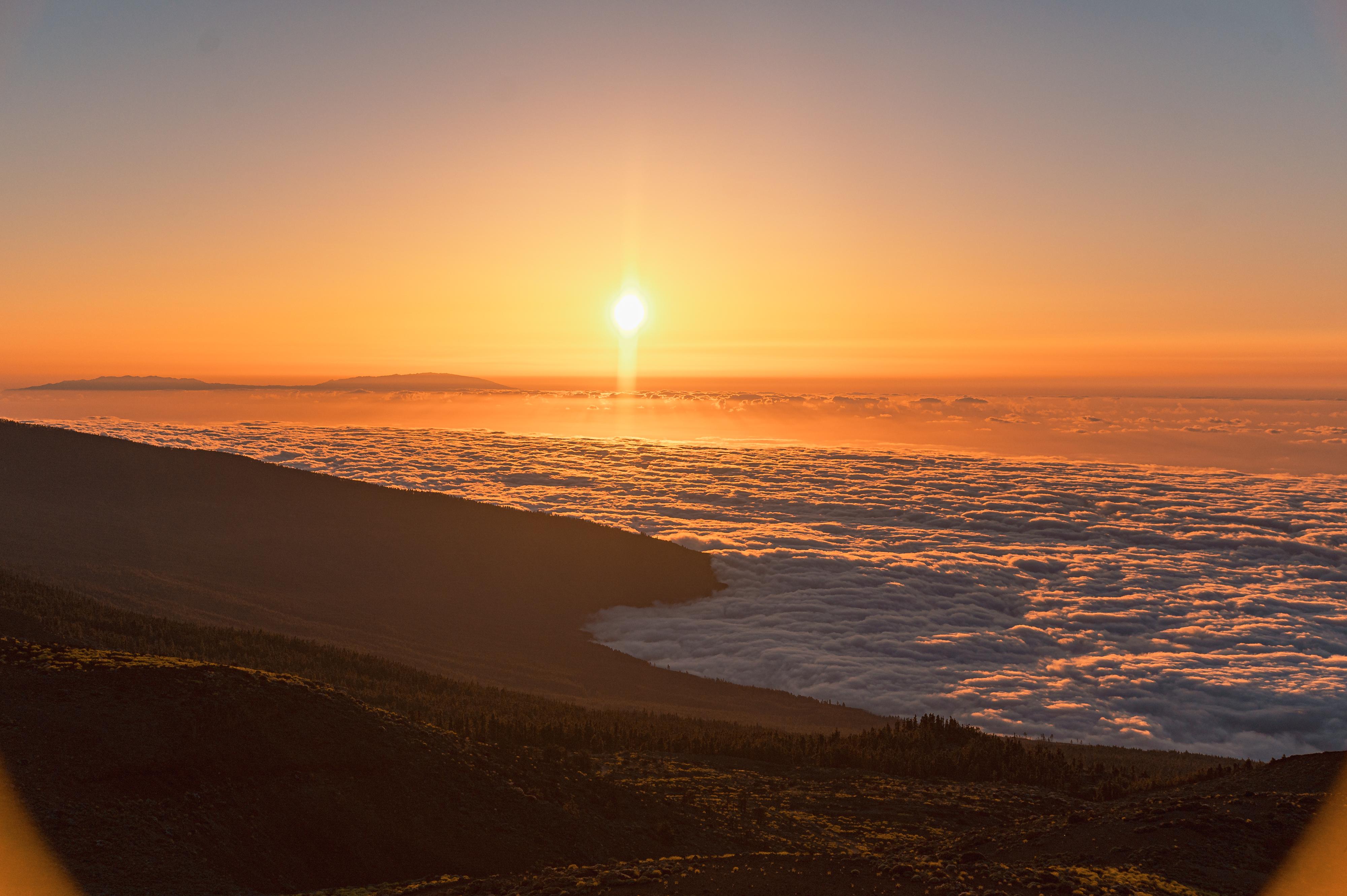
The tours stop in the national park for the sunset, often above the cloud layer, and some pour a glass of cava.
Stars Through the Telescope
After dark the guide points out constellations with a green laser and aims telescopes at planets, star clusters and galaxies. Then the coach takes you back down.
Photo Gallery
Teide After Dark
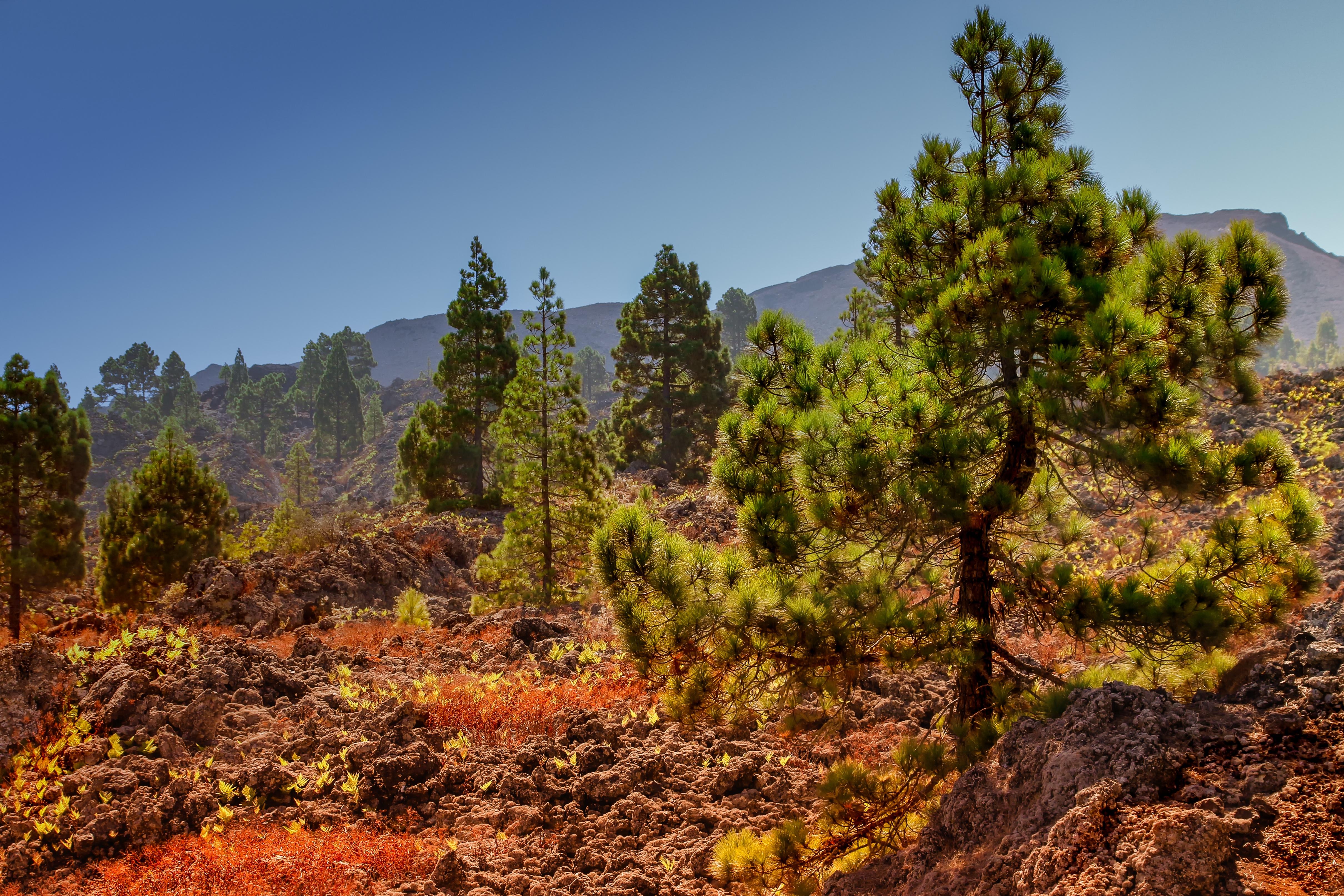
Lava fields at sunset, the cloud sea below and telescopes under the stars.




Book Your Experience
Check Availability & Prices
Select your preferred date and time. Cancel up to 24 hours in advance for a full refund.
What the Tour Brings, and What You Bring
Volcano Teide includes
- Pickup from several locations (South, between Los Cristianos and Los Gigantes, or North at Puerto de la Cruz)
- Photo stops in National Park of Mount Teide
- 3-course dinner with drinks at a restaurant
- Stargazing with lasers and telescopes
From the tour's GetYourGuide listing, checked October 2026.
Bring
- Warm layers, a hat and gloves: the night is colder than the day, in every month
- A red light, or a phone set to a red screen: white light ruins your night vision
- Binoculars rather than your own telescope: they need no setup and show far more than your eyes
- Closed shoes for uneven ground in the dark
Month by month
When the Sky Is Darkest at Teide National Park
Night cloud, Milky Way core hours and the next new moon in each month, at the observing site.
The climatology grid cell sits at 138 m, below the observing site, so the cloud bars run pessimistic: high sites often sit above the cloud.
| Month | Night cloud | Full darkness | Milky Way core | Next new moon |
|---|---|---|---|---|
| January | 61% | 10.7 h | 0 h | 7 Jan 2027 |
| February | 62% | 10.1 h | 0.2 h | 6 Feb 2027 |
| March | 64% | 9.4 h | 1.4 h | 8 Mar 2027 |
| April | 62% | 8.4 h | 2.9 h | 7 Apr 2027 |
| May best | 63% | 7.5 h | 4.3 h | 6 May 2027 |
| June best | 58% | 6.9 h | 5.5 h | 4 Jun 2027 |
| July best | 60% | 7.3 h | 4.5 h | 4 Jul 2027 |
| August | 55% | 8.1 h | 2.9 h | 2 Aug 2027 |
| September | 48% | 9.1 h | 1.5 h | 30 Sep 2027 |
| October | 55% | 9.9 h | 0.2 h | 29 Oct 2027 |
| November | 65% | 10.5 h | 0 h | 9 Nov 2026 |
| December | 61% | 10.8 h | 0 h | 9 Dec 2026 |
Night cloud: NASA POWER climatology (CLOUD_AMT_NIGHT), January 2001 to December 2025, at the observing site's grid cell (138 m). Darkness and Milky Way hours: computed for 2027 with JPL DE421 via Skyfield (sun more than 18° below the horizon; galactic centre at least 20° up). No night temperatures shown: the climatology grid cell sits at 138 m, more than 500 m from the 2000 m site. Checked October 2026.
What you will see
The Sky Over Teide National Park, Month by Month
Computed star charts for the observing site on new-moon nights, at the hour the tours are out. The Milky Way is drawn schematically.


Night calendar
Dark Nights Coming Up at Teide National Park
The nights around a new moon are the darkest of the month. Dates are local to the observing site.
Next new moons
- 9 November 2026
- 9 December 2026
- 7 January 2027
- 6 February 2027
- 8 March 2027
- 7 April 2027
Meteor showers
- Leonids, peak night 17 November 2026 some moonlight
- Geminids, peak night 14 December 2026 some moonlight
- Ursids, peak night 22 December 2026 bright moon
- Quadrantids, peak night 4 January 2027 dark moon
- Lyrids, peak night 23 April 2027 bright moon
- Eta Aquariids, peak night 6 May 2027 dark moon
Milky Way season
Core season March to September. Best months: May, June and July.
Lunar eclipses
- 20 February 2027, 23:14 local: penumbral (a faint shading, easy to miss)
New moons, darkness and eclipse visibility: JPL DE421 via Skyfield. Meteor-shower peaks from the IAU Meteor Data Center's established-shower solar longitudes (Jopek & Kaňuchová); the peak night can shift by a day. Lunar eclipses: Eclipse Predictions by Fred Espenak, NASA/GSFC. Moon labels: under 25% lit = dark moon, under 60% = some moonlight. Checked October 2026.
Tour or on your own?
Teide on Your Own, or With a Tour?
- Do you have a car and the nerve for a mountain road after dark? Pickups take from 45 minutes to over two hours to reach the park.
- Will your eyes and binoculars do, or do you want to see planets and galaxies through a telescope?
- Will you dress for a night above 2,000 m and find a viewpoint that is not on a road with headlights?
Yes to all three
Go on your own
Drive up into Teide National Park after sunset and look up: the sky costs nothing. DAS Experience and Night Skies Tenerife also sell a self-drive place, where you meet the guide and the telescopes at the viewpoint.
No to any of them
Book the tour
Pickup from the south coast, the sunset in the park, a guide with a laser and telescopes, and on some tours dinner and a photo of you under the stars.
Check dates →Volcano Teide vs. DAS Experience vs. Night Skies Tenerife
Three Teide sunset and stargazing tours side by side. Prices as of October 2026.
| Feature | THE WHOLE EVENING Volcano Teide, Sunset & Stars with Dinner | DAS Experience Sunset & Stargazing | Night Skies Tenerife |
|---|---|---|---|
| Starting Price | From US$100/per person | From US$39 | From US$62 |
| Rating | 4.6/5 (1,564 reviews) | 4.7/5 (3,757 reviews) | 4.5/5 (2,547 reviews) |
| Length | About 9 hours | 3 to 5 hours | 3.5 to 8 hours |
| Dinner | Three courses with drinks | No; a glass of cava | Optional Canarian dinner |
| Getting There | Pickup: south coast, or Puerto de la Cruz Wed/Fri/Sun | Self-drive, or VIP pickup in the south | Self-drive, or pickup in the south |
| Extras | Village stop, astronomer guide | Photo under the stars, small group | Free photos and a sunset time-lapse |
| Warm Coats | Not stated: bring layers | On the VIP option | On request |
| Free Cancellation | Up to 24 hours ahead | Up to 24 hours ahead | Up to 24 hours ahead |
| Best For | Nothing to organise | The sky, at the lowest price | Photos and a middle price |
| Check Availability | View DAS Experience | View Night Skies |
Other Stargazing Tours in the Canary Islands
The best-rated small-group session on Tenerife, a sunset tour with an optional Canarian dinner, and the night trip up La Palma's Roque de los Muchachos.
The Tenerife Stargazing Guide
Which Teide Stargazing Tour to Book
Eight tours compared on price, group size, dinner, pickup and what keeps you warm.
For a whole evening with nothing to organise, book Volcano Teide’s sunset and stargazing tour: hotel pickup, the sunset in Teide National Park, a three-course dinner with drinks and an astronomer with telescopes, from US$100 a person as of October 2026, rated 4.6 from 1,564 reviews. If you only want the sky, DAS Experience’s small-group session costs from US$39 in current promotion (usually $45), is the best rated of the big sellers at 4.7 from 3,757 reviews, and includes a photo of you under the stars.
Why Tenerife is one of the easy places to see a dark sky
Two things work for Tenerife. The first is height: the stargazing viewpoints are high in Teide National Park, and on many evenings the sunset happens above a layer of cloud that sits lower down the mountain. The second is protection. The Starlight Foundation certified Teide National Park as a Starlight Tourist Destination in 2013, and the Cumbres de Tenerife around it as a Starlight Reserve. Spain’s Law 31/1988, the “Sky Law” passed for the Canary Islands observatories, limits outdoor lighting, radio emissions and air pollution, so the sky over the island’s high ground is protected for astronomy. The Teide Observatory itself sits at about 2,390 metres at Izaña, run by the Instituto de Astrofísica de Canarias.
None of the tours take you to the summit at night. They stop at viewpoints inside the park; DAS Experience says plainly that its sessions use public viewpoints the authorities allow, “not on Mt. Teide”.
The Teide stargazing tours compared
| Tour (operator) | From | Rating (reviews) | Length | Dinner | Getting there |
|---|---|---|---|---|---|
| Sunset and stargazing with dinner (Volcano Teide) | US$100 | 4.6 (1,564) | About 9 hours | Three courses with drinks | Pickup, south coast or Puerto de la Cruz |
| Sunset and stargazing at Teide (DAS Experience) | US$39 in current promotion (usually $45) | 4.7 (3,757) | 3 to 5 hours | No; a glass of cava | Self-drive, or VIP pickup in the south |
| Teide sunset and stargazing (Night Skies Tenerife) | US$62 | 4.5 (2,547) | 3.5 to 8 hours | Optional, Canarian, three courses | Self-drive, or pickup in the south |
| Teide sunset and stargazing (Tenerife Stars) | US$45 | 4.2 (4,683) | 3 to 6.5 hours | Optional | Transport optional, south only |
| Sunset picnic and stargazing (Easytours) | US$77 in current promotion (usually $112) | 4.7 (463) | About 6 hours | Picnic | Pickup, north and south |
| Observatory visit plus night telescope (Volcano Teide) | US$108 | 4.5 (132) | About 8 hours | No | Small-group transport |
| Teide Observatory by day (Volcano Teide) | US$24 | 4.6 (921) | 1.5 hours | No | Make your own way |
Prices, ratings and review counts as of October 2026; operators change prices, so treat them as the shape of the market, not a quote.
Who each one suits
Pick by how much of the evening you want planned:
The whole evening
Volcano Teide with dinner
Pickup, a village stop, the sunset, dinner with drinks and the telescopes. One language per coach.
Check dates →Just the sky, best rated
DAS Experience
A small group, a glass of cava at sunset and a photo of you under the stars. English only.
See this tour →Photos and a time-lapse
Night Skies Tenerife
Free photos and a sunset time-lapse, an optional Canarian dinner, and warm coats on request.
See this tour →Volcano Teide runs the longest evening: a coffee stop in a traditional village on the way up, time in the park before sunset, dinner at a restaurant inside the park, then the astronomer’s session. Its coaches collect from the south coast between Los Cristianos and Los Gigantes every day, and from Puerto de la Cruz in the north on Wednesdays, Fridays and Sundays.
DAS Experience is the one to book if the sky is the point and you would rather not sit through a dinner. Its sessions are small groups, with starlight-certified guides, a laser tour of the constellations, telescopes and an astrophotography portrait. The VIP option collects you on the south coast between Los Cristianos and Callao Salvaje and lends warm jackets; the self-drive option has you follow the guide in your own car, not a taxi. There are no toilets at or near the viewpoints.
Night Skies Tenerife sits between the two: the sunset at Montaña Samara with cava or orange juice, an optional three-course dinner at the 7 Cañadas restaurant, then telescopes, with free photos and a sunset time-lapse. Self-drive guests meet the group at Montaña Samara.
Tenerife Stars has the most reviews on the island and the lowest rating of the big four, 4.2. It does not lend jackets or blankets, so bring your own.
Cold, altitude and the moon
Dress for winter even in summer. Every listing asks for warm clothing. After sunset at altitude it is far colder than on the coast, and only some tours lend coats: DAS Experience on its VIP option, Night Skies Tenerife on request. Tenerife Stars says jackets and blankets are not included.
Altitude. The viewpoints are high enough that Night Skies Tenerife and DAS Experience list the tours as not suitable for people with altitude sickness, and the Teide Observatory visit warns that the oxygen thins at about 2,400 metres.
The moon. A bright moon washes out the Milky Way but not the planets or the Moon itself, which is a fine telescope target. Tenerife Stars notes that the Moon is visible only on some nights and does not spoil the session; on La Palma, the Roque de los Muchachos tour does not run at full moon at all.
Beyond Tenerife: La Palma and the observatories
La Palma is the Canary island built around astronomy. The Roque de los Muchachos Observatory stands at about 2,396 metres on the island’s rim, and La Palma is described as the first Starlight Reserve. La Palma Transfer & Tours runs a night trip to the Roque de los Muchachos viewpoint with hotel pickup, a glass of wine at sunset and a telescope session, from US$62, rated 4.4 from 718 reviews. It does not go inside the observatory, which is closed at night.
The Teide Observatory by day. Volcano Teide also runs a 90-minute guided visit to the observatory with two solar telescopes, from US$24 (no transport, not for children under 8), and an eight-hour version that adds a night session with a telescope, from US$108. Both ask children to prove their age with a passport or ID card.
For the general rules of when to go and what a dark sky place is, see the best time to go stargazing and what a dark sky reserve is. Elsewhere on this site, Lake Tekapo and the Atacama Desert are the southern-hemisphere equivalents.
Guest Reviews
What Recent Guests Say
4.6/5
from 1564 verified reviews
"A wonderful experience from start to finish! From enjoying the sunset with Mount Teide to stargazing! Not to be missed. Highly recommended. 10/10"
"Simply wonderful. Everything on this one day trip was perfectly organized, and Sandra, our tour guide, gave us so much information about Tenerife and told us so much about the stars. What we saw and experienced was simply fantastic. Our bus driver, Juan Carlos, drove so carefully. Thank you. Thank you. Ela and Carmen."
"Take a little more time, and the food was solid, but could be a bit better. Otherwise, a great program and very good and friendly guides!"
"Our guide Isabelle gave us a wonderful tour through, and to, the nature park, during which she told us a lot about what we saw. With several stops to enjoy the beautiful surroundings. In the evening, we had a stunning sunset and, after a simple dinner, the tour ended with stargazing, during which Isabelle guided us through the fantastic starry sky, and we also observed a number of objects through the telescopes. We enjoyed it!"
"Beautiful scenery – a must-do day trip in Tenerife. The guide was excellent. He told us about the history of the Canary Islands and the constellations. On the day we chose, the sky was not very clear due to the Saharan storm and the easterly wind. But it was still magnificent."
"Everything was well organized. We would have liked to have had a little more time for the meals. The sunset wasn't quite as spectacular due to the calima. But overall, it was a great excursion. Many thanks to Nico, our guide."
"Is the best tour, bus was comfortable and fan is working perfectly, guide is was knowledgeable about Tenerife and star. Thank you for driver, is professional on turn, soft turn, don’t make me sick. Thank you. Good stops."
Read all 1564 verified reviews
See All ReviewsPick a Night, See the Price
Many stargazing tours on this site move you to another night if cloud cancels the session. Check the terms of the tour you pick before you pay. Starting from US$100 per person.
Check AvailabilityFAQ: Stargazing on Tenerife
The tours, the cold, the moon and La Palma, with prices as of October 2026.
Sunset and stargazing tours in Teide National Park, a daytime visit to the Teide Observatory, and the cable car and hiking trips by day. The stargazing tours run every evening: a two- to five-hour session from about US$39, or a whole evening with dinner and pickup from about US$100, as of October 2026. Compare them on this page's calendar.
Yes: the viewpoints are high in Teide National Park, often above the cloud layer, and the sky is protected. Teide National Park is a Starlight Tourist Destination (Starlight Foundation, 2013), and Spain's 1988 Sky Law for the Canary Islands observatories limits outdoor lighting and radio emissions, and the Teide Observatory sits at about 2,390 metres. See what dark-sky protection means.
No. The sessions use viewpoints inside the national park. DAS Experience says its tours use public viewpoints allowed by the authorities, not Mount Teide itself, and no tour visits the observatory at night. The Volcano Teide evening stops at a restaurant inside the park for dinner.
Much colder than on the coast, in every season. Every listing asks for warm clothing, long trousers and closed shoes. Only some tours lend coats: DAS Experience on its VIP option and Night Skies Tenerife on request; Tenerife Stars does not include jackets or blankets. Read what to wear stargazing.
Yes, if you want telescopes, a guide and no night drive on mountain roads. You can drive up yourself and look up for free, but the tours bring the telescopes, a laser tour of the constellations and, on most, a photo. The best-rated session costs about US$39; see whether a stargazing tour is worth it.
Some do. Volcano Teide includes a three-course dinner with drinks; Night Skies Tenerife and Tenerife Stars sell it as an option; Easytours serves a sunset picnic; DAS Experience pours a glass of cava and serves no meal. Compare them in the table above.
Most tours take children, with a few limits. The Teide Observatory visits are not for children under 8 and ask for a passport or ID to prove a child's age; DAS Experience asks families with children under 5 to contact it first. Dress children warmly. The Volcano Teide evening offers a children's menu.
The operators reschedule or refund. Tenerife Stars contacts guests to rebook or cancel with a full refund when the weather is unsuitable, and cancellation terms for each tour are on its listing. Book early in your stay so a second night is possible; the calendar shows the open dates.
It washes out the Milky Way, but the planets and the Moon itself are fine telescope targets. Tenerife Stars says the Moon does not spoil its session. If the Milky Way is the point, pick a night close to the new moon; see the best time to go stargazing.
Tenerife has far more tours and departures; La Palma is the island built around astronomy. La Palma's Roque de los Muchachos Observatory stands at about 2,396 metres, and its night tour runs from about US$62 with pickup and a glass of wine, but not at full moon. See the La Palma card above.
No published measurement. No sky-brightness measurement has been published for the Teide National Park viewpoints the tours use. It lies inside Teide National Park, a Starlight Tourist Destination (Starlight Foundation, 2013). The Cumbres de Tenerife around the park are a Starlight Reserve (certified October 2013, still on the foundation's July 2026 list), and Spain's Sky Law (Law 31/1988) limits outdoor lighting around the Canary Islands observatories. No Bortle class is estimated from satellite data. Checked October 2026.
May, June, July. Those months combine the most Milky Way core hours with the least night cloud at the observing site: the core stands at least 20° up for an hour or more of full darkness from March to September. Core hours computed with JPL DE421 via Skyfield; night cloud from NASA POWER (2001-2025), checked October 2026.
9 November 2026, 9 December 2026, 7 January 2027. The nights either side of a new moon are the darkest of the month. Dates are local, computed with JPL DE421 via Skyfield, checked October 2026.
About 59% night cloud cover on average across the year. The clearest month is September (48%), the cloudiest November (65%). NASA POWER climatology, 2001-2025, checked October 2026. The climatology grid cell sits at 138 m, below the observing site, so these figures run pessimistic: high sites often sit above the cloud.
Still have questions? Email us at info@beststargazing.com
Night-cloud and night-low climatology: NASA POWER Project, January 2001 to December 2025 · Tonight's cloud: data from MET Norway (CC BY 4.0) · Moon, darkness and Milky Way geometry: JPL DE421 via Skyfield · Lunar eclipses: Eclipse Predictions by Fred Espenak, NASA/GSFC · Meteor showers: IAU Meteor Data Center list of established showers · Sky data checked October 2026.