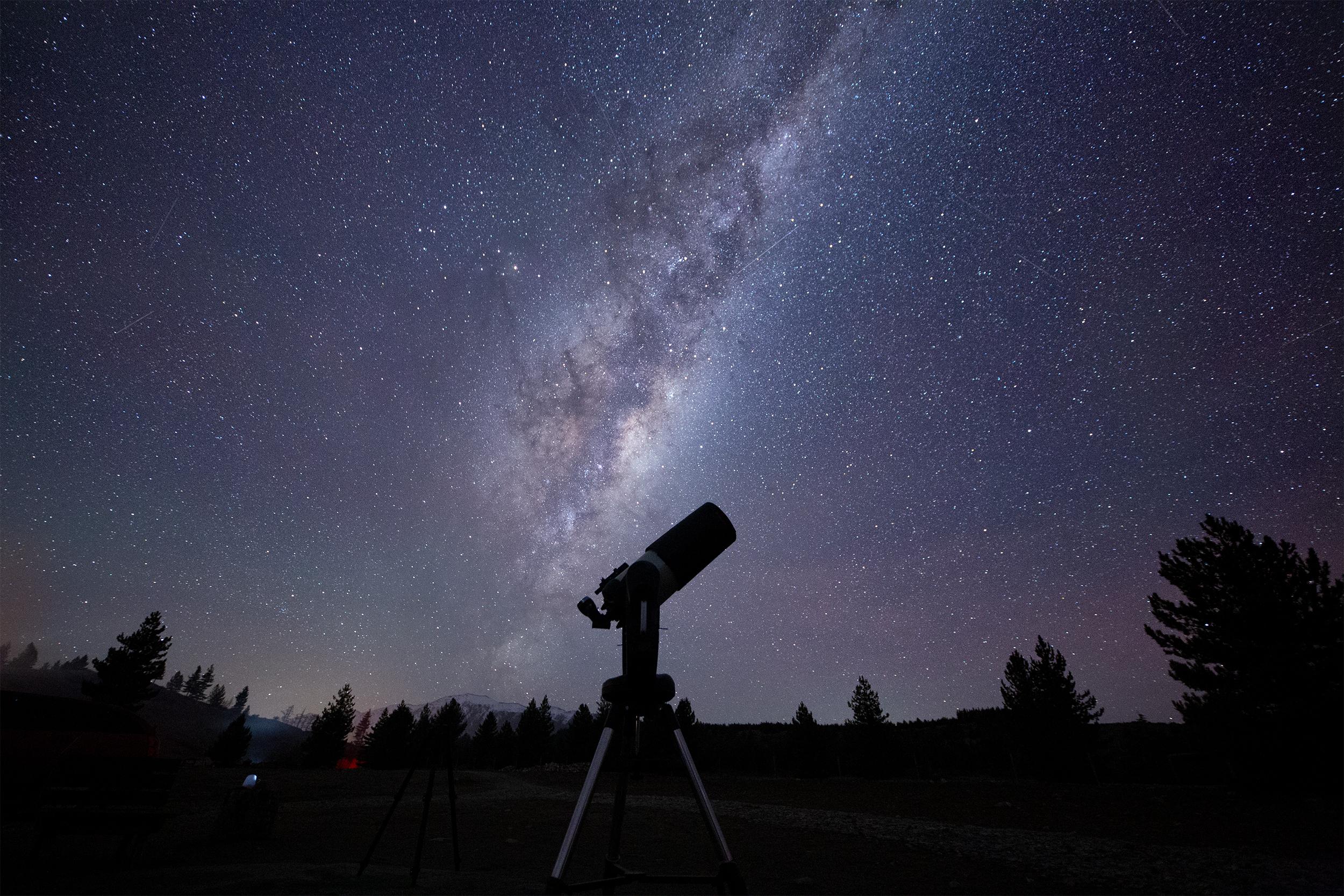
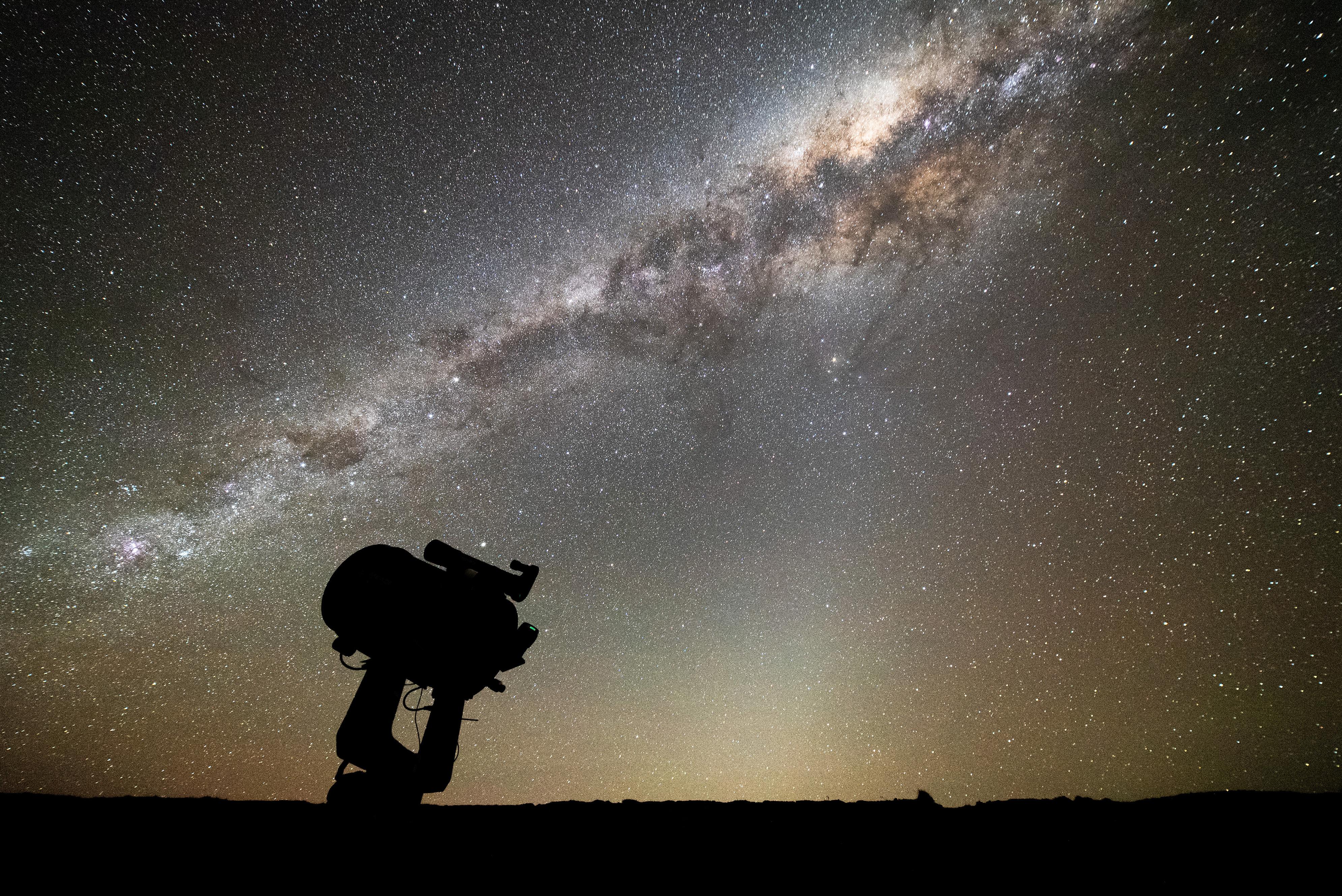
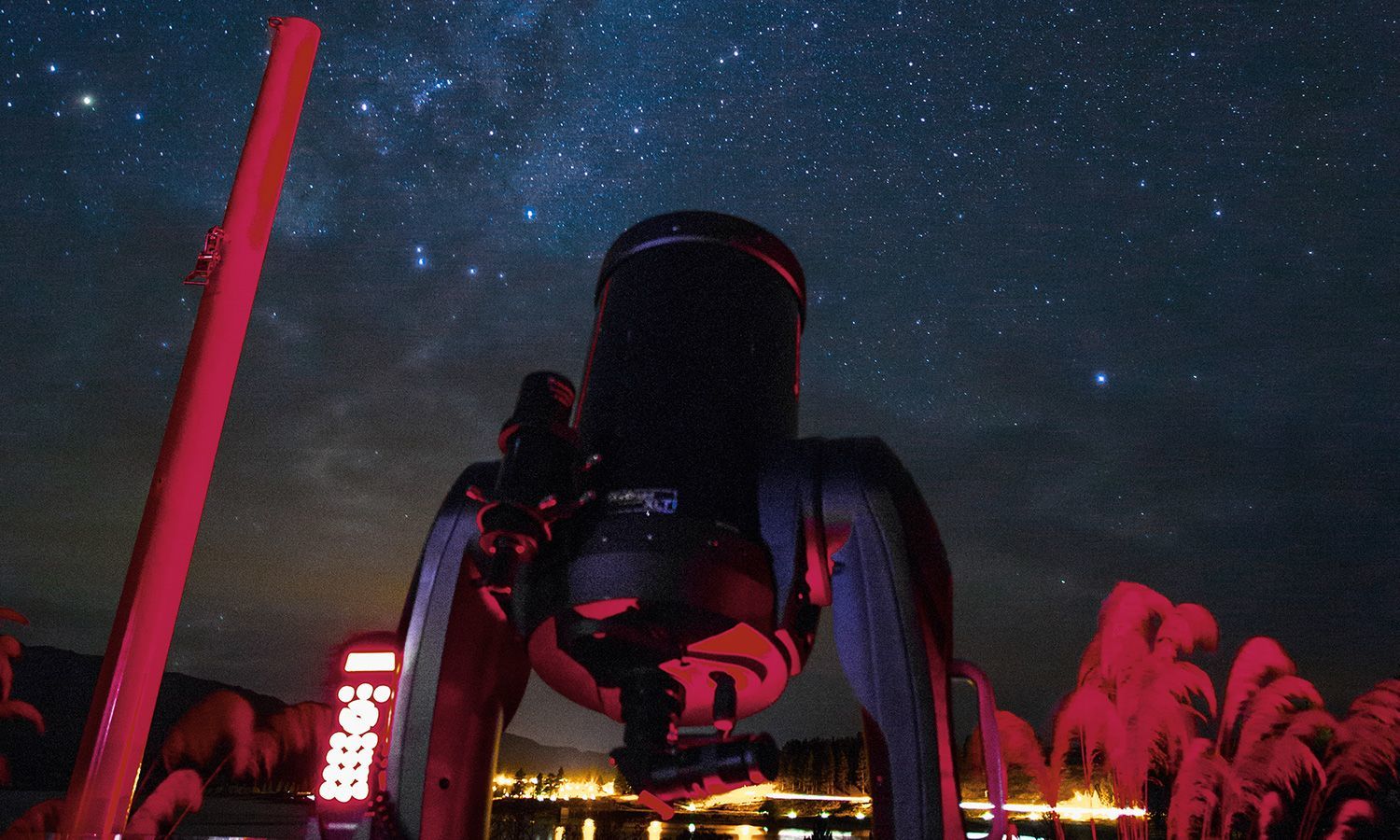
"I did this activity back in 2017 and it was super cloudy, but I was soooo lucky with the weather this time. Perfect sky for stargazing. Very good clear directions from booking to activity end. Lovely (and safe) bus driver with excellend on topic music choices!! Our guide Daley was amazing! Super enthusiastic and engaging, very knowledgeable, I learnt soooo much and loved looking at the constellations, learning how to find South by the stars and seeing Saturn, the moon and Alpha Centauri through the various telescopes. 100% recommend!"
CHECK THE SKY
Cloud decides the night
—
Cloud over tonight’s dark hours
—
Moon tonight
—
Full darkness tonight
Forecast cloud for Mount John summit (Dark Sky Project) · month-by-month sky · checked · data from MET Norway
Sky brightness
21.67 mag/arcsec²
Measured at Mt John main car park, June 2011 to January 2012. Source, checked October 2026.
Bortle class (est.)
≈ 3-4 estimated
≈ Bortle 3-4: estimated from the darkest reading, 21.8 mag/arcsec² (class 3), and the survey average, 21.67 (class 4), measured by Aoraki Mackenzie starlight reserve application to the IDA, SQM survey (Table 7-1) at Mt John main car park, June 2011 to January 2012. The reserve's application puts it at Bortle 2, its own estimate (from its 21.67 and 21.51 mag/arcsec² averages at the primary core, the two Mt John car parks, p. 39). Bortle is a visual scale; treat ±1 class as the uncertainty.
Dark-sky designation
International Dark Sky Reserve
It lies inside the Aoraki Mackenzie International Dark Sky Reserve, an International Dark Sky Reserve (DarkSky International, 2012). Source, checked October 2026.
Elevation
1,029 m
Dark Sky Project's listing: Mount John Observatory summit (1,029m). Source, checked October 2026.
Best months for the Milky Way
May, Jun, Jul
Most core hours above 20° in full darkness, weighted by night cloud (core season February to October). Computed with JPL DE421 and NASA POWER, checked October 2026.
Lake Tekapo · Mackenzie Basin · Aoraki Mackenzie Dark Sky Reserve
Lake Tekapo Stargazing: Mount John, the Farm Sites or the Hot Pools
Lake Tekapo sits inside the Aoraki Mackenzie International Dark Sky Reserve. The tours take you up Mount John to the university observatory, out to a farm with big telescopes, or into a hot pool with a guide pointing out the stars.
From
US$138
per person
Free cancellation
- 4.6 / 5 344+ Reviews
- 10 Dark-Sky Places Compared on This Site
- Free Cancellation
The Experience
What the Mount John Summit Tour Includes
About 1 hour 45 minutes. Not for children under 10; you need to walk 100 metres up a gravel slope.
Highlights
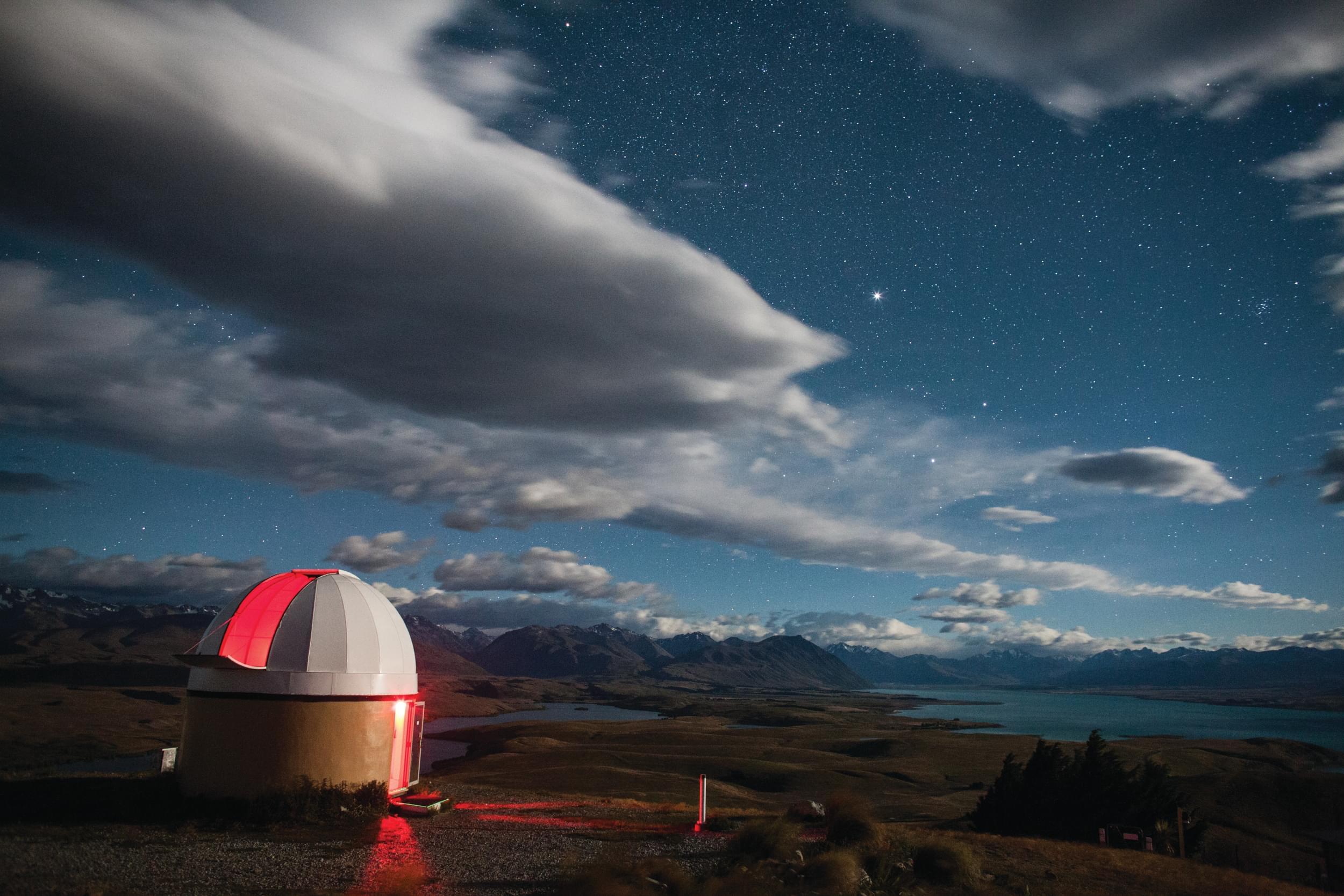
- The summit of Mount John, above the university observatory
- High-powered telescopes and an observatory dome
- An astronomy guide and storytelling
- Return transport from the Dark Sky Project base
- An extreme-cold-weather jacket lent at check-in
What's Included
- Guided mountaintop stargazing experience (round trip of 1 hour 45 minutes)
- Exclusive access to Mount John Observatory summit (1,029m)
- Expert astronomy guide and storytelling
- Return transport between Dark Sky Project base and summit
- Extreme cold weather jacket provided
How a Lake Tekapo Stargazing Tour Works
From check-in in the village to the telescopes and back.
Pick a Night
Book early in your stay. If cloud closes in, the Dark Sky Project offers an indoor alternative or a refund, and an early date leaves room for a second try.
Check In in the Village
The tours start from their own base in Lake Tekapo village, and the operator drives you to the site. Start times move with the season.
Up to the Site
The summit tour climbs Mount John; the farm tours drive a few minutes out of the village to a site with no lights.
Telescopes and Stories
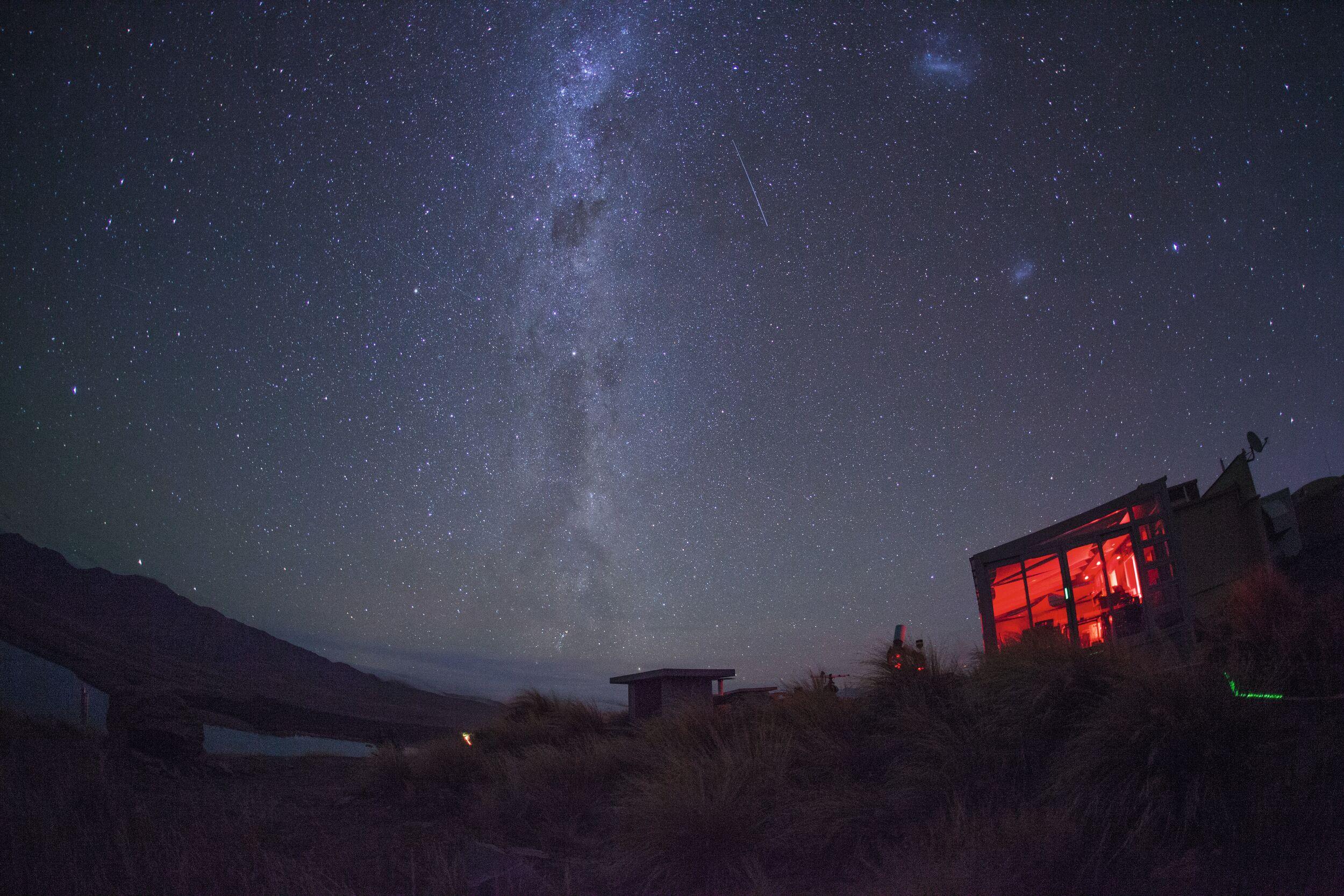
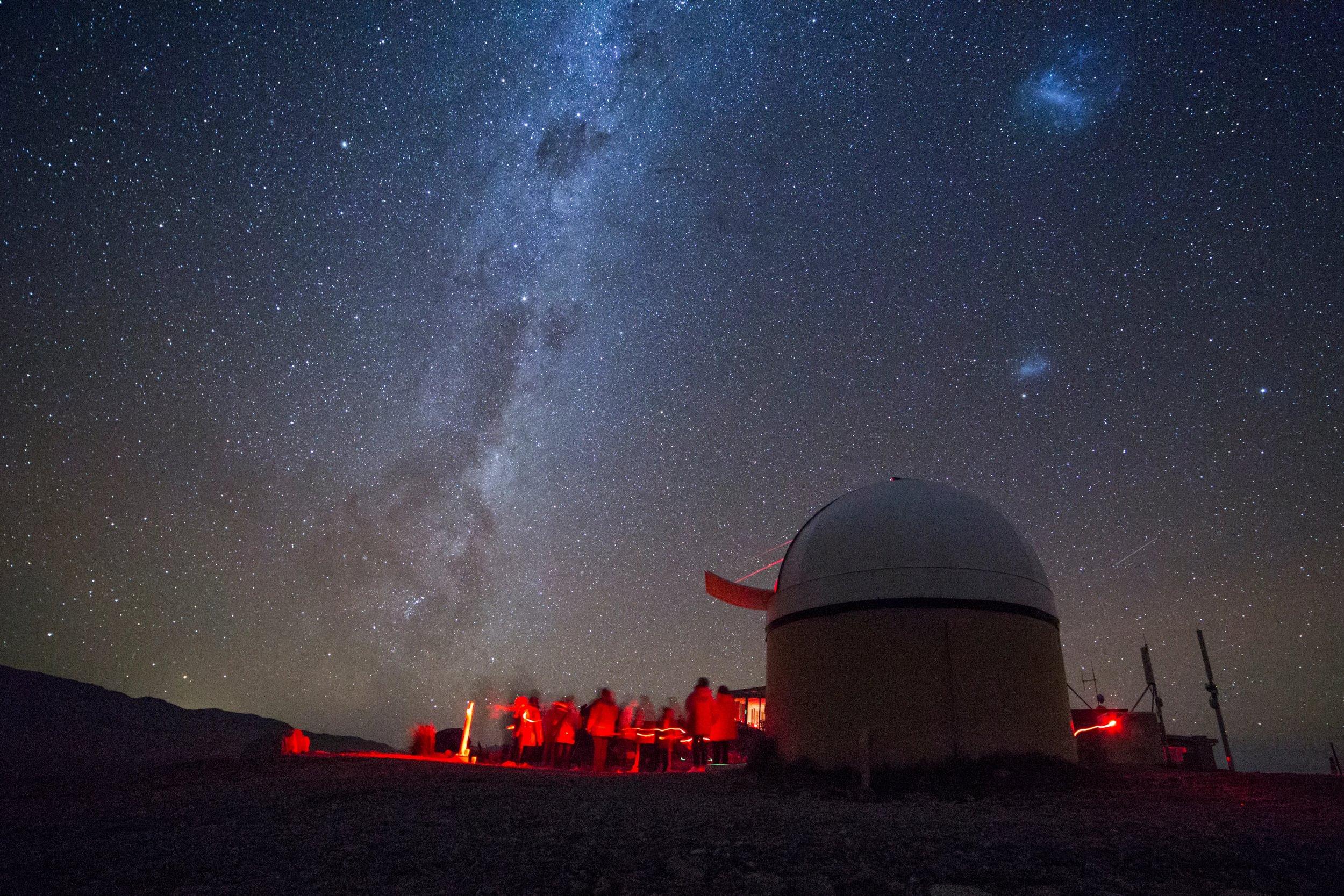
The guide points out the Southern Cross, the Magellanic Clouds and the planets, then lines up the telescopes. Most tours send you a photo.
Photo Gallery
Lake Tekapo After Dark
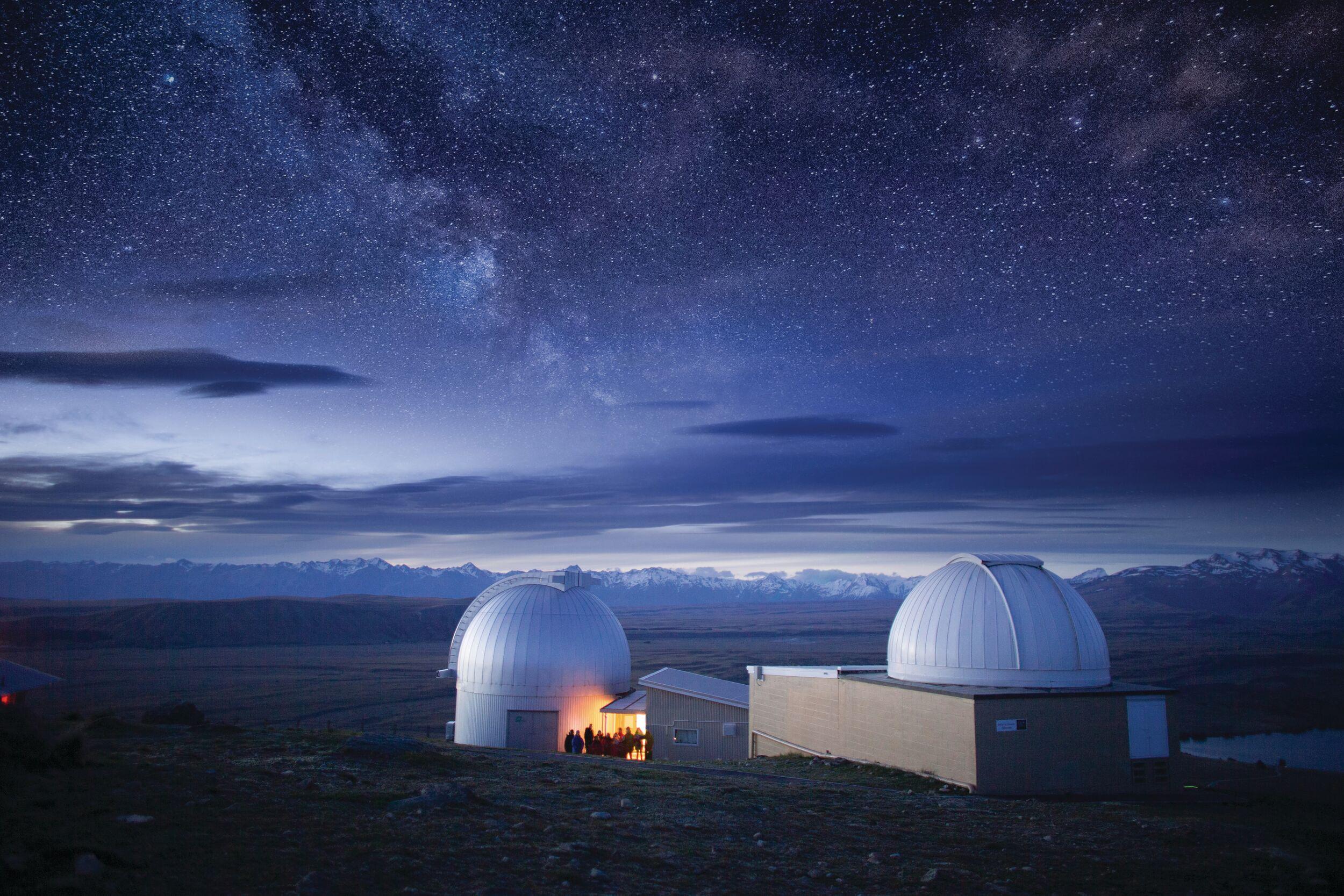
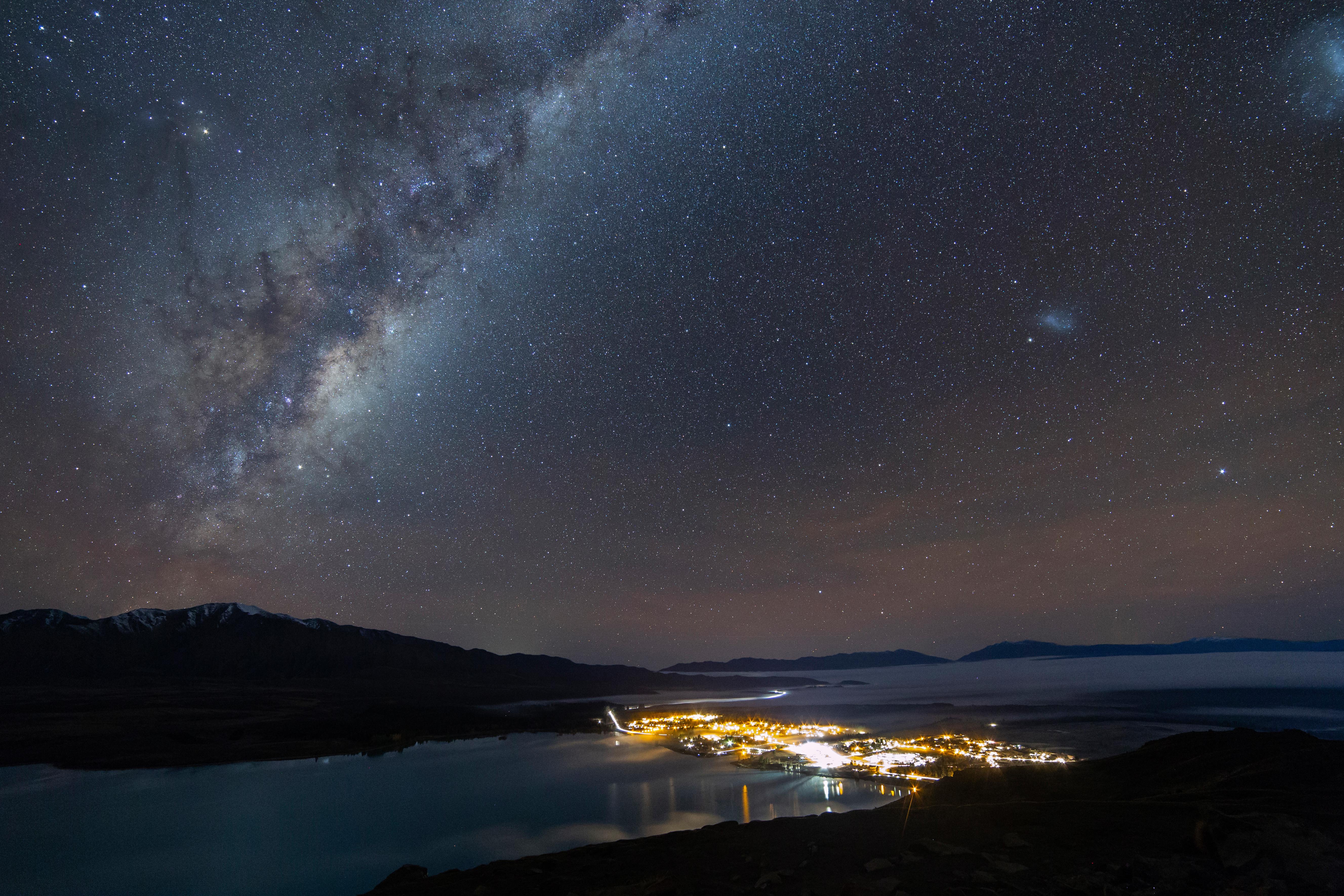
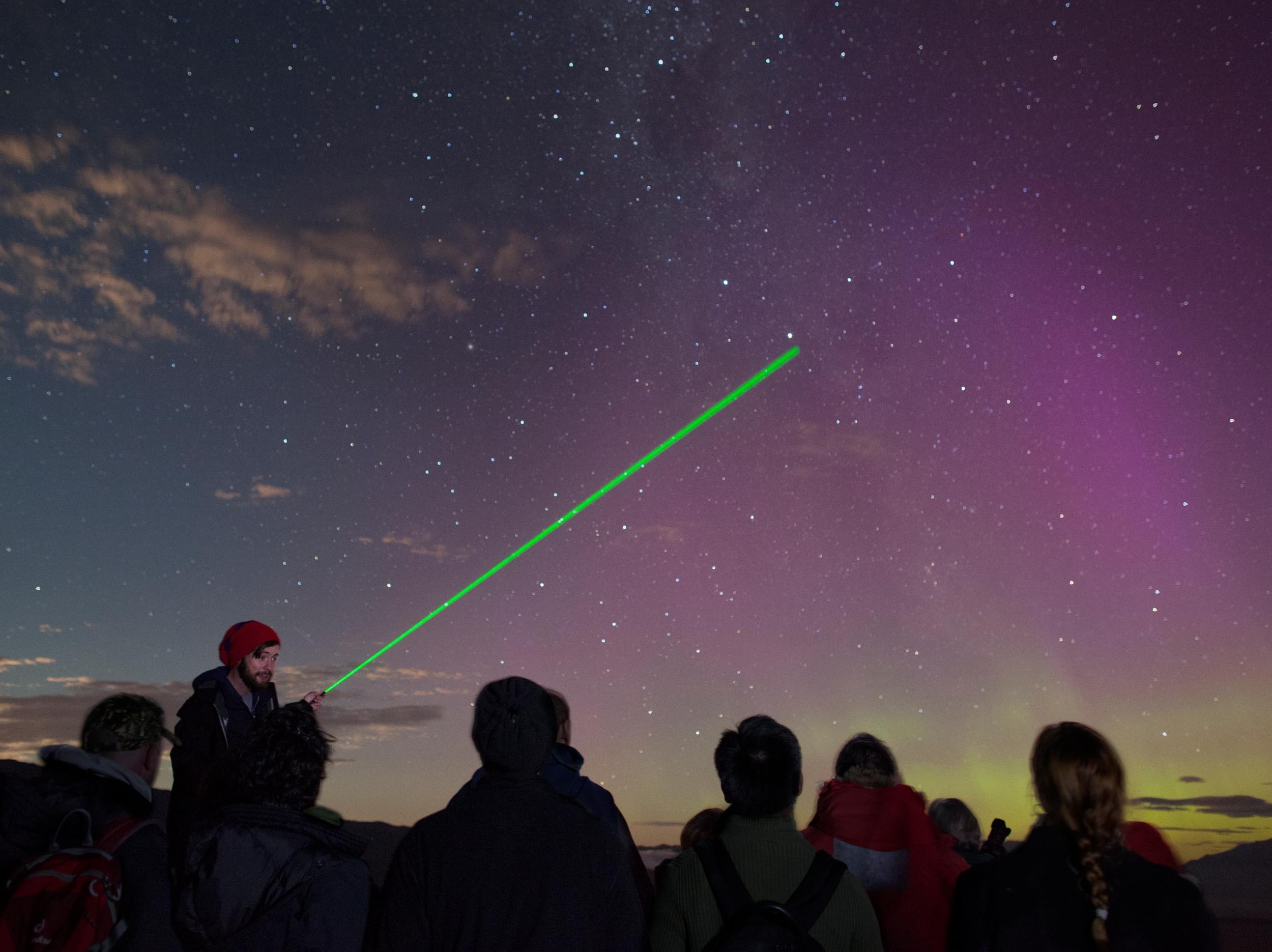
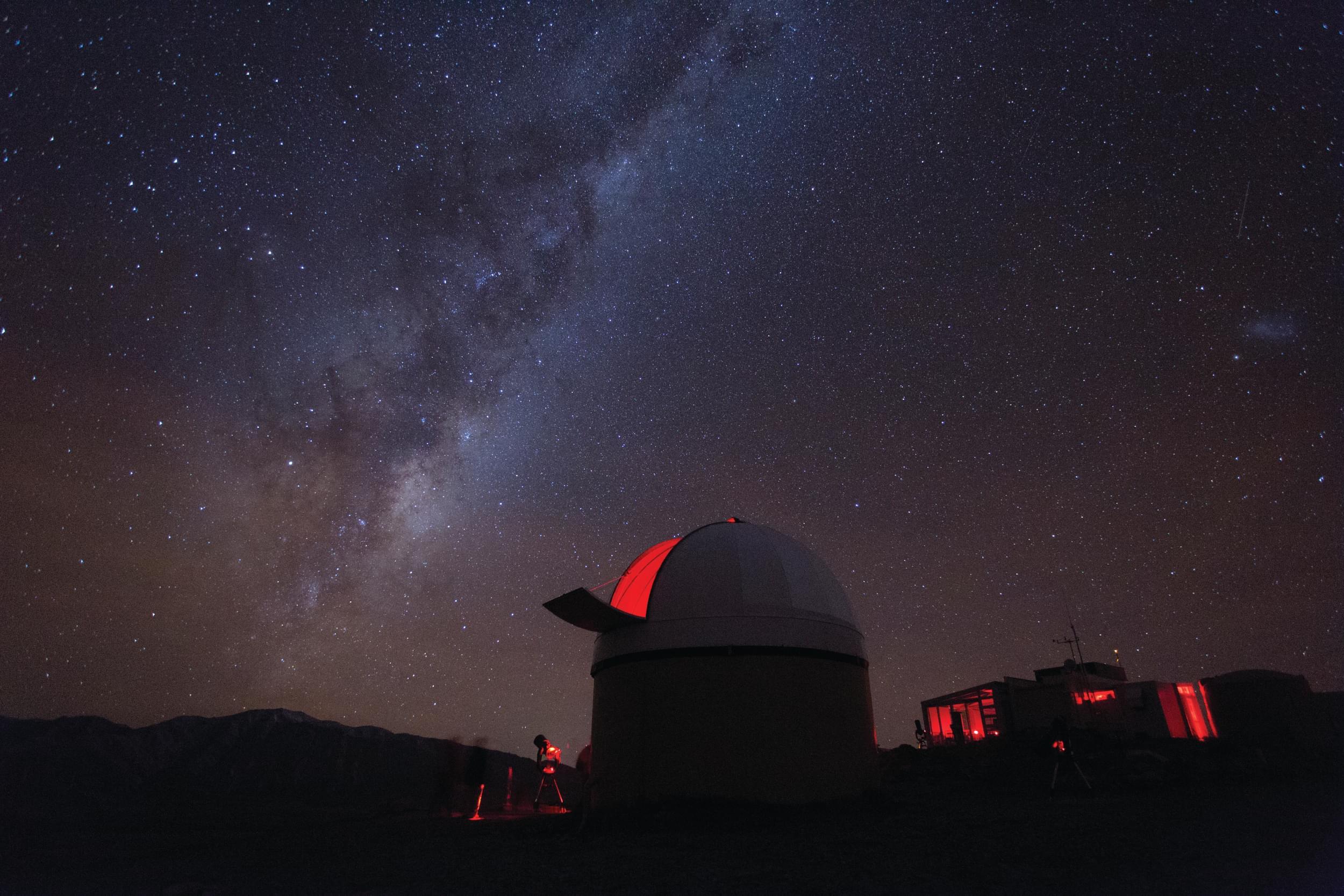
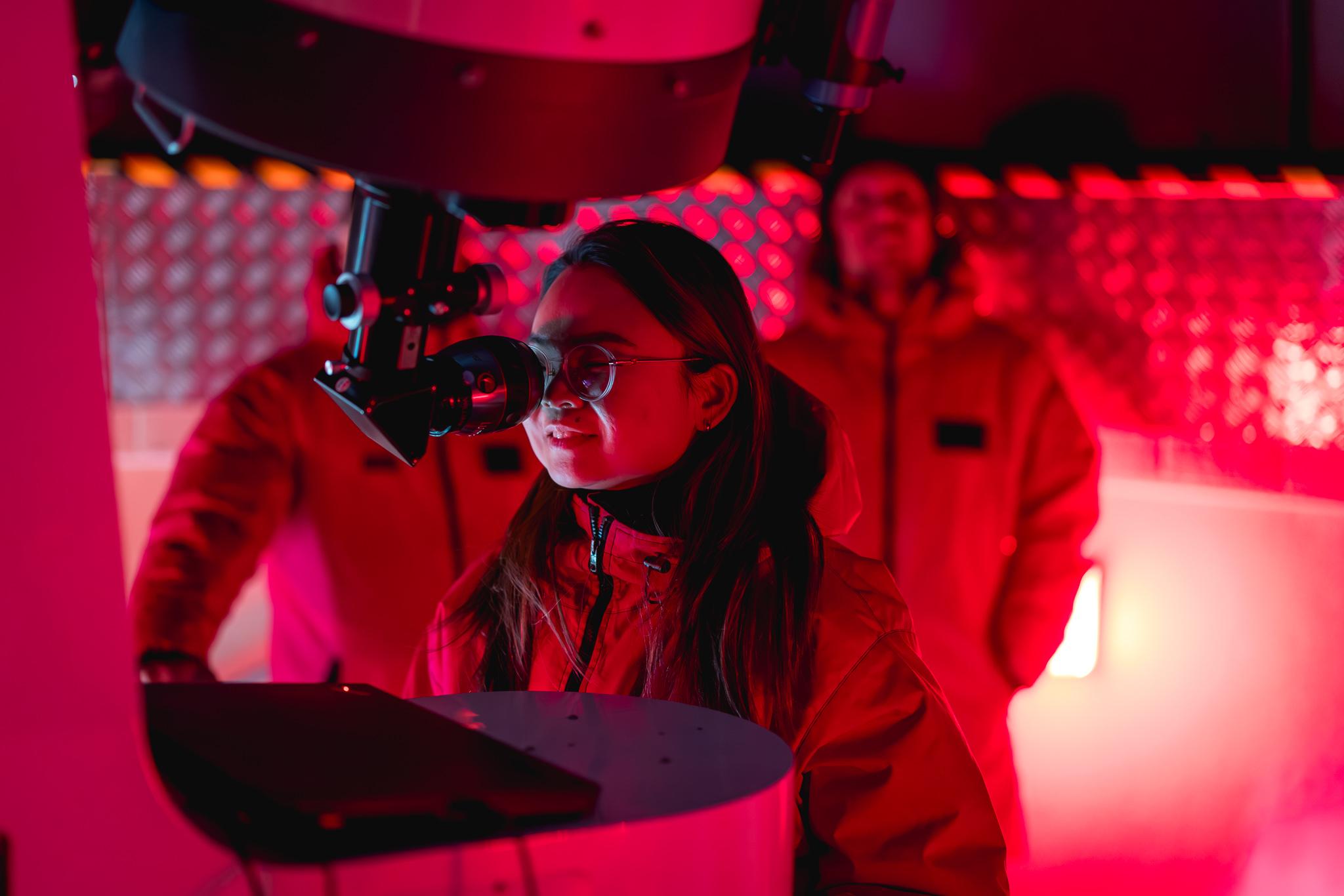
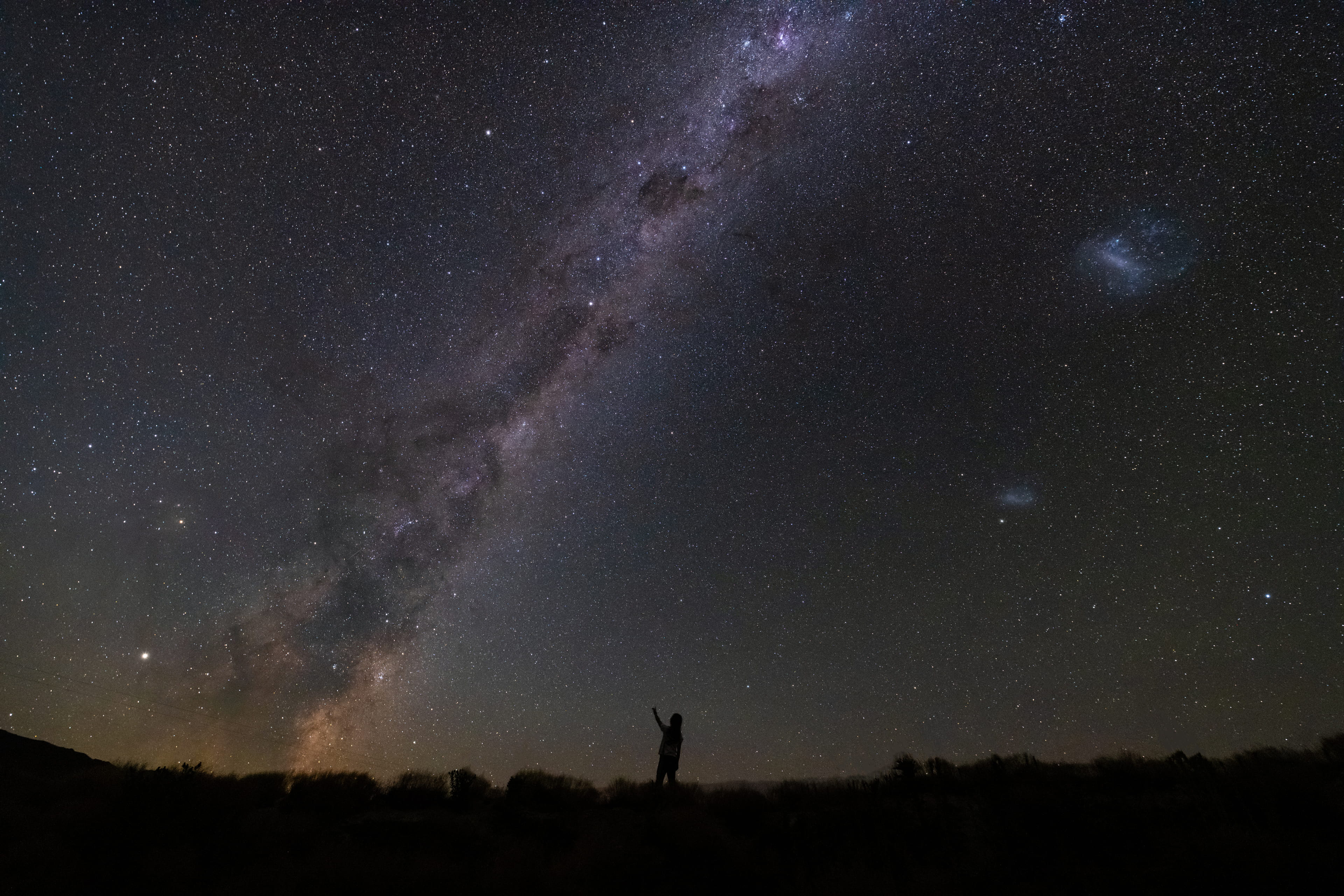
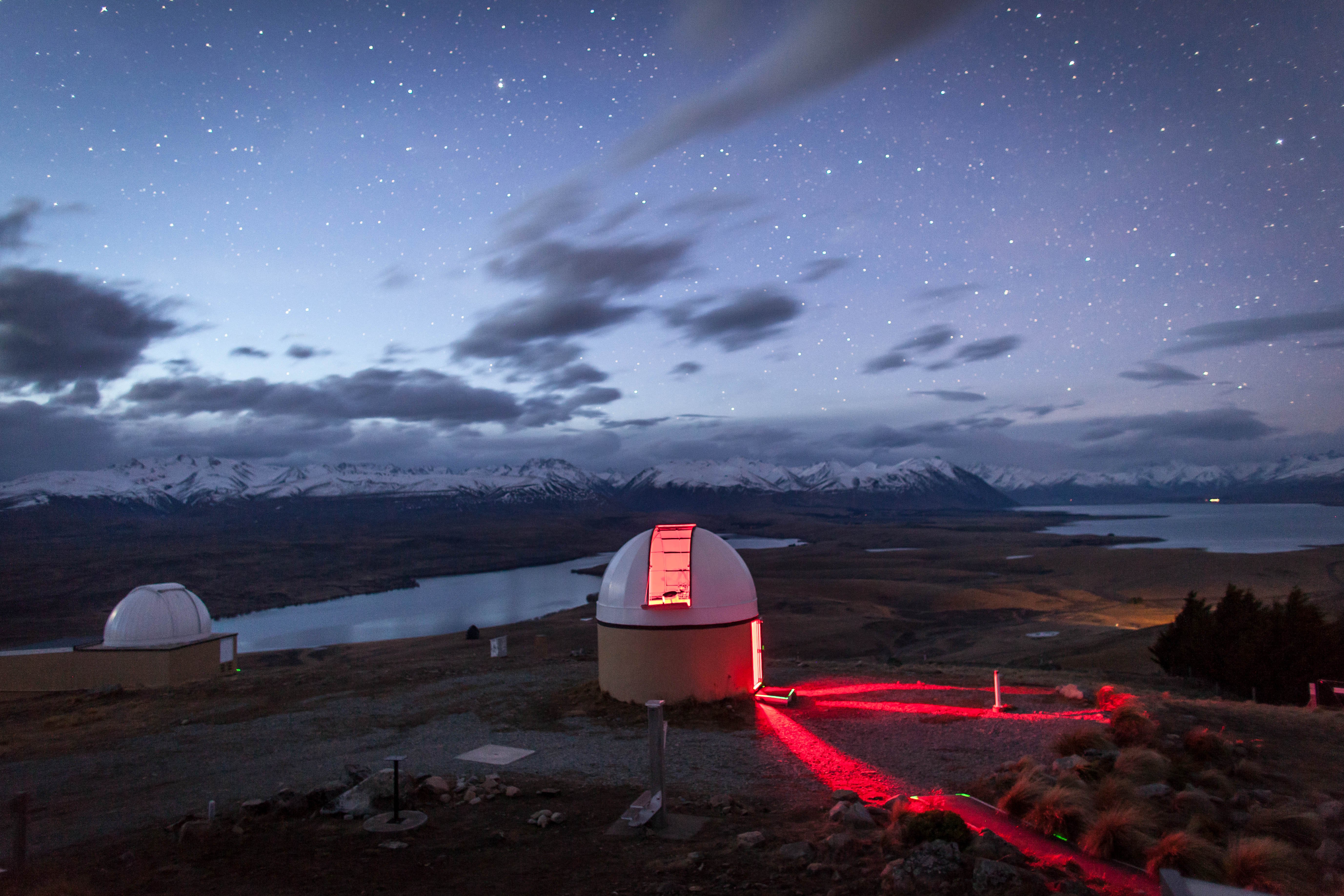
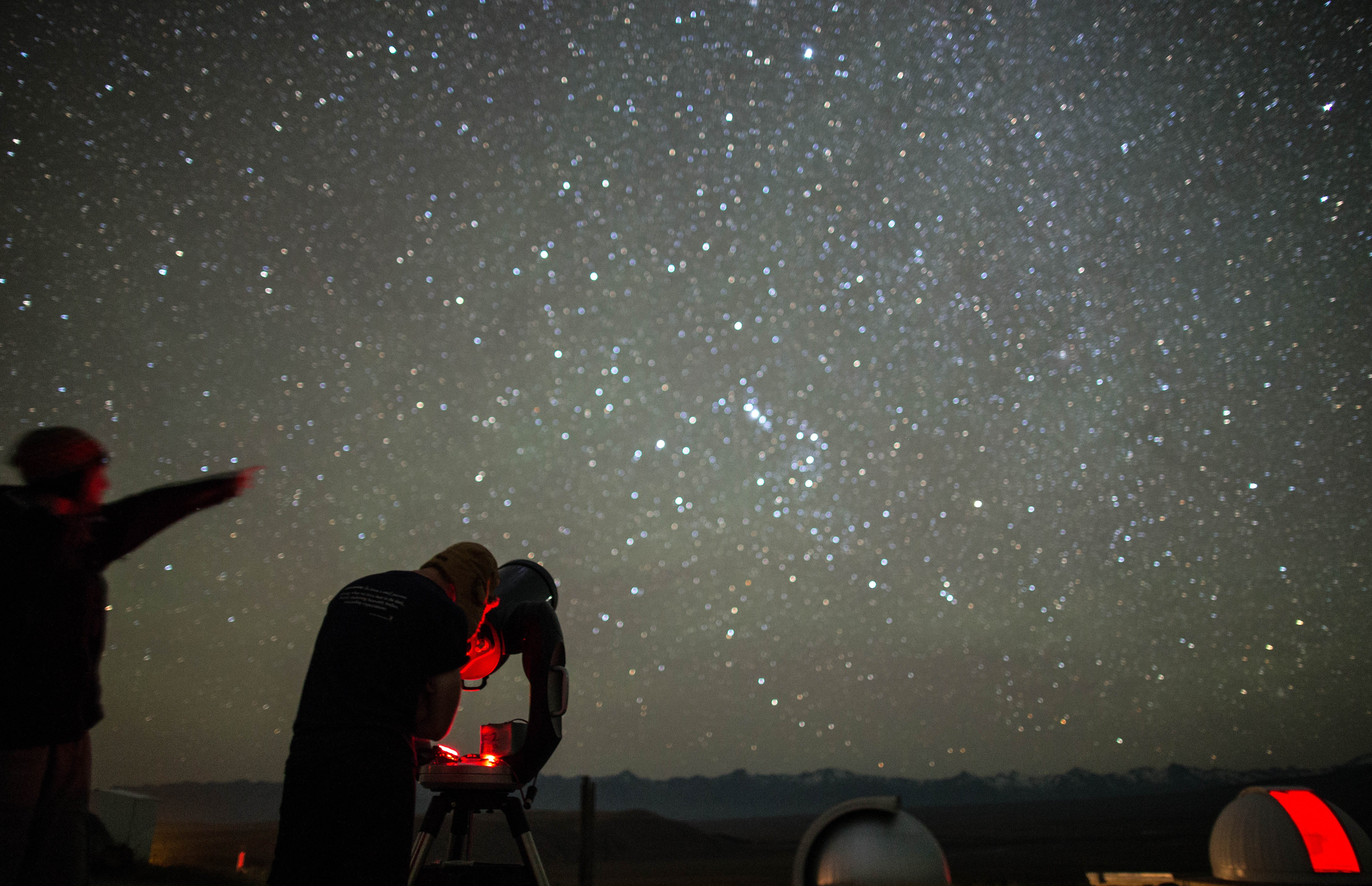
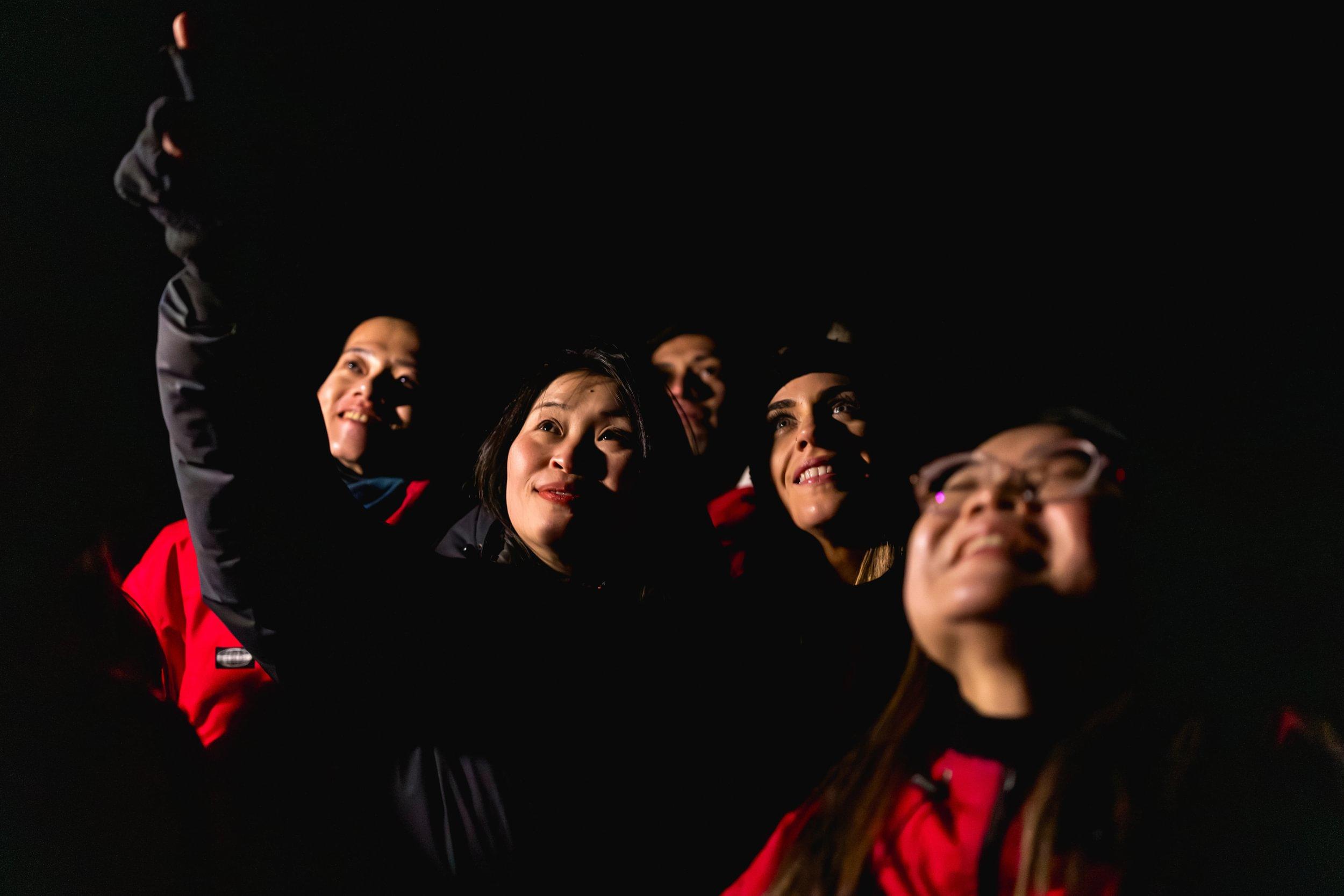
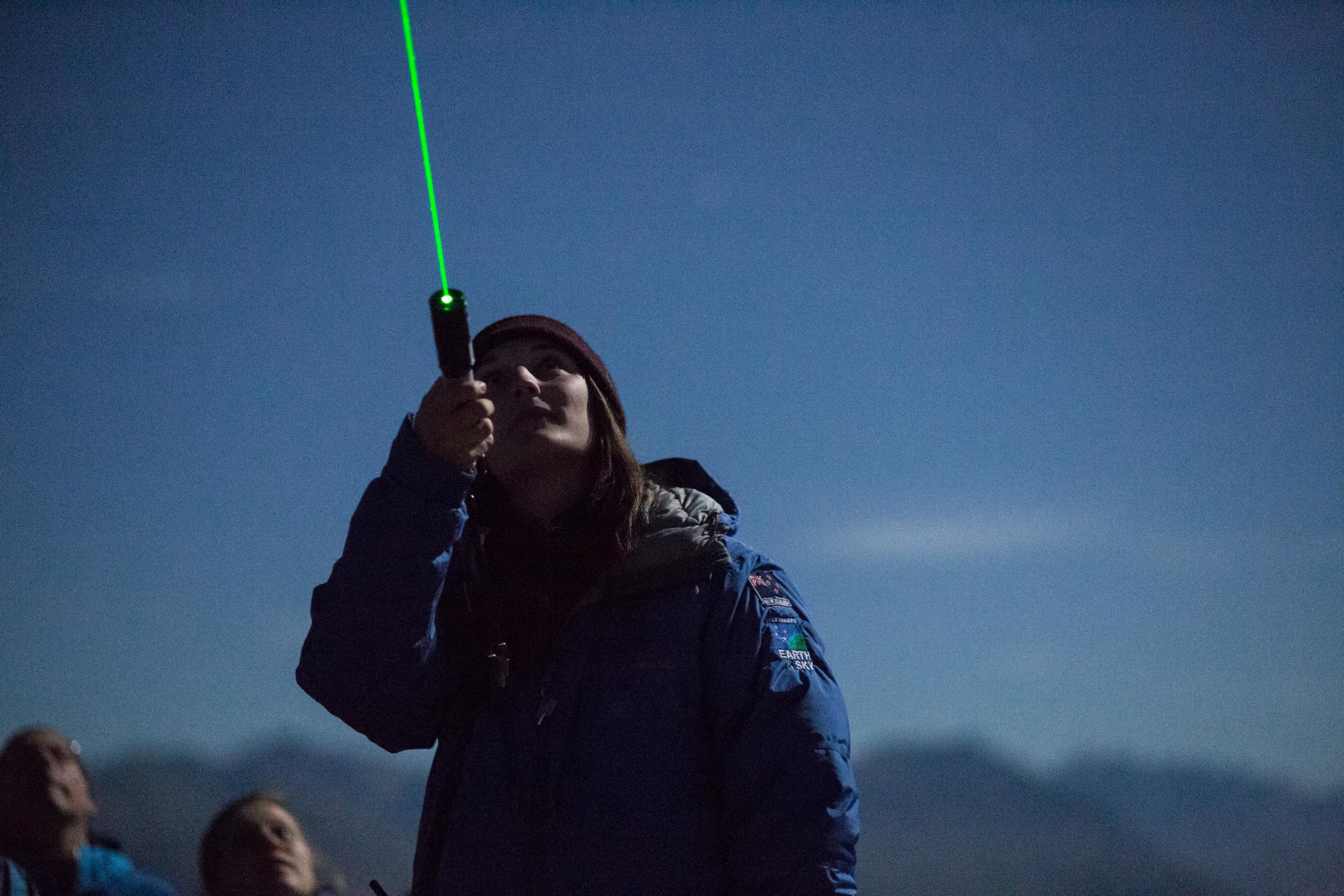
The observatory domes on Mount John, the telescopes and the southern sky.
Book Your Experience
Check Availability & Prices
Select your preferred date and time. Cancel up to 24 hours in advance for a full refund.
What the Tour Brings, and What You Bring
Dark Sky Project includes
- Return transport between Dark Sky Project base and summit
- Extreme cold weather jacket provided
From the tour's GetYourGuide listing, checked October 2026.
Bring
- Warm layers, a hat and gloves: the night is colder than the day, in every month
- A red light, or a phone set to a red screen: white light ruins your night vision
- Binoculars rather than your own telescope: they need no setup and show far more than your eyes
- Closed shoes for uneven ground in the dark
Month by month
When the Sky Is Darkest at Lake Tekapo
Night cloud, Milky Way core hours and the next new moon in each month, at the observing site.
| Month | Night cloud | Full darkness | Milky Way core | Next new moon | Coldest hour |
|---|---|---|---|---|---|
| January | 63% | 4.6 h | 0 h | 8 Jan 2027 | -0 °C |
| February | 59% | 6.5 h | 1.3 h | 7 Feb 2027 | -0 °C |
| March | 58% | 8.3 h | 4.1 h | 8 Mar 2027 | -2 °C |
| April | 59% | 9.9 h | 6.7 h | 7 Apr 2027 | -4 °C |
| May best | 59% | 11.1 h | 9.2 h | 6 May 2027 | -6 °C |
| June best | 55% | 11.5 h | 11.2 h | 5 Jun 2027 | -13 °C |
| July best | 56% | 11.3 h | 9.7 h | 4 Jul 2027 | -12 °C |
| August | 59% | 10.4 h | 7.2 h | 2 Aug 2027 | -17 °C |
| September | 63% | 9 h | 4.7 h | 1 Sep 2027 | -7 °C |
| October | 63% | 7.2 h | 1.9 h | 30 Oct 2027 | -6 °C |
| November | 66% | 5.2 h | 0 h | 9 Nov 2026 | -4 °C |
| December | 65% | 3.8 h | 0 h | 9 Dec 2026 | -2 °C |
Night cloud: NASA POWER climatology (CLOUD_AMT_NIGHT), January 2001 to December 2025, at the observing site's grid cell (869 m). Darkness and Milky Way hours: computed for 2027 with JPL DE421 via Skyfield (sun more than 18° below the horizon; galactic centre at least 20° up). Coldest hour: POWER T2M_MIN, the lowest hourly temperature in the period. Checked October 2026.
What you will see
The Sky Over Lake Tekapo, Month by Month
Computed star charts for the observing site on new-moon nights, at the hour the tours are out. The Milky Way is drawn schematically.


Night calendar
Dark Nights Coming Up at Lake Tekapo
The nights around a new moon are the darkest of the month. Dates are local to the observing site.
Next new moons
- 9 November 2026
- 9 December 2026
- 8 January 2027
- 7 February 2027
- 8 March 2027
- 7 April 2027
Meteor showers
- Orionids, peak night 22 October 2026 bright moon
- Leonids, peak night 18 November 2026 bright moon
- Eta Aquariids, peak night 7 May 2027 dark moon
- Southern Delta Aquariids, peak night 29 July 2027 dark moon
- Orionids, peak night 22 October 2027 some moonlight
- Leonids, peak night 18 November 2027 bright moon
Milky Way season
Core season February to October. Best months: May, June and July.
Lunar eclipses
- 19 July 2027, 04:04 local: penumbral (a faint shading, easy to miss)
- 17 August 2027, 19:14 local: penumbral (a faint shading, easy to miss)
New moons, darkness and eclipse visibility: JPL DE421 via Skyfield. Meteor-shower peaks from the IAU Meteor Data Center's established-shower solar longitudes (Jopek & Kaňuchová); the peak night can shift by a day. Lunar eclipses: Eclipse Predictions by Fred Espenak, NASA/GSFC. Moon labels: under 25% lit = dark moon, under 60% = some moonlight. Checked October 2026.
Tour or on your own?
Tekapo on Your Own, or With a Tour?
- Do you have a way to get away from the village street lights after dark?
- Will your eyes do, or do you want planets, nebulae and star clusters through a big telescope?
- Will you be warm enough standing outside for an hour in an alpine basin at night?
Yes to all three
Go on your own
Walk or drive to the lake shore away from the street lights and look up: the whole Mackenzie Basin is inside the dark sky reserve, and the sky costs nothing.
No to any of them
Book the tour
A guide who knows the southern sky, big telescopes and, on most tours, a warm jacket and a photo of you under the stars.
Check dates →Mount John vs. Chameleon vs. Silver River
Three Lake Tekapo stargazing tours side by side. Prices as of October 2026.
| Feature | ON THE SUMMIT Dark Sky Project, Mount John Summit | Chameleon Stargazing | Silver River Alpine Stargazing |
|---|---|---|---|
| Starting Price | From US$138/per person | From US$74 | From US$68 |
| Rating | 4.6/5 (338 reviews) | 4.9/5 (771 reviews) | 4.6/5 (853 reviews) |
| Length | About 1 hour 45 minutes | 1.5 hours | 75 minutes |
| Site | Mount John summit, beside the observatory | By the Tekapo River, 4 minutes from the village | A private 50,000-acre farm |
| Telescopes | High-powered telescopes and a dome | 9.25-inch telescope and a smart telescope | 14-inch telescopes |
| Warmth | Cold-weather jacket lent | Blankets, hot chocolate, fire bowl | Down jackets lent |
| Age Limit | 10 and over | Not stated | One infant per tour, earliest slot |
| Free Cancellation | Up to 24 hours ahead | Up to 24 hours ahead | Up to 24 hours ahead |
| Best For | The observatory summit | Comfort and the best reviews | Big telescopes at a lower price |
| Check Availability | View Chameleon | View Silver River |
Other Lake Tekapo Stargazing Tours
A telescope session by the Tekapo River, a farm site with 14-inch telescopes, and stargazing from a 38-degree hot pool.
The Lake Tekapo Stargazing Guide
Which Lake Tekapo Stargazing Tour to Book
Seven tours compared on site, telescopes, warmth, age limits and price.
The Lake Tekapo tour with the best setting is the Dark Sky Project’s Mount John summit experience: a guided session at the top of Mount John, beside the University of Canterbury’s observatory, with high-powered telescopes and a cold-weather jacket lent at check-in, from US$138 a person as of October 2026, rated 4.6 from 344 reviews. For half the price, Chameleon Stargazing’s session by the Tekapo River is the best rated in town, 4.9 from 779 reviews, with hot chocolate, mattresses and a fire bowl.
Why Lake Tekapo
Lake Tekapo is inside the Aoraki Mackenzie International Dark Sky Reserve, designated by the International Dark-Sky Association in 2012 and the first in the Southern Hemisphere. The reserve covers about 4,367 square kilometres of the Mackenzie Basin, from Aoraki/Mount Cook National Park to Lakes Tekapo and Pukaki, and outdoor lighting has been controlled there since the early 1980s to protect the research at Mount John. From Mount John, the reserve’s application notes, the Magellanic Clouds, two small galaxies beside our own, are visible on clear nights all year.
The Lake Tekapo tours compared
| Tour (operator) | From | Rating (reviews) | Length | Site | Warmth |
|---|---|---|---|---|---|
| Mount John summit (Dark Sky Project) | US$138 | 4.6 (344) | 1 h 45 min | Mount John, 1,029 m | Cold-weather jacket lent |
| Stargazing experience (Chameleon Stargazing) | US$75 | 4.9 (779) | 1.5 hours | By the Tekapo River | Blankets, hot chocolate, fire bowl |
| Alpine stargazing (Silver River Stargazing) | US$69 | 4.6 (853) | 75 minutes | Private 50,000-acre farm | Down jackets lent |
| Crater stargazing at Cowan's Observatory (Dark Sky Project) | US$80 | 4.6 (88) | 75 minutes | Observation craters | Bring warm clothes |
| Hot pools and stargazing (Tekapo Springs) | US$109 | 4.4 (78) | 90 minutes | A 38-degree hot pool | You are in the water |
| Mt Cook stargazing (Silver River Stargazing) | US$57 | 4.7 (15) | 75 minutes | Below Aoraki/Mount Cook | Bring warm clothes |
| Indoor dark sky experience (Dark Sky Project) | US$34 | 4.6 (52) | 45 minutes | Indoors, any weather | Indoors |
Prices, ratings and review counts as of October 2026; operators change prices, so treat them as the shape of the market, not a quote.
Who each one suits
Pick by where you want to stand:
On the summit
Dark Sky Project, Mount John
The observatory summit, its telescopes and dome, and a jacket lent at check-in. Ages 10 and up.
Check dates →Best rated
Chameleon Stargazing
A 9.25-inch telescope and a smart telescope, mattresses, blankets, hot chocolate and edited photos, four minutes from the village.
See this tour →In warm water
Tekapo Springs hot pools
A 38-degree pool and a floating hammock, with a guide, a telescope and hot chocolate or green tea. Ages 10 and up.
See this tour →The Dark Sky Project runs three of the seven: the Mount John summit, the observation craters at Cowan’s Observatory, and a 45-minute indoor show with Māori astronomy and a restored Brashear telescope that runs in any weather. On the summit tour you must be able to walk 100 metres up a gravel slope and speak the tour’s language, English, Chinese or Japanese, for safety reasons. If the weather closes in, it offers the indoor experience or a refund.
Chameleon Stargazing is the most comfortable of the outdoor sessions: you lie on mattresses under blankets by the Tekapo River while the guide works the telescopes. Late tours can start after midnight, and a tour after midnight is booked on the next day’s date.
Silver River Stargazing takes you to a private 50,000-acre farm with 14-inch telescopes and lends warm down jackets. It also runs a smaller session below Aoraki/Mount Cook.
Cold, children and the moon
Cold. Every operator warns that Tekapo nights are cold in every season. The Dark Sky Project and Silver River lend jackets; for the others, bring layers, a hat and gloves. See what to wear stargazing.
Children. The Mount John summit and the hot pools are for ages 10 and up; Cowan’s Observatory takes children from 5; the indoor experience suits all ages.
The moon. A bright moon hides the faint Milky Way but not the Moon, the planets or bright clusters, which the telescopes still show. The night calendar on this page lists the next new moons for Tekapo.
For the other side of the world’s dark skies, see Atacama Desert stargazing, and for how reserves like this one work, what a dark sky reserve is.
Guest Reviews
What Recent Guests Say
4.6/5
from 344 verified reviews
"Phoebe was clear and very informative, it was an amazing clear crisp night, the experience from start to finish was friendly, easy and comfortable."
"This is really amazing. I have never seen so many stars in my life before. I've learnt so much stuff and I even get to see Saturn through the powerful telescope. I will take these memories for the rest of my life. Highly recommend everyone to do it and check when is the New Moon so that there's no moon in the sky for darker night."
"Terrific evening, highly recommend. So many stars on this clear night and the observatory hill is a perfect place. Very well organized and informative. We got lucky and saw the Southern Lights, which was an unexpected bonus."
"One of the most incredible experiences of my life! Worth braving the sub zero temperatures for, to see the beautiful galaxy in a clear sky. Our guide Daley was very knowledgeable and helpful throughout the journey. A must do activity while in Lake Tekapo."
"I was overwhelmed by the stars, the Milky Way, and the many shooting stars that can only be seen in the southern hemisphere. The commentary was also very easy to understand, and time flew by as we looked at Saturn through the telescope and more. This excursion was worth more than the price, and I'm really glad I took part. I'd like to do it again the next time I come to Tekapo!"
"It was a very nice time and the best memory of my life because I was able to go to NZ with my long-cherished wish. Also I went to Tekapo, which I wanted to go to, and I was lucky enough to see a lot of stars."
"A very well organised tour - the weather didn't play ball for the whole time but as a consequence Dark Sky project refunded half of the cost - commendable and unexpected - would highly recommend this operator."
Read all 344 verified reviews
See All ReviewsPick a Night, See the Price
Many stargazing tours on this site move you to another night if cloud cancels the session. Check the terms of the tour you pick before you pay. Starting from US$138 per person.
Check AvailabilityFAQ: Stargazing at Lake Tekapo
The tours, the cold, the reserve and the moon, with prices as of October 2026.
Yes, if you want telescopes and a guide to the southern sky. The basin is inside a dark sky reserve, so the naked-eye sky is free; the tours add big telescopes, a guide who knows the Southern Cross and the Magellanic Clouds, and usually a photo. Sessions start from about US$68 as of October 2026; see whether a stargazing tour is worth it.
Yes. The whole Mackenzie Basin is inside the Aoraki Mackenzie International Dark Sky Reserve, and away from the village street lights the sky is dark. You will not have telescopes or a guide, and the Mount John summit is reached on the Dark Sky Project's tour.
The Mount John summit for the setting, Chameleon Stargazing for comfort and reviews. The Dark Sky Project's summit tour stands beside the university observatory, from about US$136; Chameleon's riverside session is rated 4.9 from 771 reviews, from about US$74, as of October 2026. Compare them in the table above.
An International Dark Sky Reserve designated by the International Dark-Sky Association in 2012, the first in the Southern Hemisphere. It covers about 4,367 square kilometres, from Aoraki/Mount Cook National Park to Lakes Tekapo and Pukaki, with outdoor lighting rules to protect the research at Mount John. Read what a dark sky reserve is.
Yes, in every month. Every operator warns that Tekapo nights are cold. The Dark Sky Project lends a cold-weather jacket on the summit tour and Silver River lends down jackets; for the others bring layers, a hat and gloves. See what to wear stargazing.
Yes, with age limits on some tours. The Mount John summit and the hot pools tour are for ages 10 and up; the crater session at Cowan's Observatory takes children from 5; the indoor Dark Sky Experience suits all ages. The cards above show each tour.
The Dark Sky Project offers an indoor alternative or a full refund. Tekapo Springs moves its session indoors to a virtual-reality show if the sky closes in. Book early in your stay so there is time for a second night; the calendar shows open dates.
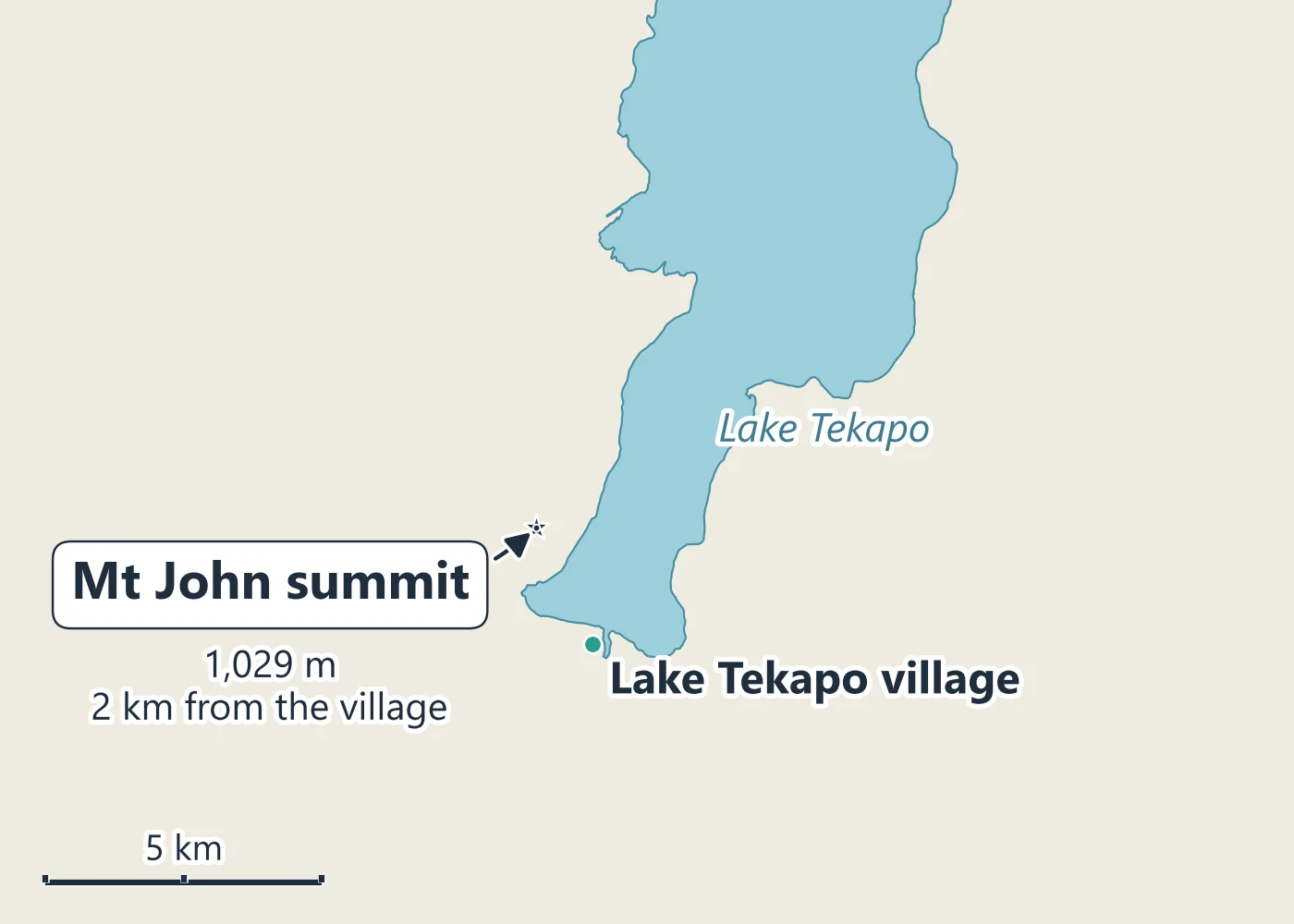
In the Mackenzie Basin, in the Canterbury region of the South Island. The village sits on the lake's southern shore, with Mount John and its observatory above it and Aoraki/Mount Cook to the north-west. The month-by-month chart shows the sky there through the year.
≈ Bortle 3-4, estimated. Estimated from the darkest reading, 21.8 mag/arcsec² (class 3), and the survey average, 21.67 (class 4), measured by Aoraki Mackenzie starlight reserve application to the IDA, SQM survey (Table 7-1) at Mt John main car park, June 2011 to January 2012. The reserve's application puts it at Bortle 2, its own estimate (from its 21.67 and 21.51 mag/arcsec² averages at the primary core, the two Mt John car parks, p. 39). Bortle is a visual scale; treat ±1 class as the uncertainty. Checked October 2026.
May, June, July. Those months combine the most Milky Way core hours with the least night cloud at the observing site: the core stands at least 20° up for an hour or more of full darkness from February to October. Core hours computed with JPL DE421 via Skyfield; night cloud from NASA POWER (2001-2025), checked October 2026.
9 November 2026, 9 December 2026, 8 January 2027. The nights either side of a new moon are the darkest of the month. Dates are local, computed with JPL DE421 via Skyfield, checked October 2026.
About 60% night cloud cover on average across the year. The clearest month is June (55%), the cloudiest November (66%). NASA POWER climatology, 2001-2025, checked October 2026.
Still have questions? Email us at info@beststargazing.com
Night-cloud and night-low climatology: NASA POWER Project, January 2001 to December 2025 · Tonight's cloud: data from MET Norway (CC BY 4.0) · Moon, darkness and Milky Way geometry: JPL DE421 via Skyfield · Lunar eclipses: Eclipse Predictions by Fred Espenak, NASA/GSFC · Meteor showers: IAU Meteor Data Center list of established showers · Sky data checked October 2026.