
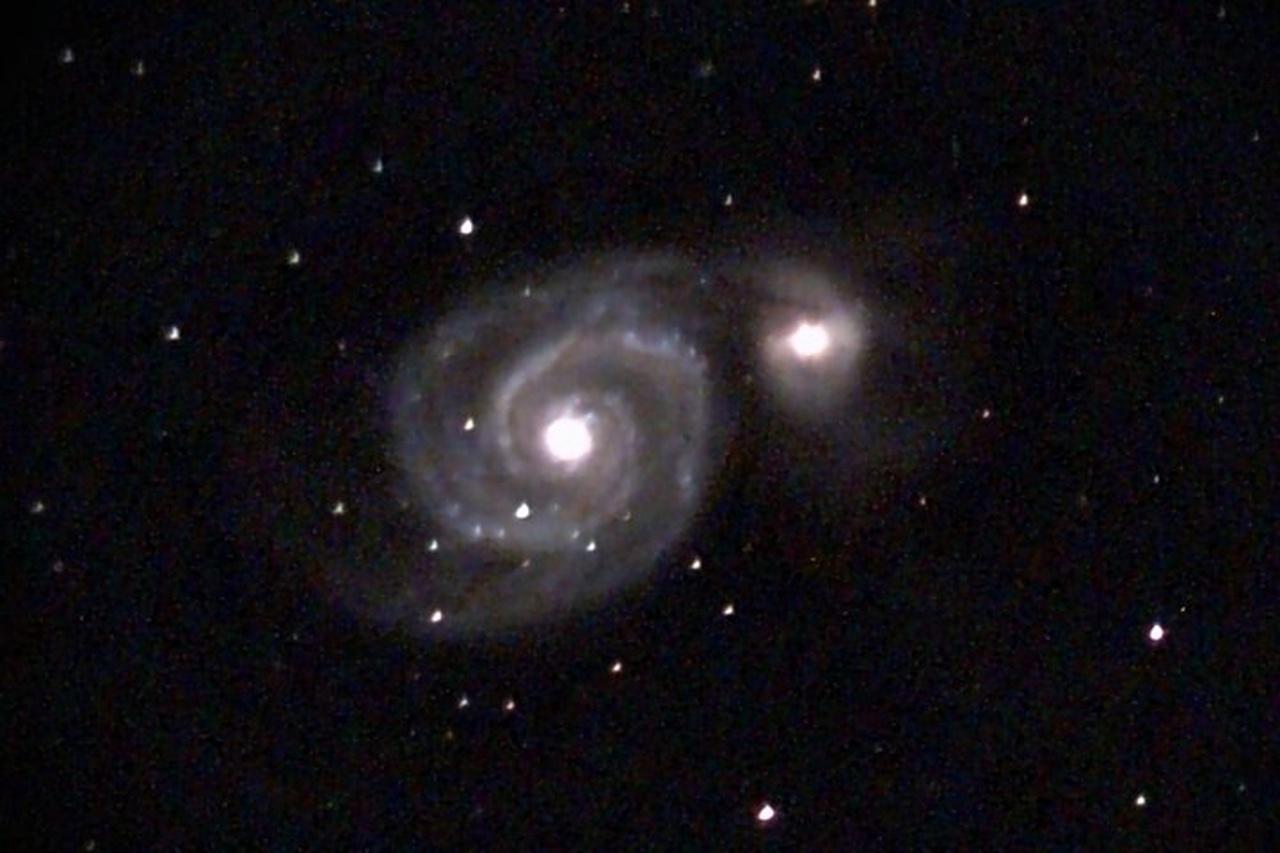
"Better than we expected. I tried all my might to use the night vision on my camera but could not produce decent pics. I'm so thankful for the associ tes that captured the magical experience and emailed us a piece of thr cosmos to take home!"
CHECK THE SKY
Cloud decides the night
—
Cloud over tonight’s dark hours
—
Moon tonight
—
Full darkness tonight
Forecast cloud for Yucca Valley (the telescope tour's meeting point); the tours do not disclose their observing site · month-by-month sky · checked · data from MET Norway
Sky brightness
21.11 mag/arcsec²
Measured at Black Rock Campground, on the park's north-west edge about 10 km from the Yucca Valley meeting point (NPS camera, zenith; all-sky mean 20.23, Keys View 20.35, the park's brightest edge), 21 February 2006. Source, checked October 2026.
Bortle class (est.)
≈ 4 estimated
≈ Bortle 4: estimated from 21.11 mag/arcsec² measured by the National Park Service night-sky team, in Joshua Tree National Park's International Dark Sky Park application (June 2016, pp. 22 and 75) at Black Rock Campground, on the park's north-west edge about 10 km from the Yucca Valley meeting point (NPS camera, zenith; all-sky mean 20.23, Keys View 20.35, the park's brightest edge), 21 February 2006. The National Park Service puts it at Bortle 5, its own estimate (in its Black Rock Campground record, p. 22). Bortle is a visual scale; treat ±1 class as the uncertainty. The tours do not disclose their own observing site, so this is a published reading near where they meet, not a reading at the tour site.
Dark-sky designation
International Dark Sky Park, Silver Tier
The tours observe outside Joshua Tree National Park, a Silver Tier International Dark Sky Park (DarkSky International, 2017). Source, checked October 2026.
Elevation
Not published
the tour site is not disclosed. Checked October 2026.
Best months for the Milky Way
May, Jun, Jul
Most core hours above 20° in full darkness, weighted by night cloud (core season April to August). Computed with JPL DE421 and NASA POWER, checked October 2026.
Joshua Tree National Park · International Dark Sky Park · Mojave Desert
Joshua Tree Stargazing Tour: Telescopes, a Night Hike and a Soundbath
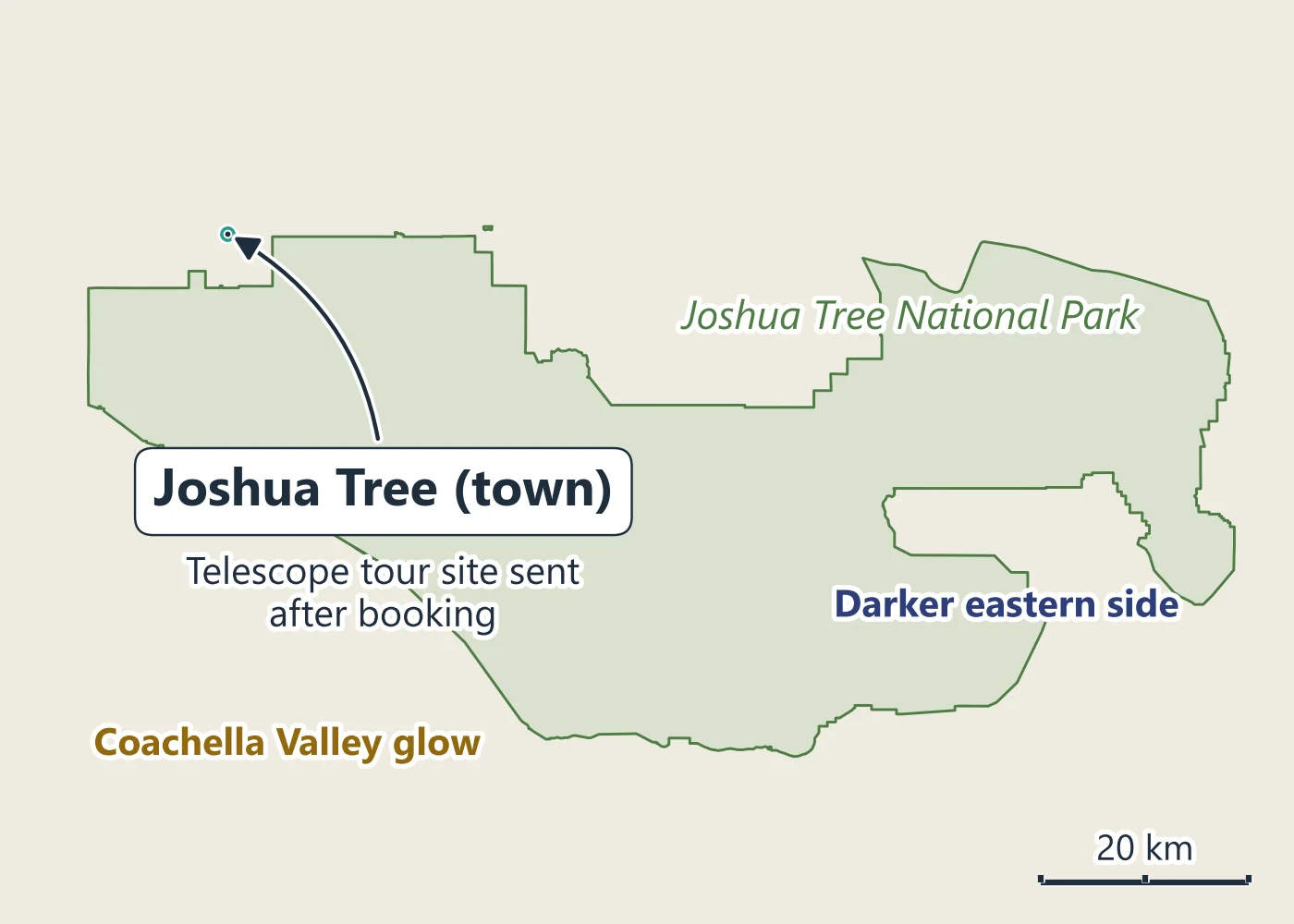
Joshua Tree's stargazing is either a telescope night with an astronomer, deep-sky targets and loungers, or a guided walk through the park as the stars come out. The telescope tour meets in Yucca Valley, on the park's brighter north-west edge; the park's darkest skies are on its eastern side.
From
US$189
per person
Free cancellation
- 5.0 / 5 12+ Reviews
- 10 Dark-Sky Places Compared on This Site
- Free Cancellation
The Experience
What the Joshua Tree Professional Stargazing Experience Includes
Two hours, ages 4 and up, 18 guests at most. Free cancellation up to 2 days ahead; rescheduled or refunded if the weather cancels it.
Highlights
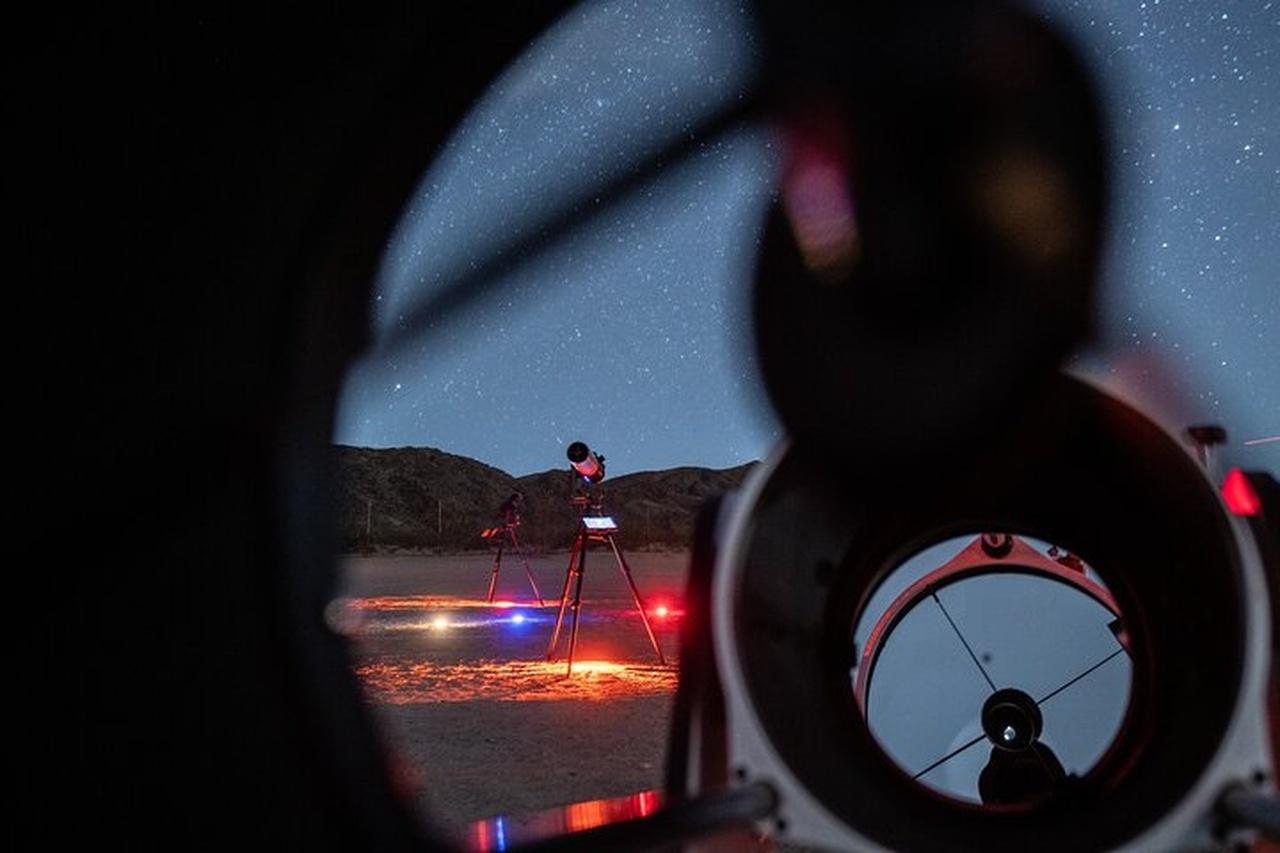
- An astronomer guide and pre-programmed deep-sky telescopes
- A walk through a scale model of the solar system at twilight
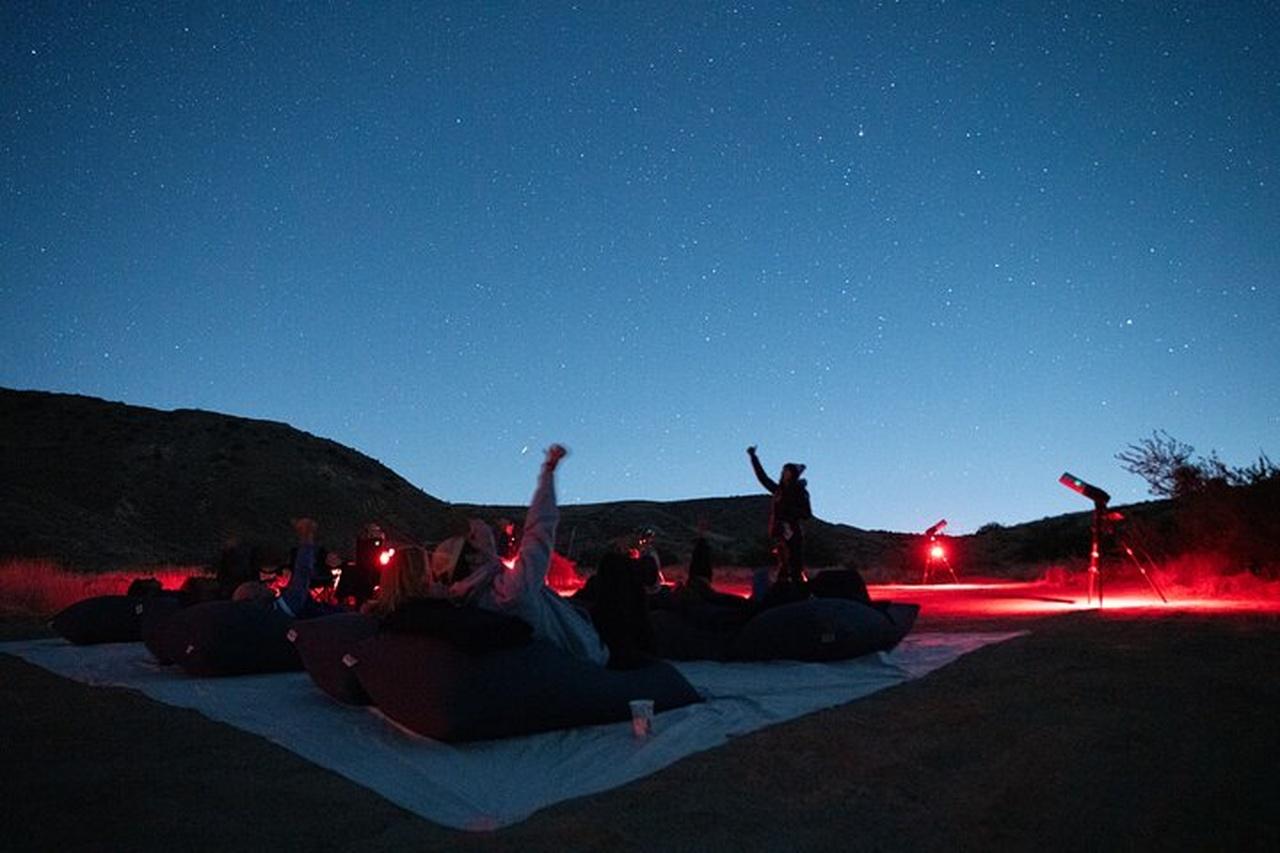
- Your own Yogibo lounger, blankets and astro-binoculars
- Hot chocolate, coffee or tea
- Deep-space photos to take home
What's Included
- Telescopes
- Yogibo lounger
- Astronomer guide
- Astro-binoculars
- Blankets
- Hot beverage station
- Deep space photography
How a Joshua Tree Stargazing Tour Works
From the directions to the telescopes.
Pick a Moonless Night
The night calendar on this page lists the next new moons; the month chart shows when the Milky Way core is up.
Download the Directions
The operator sends directions after booking. There is no cell service or restroom at the observation site, so save them before you leave.
Drive to the Site
Transport is not included on any of the three tours; bring warm layers, as the desert cools fast after sunset.
Telescopes and Loungers
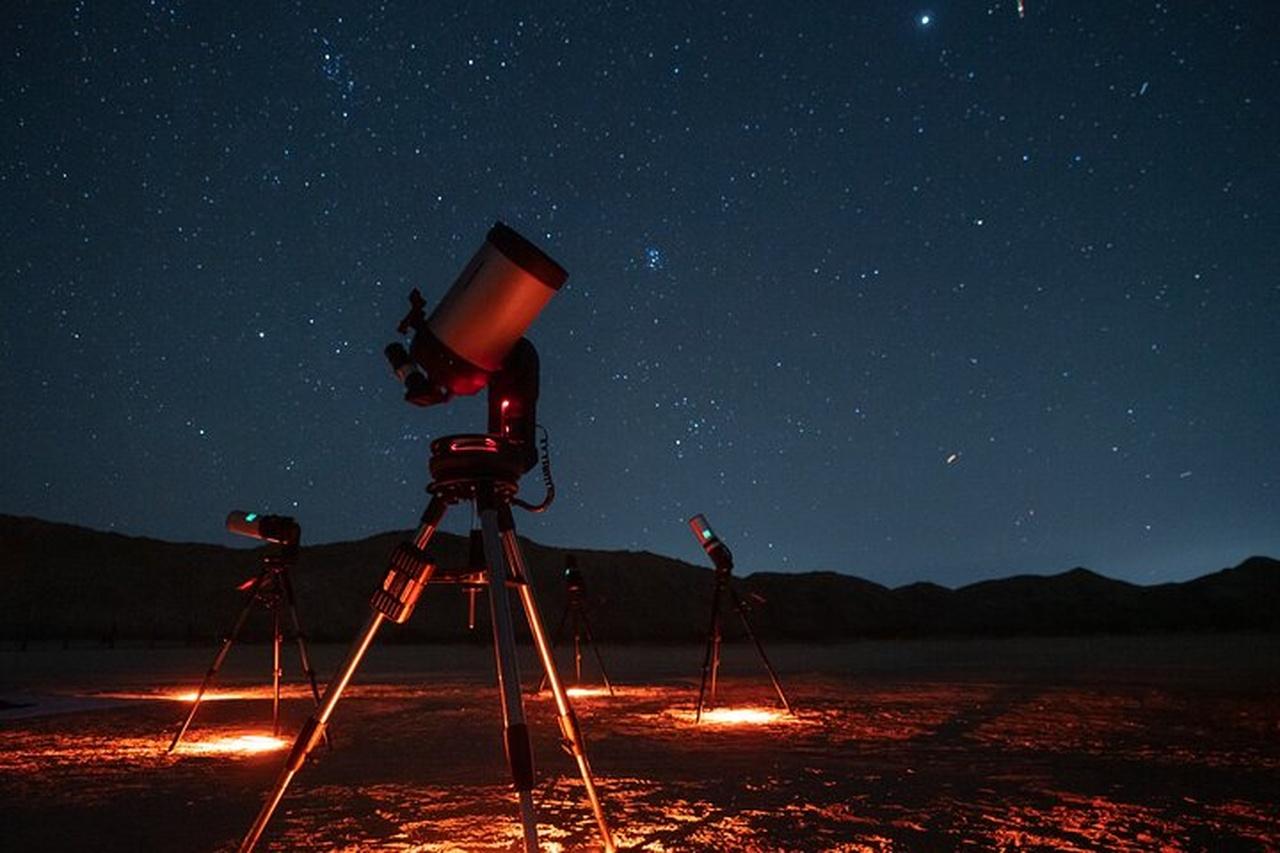
The astronomer points out the constellations with a laser, then lines up nebulae, star clusters, galaxies and the planets in season.
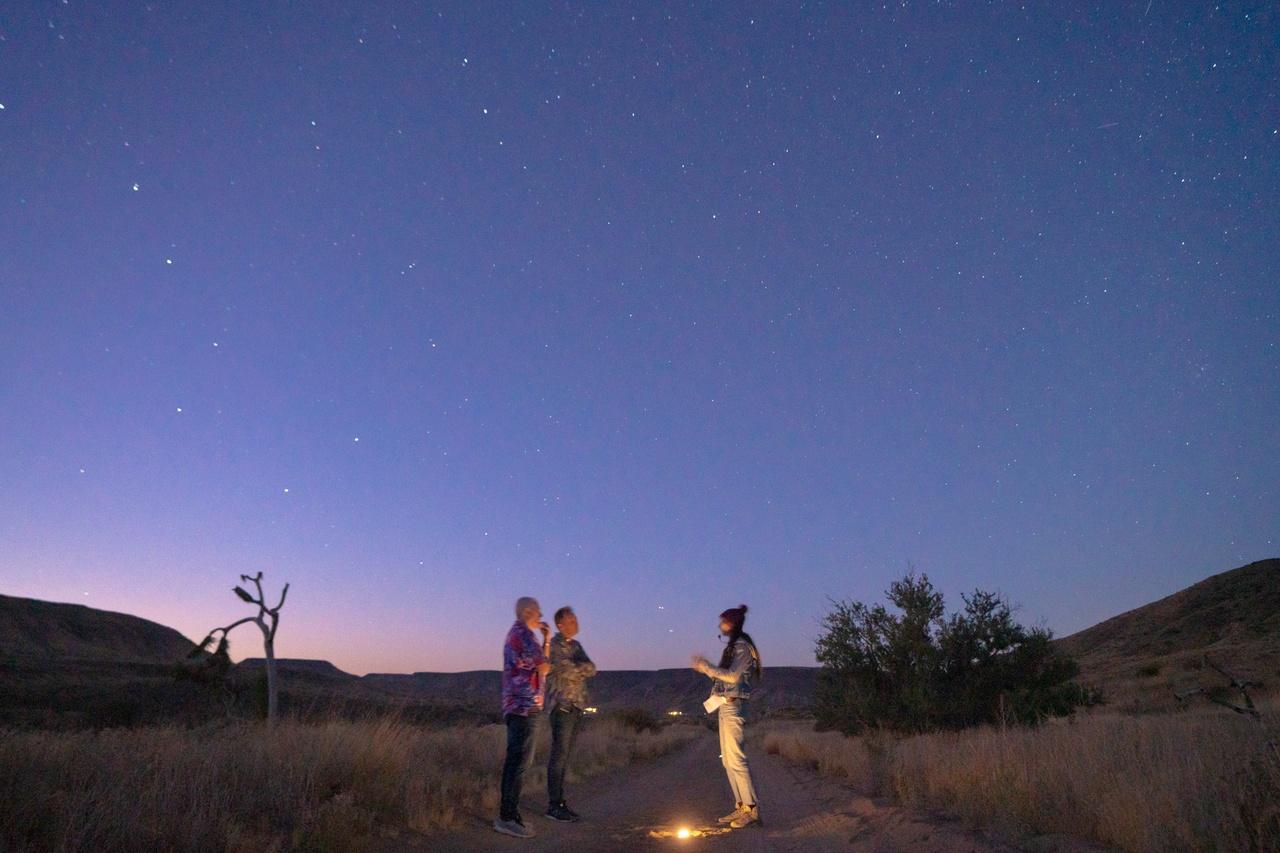
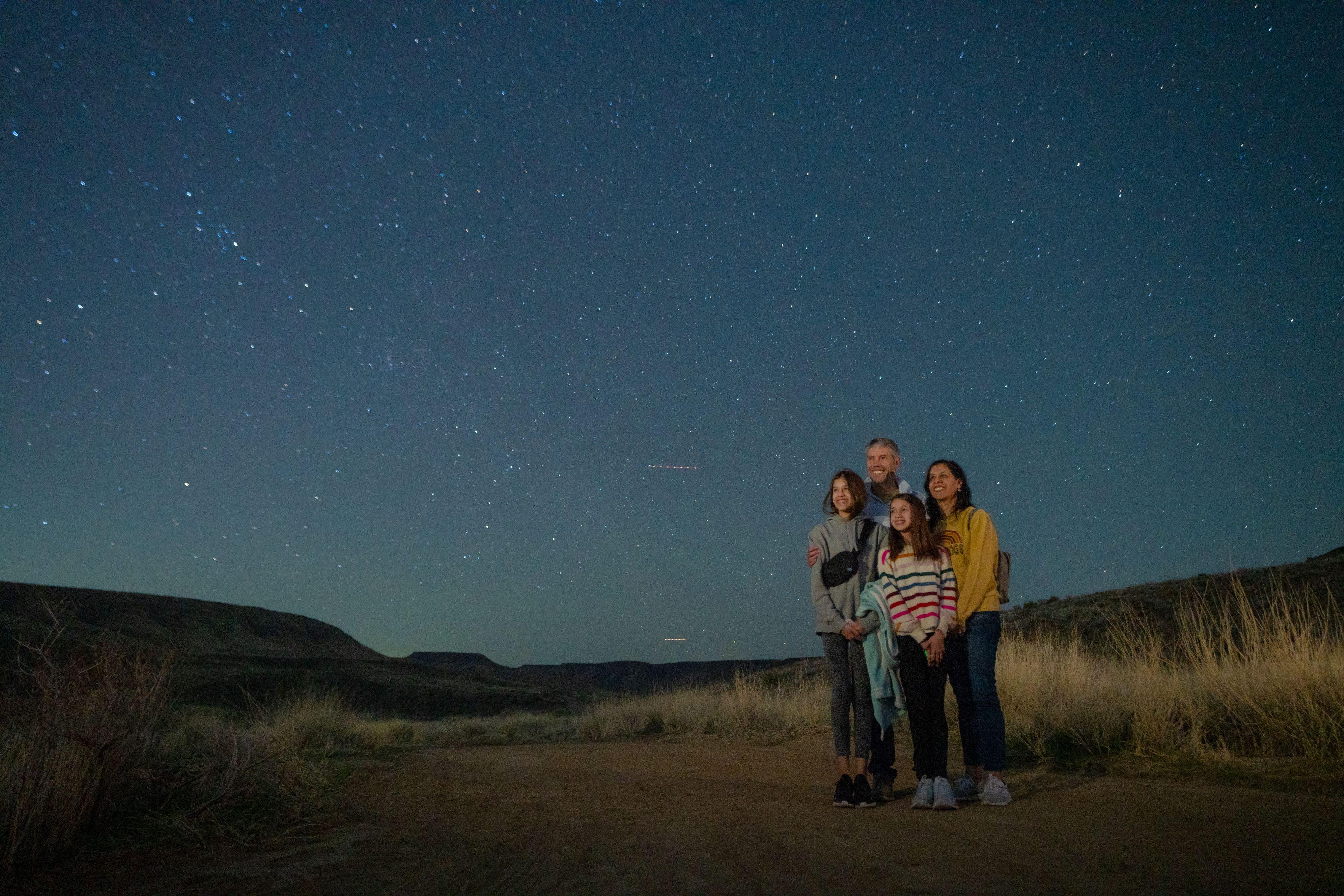
Photo Gallery
Joshua Tree After Dark
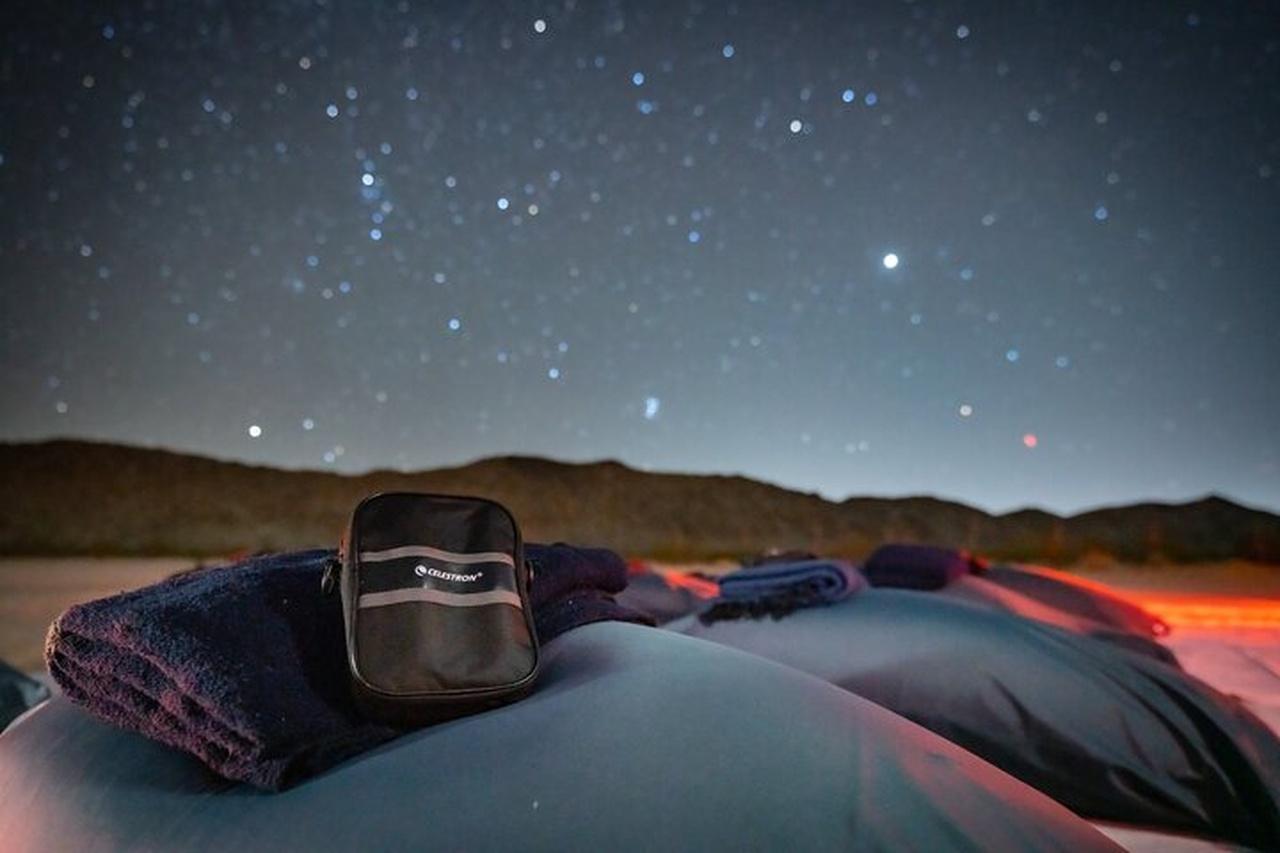
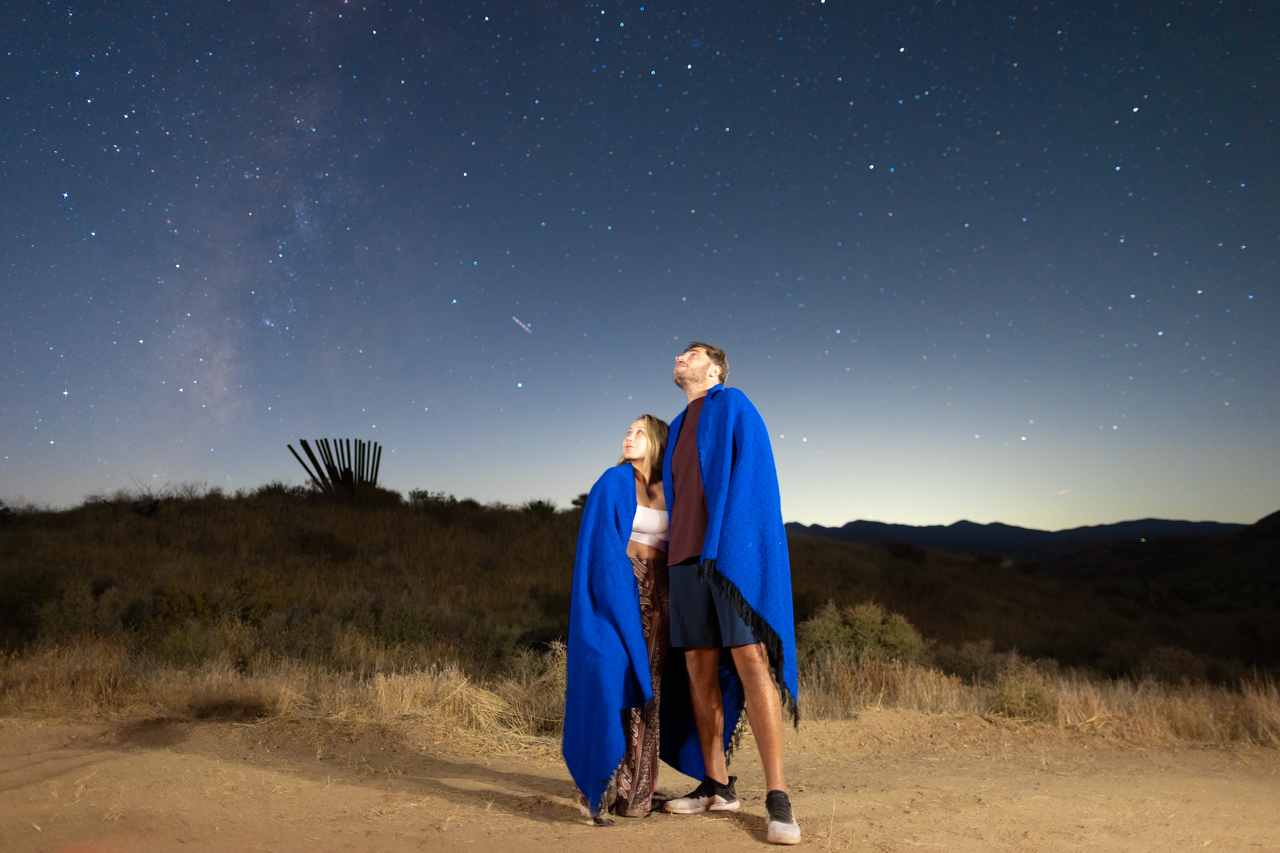
The desert, the telescopes and the night sky over the Mojave.
Book Your Experience
Check Availability & Prices
Select your preferred date and time. Cancel up to 2 days in advance for a full refund.
What the Tour Brings, and What You Bring
Stargazing Joshua Tree includes
- Telescopes
- Yogibo lounger
- Astro-binoculars
- Blankets
- Hot beverage station
- Deep space photography
From the tour's GetYourGuide listing, checked October 2026.
Bring
- Warm layers, a hat and gloves: the night is colder than the day, in every month
- A red light, or a phone set to a red screen: white light ruins your night vision
- Binoculars rather than your own telescope: they need no setup and show far more than your eyes
- Closed shoes for uneven ground in the dark
Month by month
When the Sky Is Darkest at Joshua Tree
Night cloud, Milky Way core hours and the next new moon in each month, at the observing site (the nearest disclosed point).
| Month | Night cloud | Full darkness | Milky Way core | Next new moon |
|---|---|---|---|---|
| January | 39% | 10.9 h | 0 h | 7 Jan 2027 |
| February | 38% | 10.2 h | 0 h | 6 Feb 2027 |
| March | 35% | 9.2 h | 0.7 h | 8 Mar 2027 |
| April | 30% | 8 h | 2 h | 6 Apr 2027 |
| May best | 23% | 6.8 h | 3.3 h | 6 May 2027 |
| June best | 16% | 6.1 h | 4.2 h | 4 Jun 2027 |
| July best | 27% | 6.5 h | 3.4 h | 3 Jul 2027 |
| August | 21% | 7.6 h | 1.9 h | 2 Aug 2027 |
| September | 16% | 8.8 h | 0.7 h | 29 Sep 2027 |
| October | 22% | 9.9 h | 0 h | 29 Oct 2027 |
| November | 31% | 10.7 h | 0 h | 8 Nov 2026 |
| December | 40% | 11.1 h | 0 h | 8 Dec 2026 |
Night cloud: NASA POWER climatology (CLOUD_AMT_NIGHT), January 2001 to December 2025, at the observing site's grid cell (924 m). Darkness and Milky Way hours: computed for 2027 with JPL DE421 via Skyfield (sun more than 18° below the horizon; galactic centre at least 20° up). No night temperatures shown: site elevation not published. Checked October 2026.
What you will see
The Sky Over Joshua Tree, Month by Month
Computed star charts for the observing site on new-moon nights, at the hour the tours are out. The Milky Way is drawn schematically.


Night calendar
Dark Nights Coming Up at Joshua Tree
The nights around a new moon are the darkest of the month. Dates are local to the observing site.
Next new moons
- 8 November 2026
- 8 December 2026
- 7 January 2027
- 6 February 2027
- 8 March 2027
- 6 April 2027
Meteor showers
- Leonids, peak night 17 November 2026 some moonlight
- Geminids, peak night 14 December 2026 some moonlight
- Ursids, peak night 22 December 2026 bright moon
- Quadrantids, peak night 3 January 2027 dark moon
- Lyrids, peak night 22 April 2027 bright moon
- Eta Aquariids, peak night 6 May 2027 dark moon
Milky Way season
Core season April to August. Best months: May, June and July.
Lunar eclipses
- 17 August 2027, 00:14 local: penumbral (a faint shading, easy to miss)
New moons, darkness and eclipse visibility: JPL DE421 via Skyfield. Meteor-shower peaks from the IAU Meteor Data Center's established-shower solar longitudes (Jopek & Kaňuchová); the peak night can shift by a day. Lunar eclipses: Eclipse Predictions by Fred Espenak, NASA/GSFC. Moon labels: under 25% lit = dark moon, under 60% = some moonlight. Checked October 2026.
Tour or on your own?
Joshua Tree on Your Own, or With a Tour?
- Do you know which side of the park is darkest, and can you drive it at night?
- Do you want to see galaxies and nebulae through a telescope, or will your eyes and binoculars do?
- Are you comfortable in the desert after dark with no cell service?
Yes to all three
Go on your own
Drive to a pull-out on the park's eastern side, away from the Coachella Valley glow, and look up; you pay the park entrance fee.
No to any of them
Book the tour
An astronomer, deep-sky telescopes, loungers, blankets and hot drinks; the hike adds a certified park guide.
Check dates →Telescope Night vs. Starlight Hike vs. Soundbath
Three Joshua Tree night experiences side by side. Prices as of October 2026.
| Feature | TELESCOPES Stargazing Joshua Tree, Professional Stargazing Experience | Joshua Tree Connectivity, Starlight Hike | Joshua Tree Connectivity, Soundbath Under the Stars |
|---|---|---|---|
| Starting Price | From US$189/per person | From US$95 | From US$95 |
| Rating | 5.0/5 (12 reviews) | New, no reviews yet | 4.8/5 (60 reviews) |
| Length | 2 hours | 2 hours | 2+ hours |
| Telescopes | Deep-sky telescopes, astro-binoculars | No | No |
| Setting | Observation site sent after booking | A trail in the national park | A secluded spot, directions sent the week of the session |
| Comfort | Yogibo loungers, blankets, hot drinks | On foot; bring water and a flashlight | Mats and blankets |
| Age Limit | 4 and up, 18 guests at most | 10 and up | Not for under 5 |
| Free Cancellation | Up to 2 days ahead | Up to 24 hours ahead | Up to 24 hours ahead |
| Best For | Seeing galaxies and planets | Walking the park at night | A relaxing night out |
| Check Availability | View the hike | View the soundbath |
Other Joshua Tree Night Experiences
A guided starlight hike in the national park, and a meditation and gong soundbath under the night sky.
The Joshua Tree Stargazing Guide
Which Joshua Tree Stargazing Tour to Book
Three nights compared on telescopes, setting and price.
The Joshua Tree stargazing tour to book is Stargazing Joshua Tree’s Professional Stargazing Experience: two hours with an astronomer guide, pre-programmed deep-sky telescopes, Yogibo loungers, blankets and hot drinks, from US$189 a person as of October 2026, rated 5.0 from 12 reviews. For a walk instead of telescopes, Joshua Tree Connectivity’s starlight hike goes into the national park itself, from US$95; it is new and has no reviews yet.
Check Joshua Tree stargazing dates →
Why Joshua Tree
Joshua Tree National Park was designated an International Dark Sky Park, silver tier, in July 2017. Its sky is not even: the western edge picks up the glow of the Coachella Valley, and the eastern side of the park is darker. The telescope tour meets in Yucca Valley, on that brighter north-west side, and sends its exact observing site after booking. The sky card quotes the published reading at Black Rock Campground, the measured point nearest that meeting place, and the National Park Service’s own Bortle class for it.
The Joshua Tree tours compared
| Tour (operator) | From | Rating (reviews) | Length | Telescopes | Transport |
|---|---|---|---|---|---|
| Professional Stargazing Experience (Stargazing Joshua Tree) | US$189 | 5.0 (12) | 2 hours | Yes, deep-sky telescopes | Make your own way |
| Starlight Hike in Joshua Tree National Park (Joshua Tree Connectivity) | US$95 | New | 2 hours | No; a guided walk | Make your own way |
| Soundbath Under the Stars (Joshua Tree Connectivity) | US$95 | 4.8 (60) | 2+ hours | No; meditation and a gong | Your own vehicle |
Prices, ratings and review counts as of October 2026; operators change prices, so treat them as the shape of the market, not a quote.
Who each one suits
Pick by what you want from the night:
Telescopes
Stargazing Joshua Tree
An astronomer, deep-sky telescopes, loungers and hot drinks; deep-space photos to take home. Ages 4 and up.
Check dates →A walk in the park
Starlight Hike
A certified park guide leads a sunset hike into the dark, Fridays and Saturdays. Ages 10 and up; park entrance fee extra.
See this hike →Relaxation
Soundbath Under the Stars
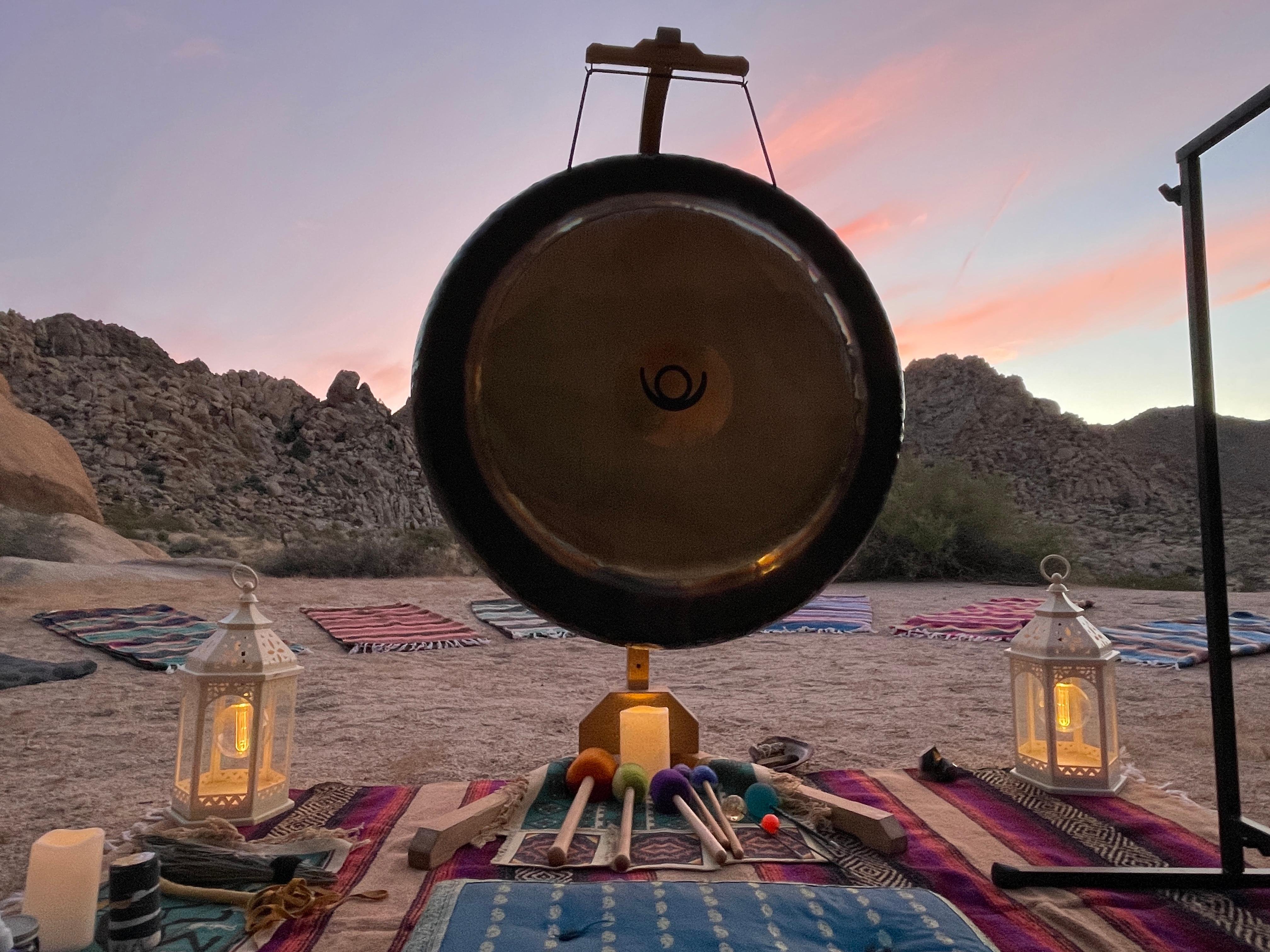
A guided meditation, then a 90-minute soundbath on a 36-inch gong, lying on mats under the sky.
See this session →Stargazing Joshua Tree starts with a walk through a scale model of the solar system at twilight, then the telescopes: nebulae, star clusters, the spiral arms of galaxies and, in season, Saturn’s rings and Jupiter. Guests must be able to stand for 30 minutes, and the site is not wheelchair accessible. If the weather cancels the night, you are rescheduled or refunded.
Joshua Tree Connectivity runs the starlight hike around sunset each Friday and Saturday all year, led by a park-certified guide; bring water, a flashlight and warm layers, and arrive 15 minutes early. It is not for children under 10, pregnant travellers or people with mobility impairments. The same operator’s soundbath sends exact directions in the week of your session.
Cold, the drive and the moon
Cold. The desert loses its heat quickly after sunset; every operator lists warm clothing.
The drive. None of the three includes transport. The telescope site has no cell service, so download the directions first.
The moon. The night calendar lists the next new moons for Joshua Tree.
For the next desert dark-sky park to the north, see Death Valley stargazing; for camera settings, how to photograph the Milky Way.
Guest Reviews
What Recent Guests Say
5.0/5
from 12 verified reviews
"I had amazing and gorgeus meditation activity yesterday. I advice to try this experience who wants to unite with spirit of gaia and universe while passing gates of sounds and cacao"
"Outstanding access to telescopes and a very informative and professional presentation. Learned so much"
Read all 12 verified reviews
See All ReviewsPick a Night, See the Price
Many stargazing tours on this site move you to another night if cloud cancels the session. Check the terms of the tour you pick before you pay. Starting from US$189 per person.
Check AvailabilityFAQ: Stargazing in Joshua Tree
Where to go, when, and which tour, with prices as of October 2026.
Yes: Joshua Tree National Park became an International Dark Sky Park, silver tier, in July 2017. The western edge picks up the Coachella Valley glow; the eastern side is darker. The sky card shows the published reading nearest the telescope tour.
The eastern side of the park, away from the Coachella Valley glow. The telescope tour is not there: it meets in Yucca Valley, on the park's brighter north-west edge, and sends its site's directions after booking; there is no cell service there, so download them first. See the calendar.
On a moonless night, in the months when the Milky Way core is up after dark. The month chart on this page shows cloud, darkness and the core for every month. See the month-by-month sky.
Yes, if you want telescopes: on your own you see the stars, not the galaxies and nebulae. Stargazing Joshua Tree costs from about US$189 as of October 2026, rated 5.0 from 12 reviews, with free cancellation up to 2 days ahead. See the tour or on your own questions.
No: all three tours on this page meet at the site. The starlight hike also leaves the national park entrance fee to you. Compare them in the guide.
Yes, on a guided starlight hike. Joshua Tree Connectivity runs one around sunset each Friday and Saturday all year, from about US$95 as of October 2026, for ages 10 and up. See the hike card.
Warm layers, even after a hot day: the desert cools fast after sunset. Bring water and, for the hike, comfortable shoes and a flashlight. Read what to wear stargazing.
≈ Bortle 4, estimated. Estimated from 21.11 mag/arcsec² measured by the National Park Service night-sky team, in Joshua Tree National Park's International Dark Sky Park application (June 2016, pp. 22 and 75) at Black Rock Campground, on the park's north-west edge about 10 km from the Yucca Valley meeting point (NPS camera, zenith; all-sky mean 20.23, Keys View 20.35, the park's brightest edge), 21 February 2006. The National Park Service puts it at Bortle 5, its own estimate (in its Black Rock Campground record, p. 22). Bortle is a visual scale; treat ±1 class as the uncertainty. The tours do not disclose their own observing site, so this is a published reading near where they meet, not a reading at the tour site. Checked October 2026.
May, June, July. Those months combine the most Milky Way core hours with the least night cloud at the observing site: the core stands at least 20° up for an hour or more of full darkness from April to August. Core hours computed with JPL DE421 via Skyfield; night cloud from NASA POWER (2001-2025), checked October 2026.
8 November 2026, 8 December 2026, 7 January 2027. The nights either side of a new moon are the darkest of the month. Dates are local, computed with JPL DE421 via Skyfield, checked October 2026.
About 28% night cloud cover on average across the year. The clearest month is June (16%), the cloudiest December (40%). NASA POWER climatology, 2001-2025, checked October 2026.
Still have questions? Email us at info@beststargazing.com
Night-cloud and night-low climatology: NASA POWER Project, January 2001 to December 2025 · Tonight's cloud: data from MET Norway (CC BY 4.0) · Moon, darkness and Milky Way geometry: JPL DE421 via Skyfield · Lunar eclipses: Eclipse Predictions by Fred Espenak, NASA/GSFC · Meteor showers: IAU Meteor Data Center list of established showers · Sky data checked October 2026.