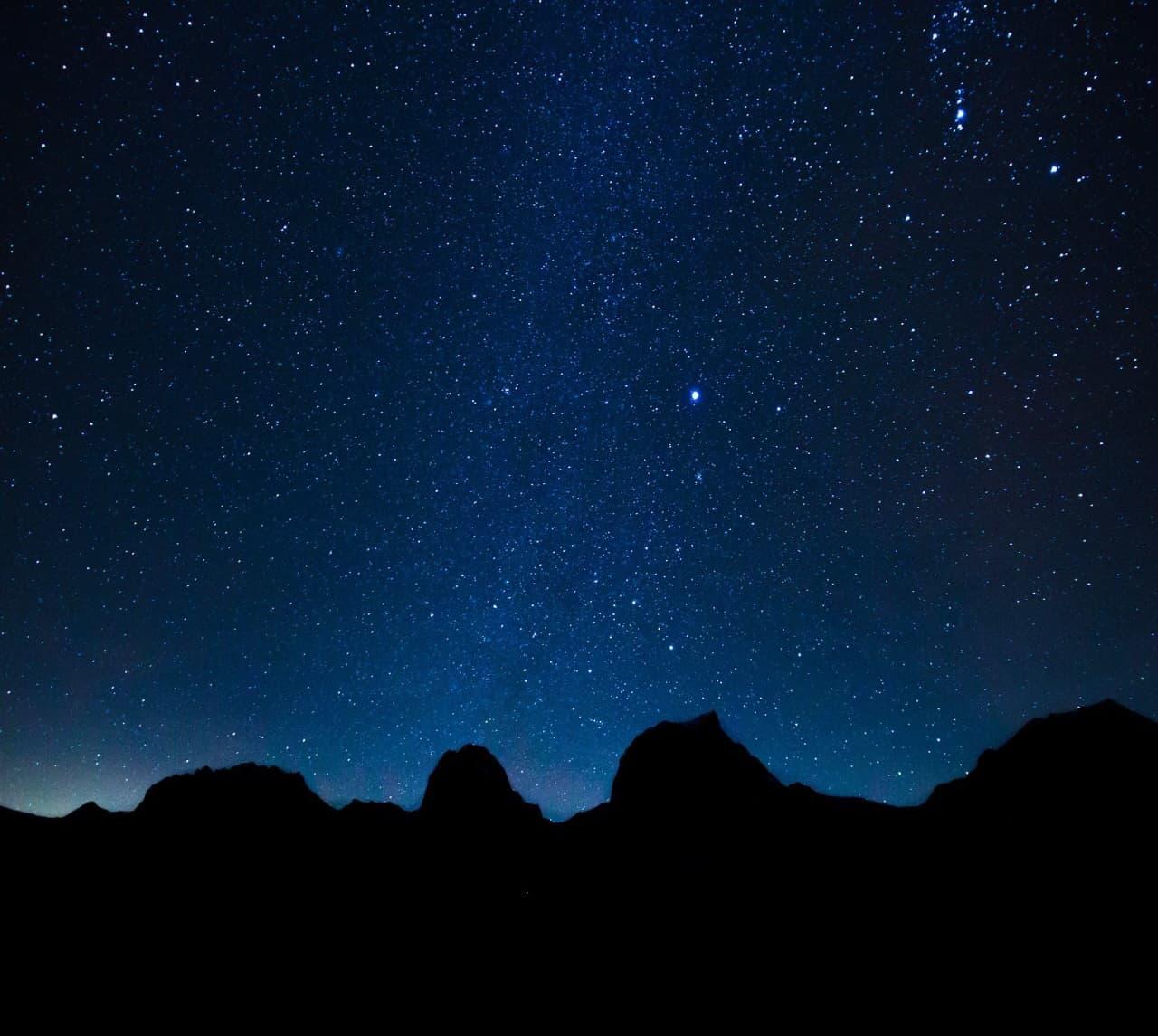
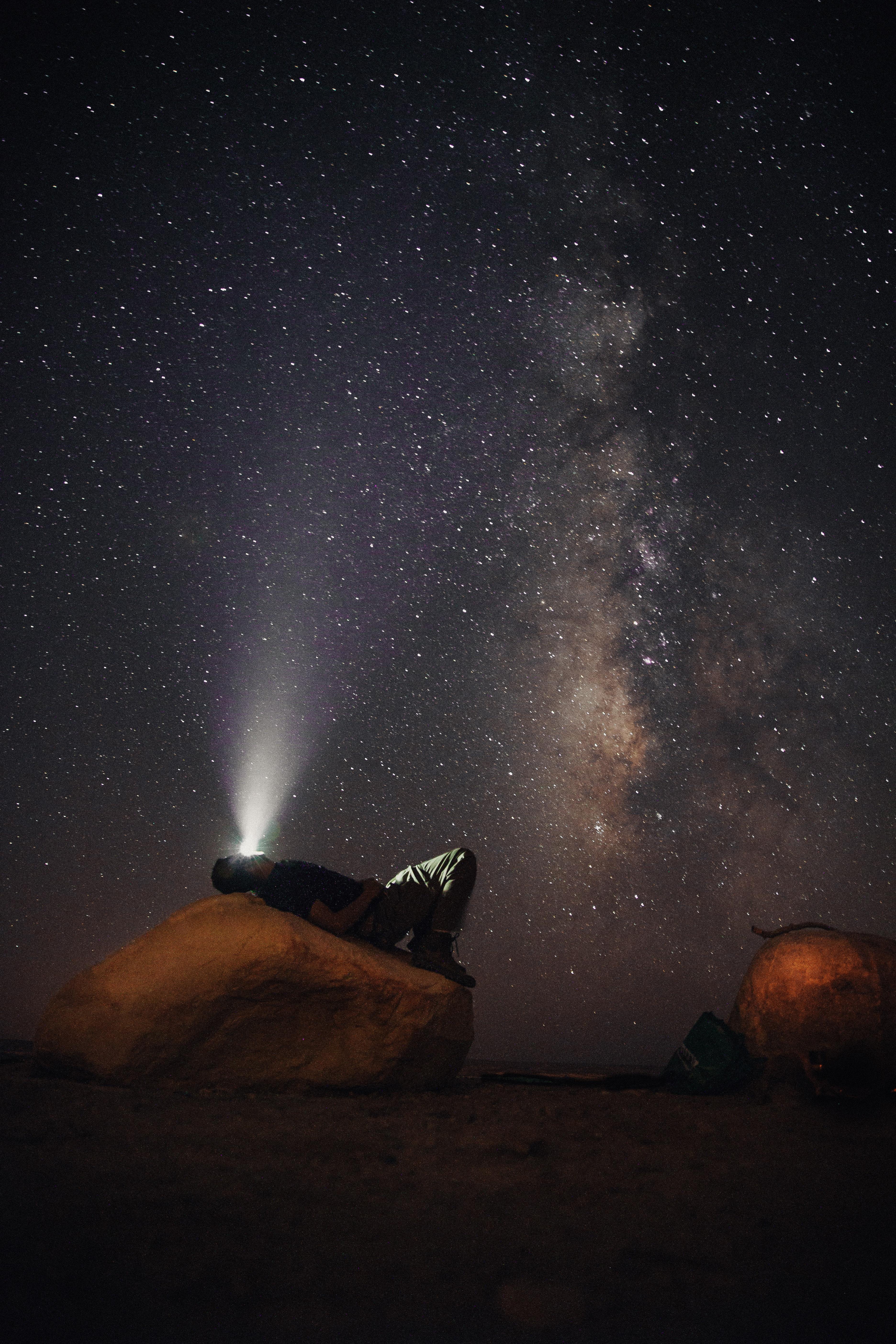
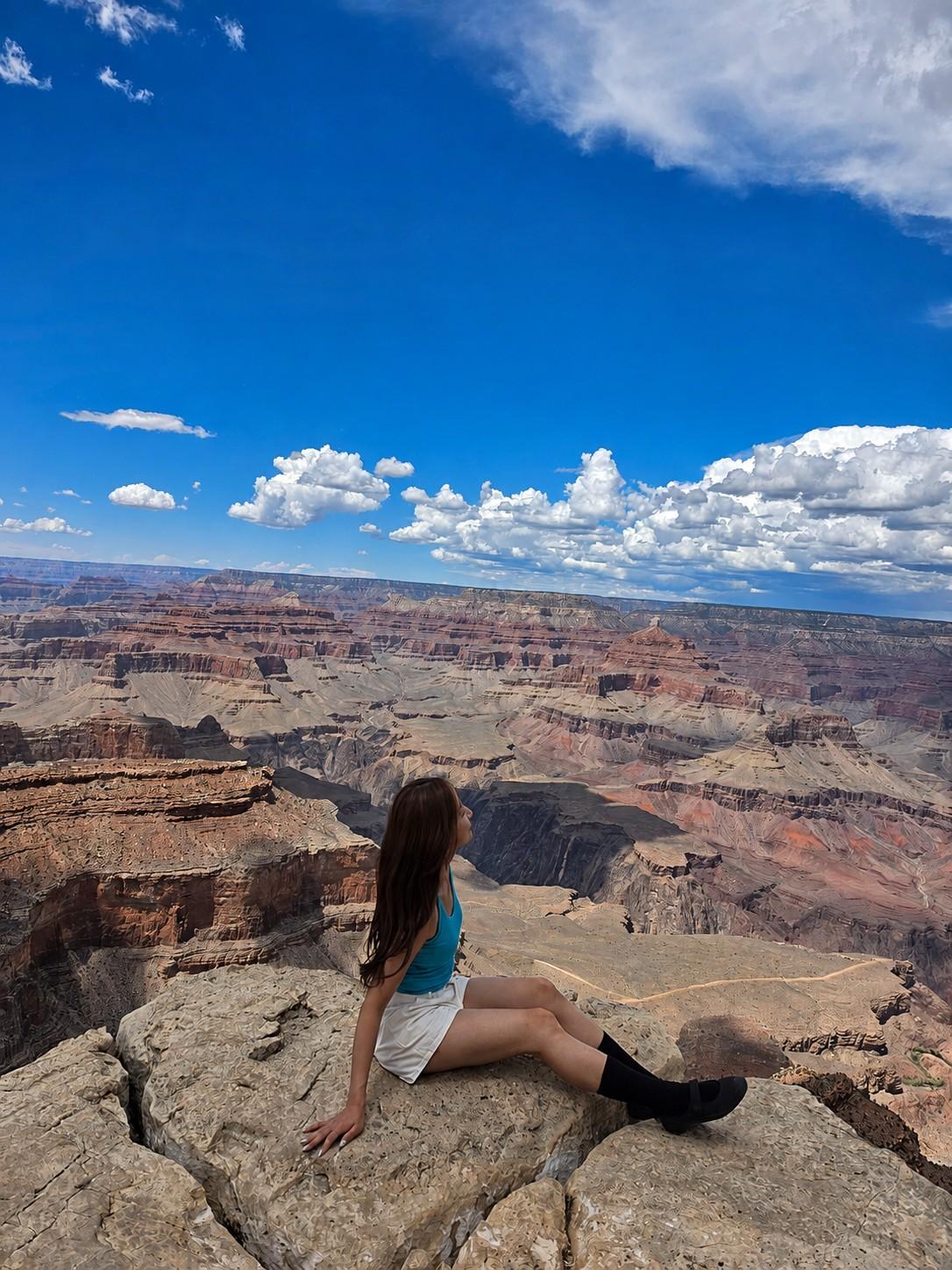
"The Death Valley tour was fantastic! The tour guide, Andrew, provided a lot of information. He also delighted me with his sense of humor. He drove us safely and comfortably. I always felt safe. He also took beautiful photos and helped us photograph the Milky Way. This tour is breathtaking, and I can recommend it 100%!!"
CHECK THE SKY
Cloud decides the night
—
Cloud over tonight’s dark hours
—
Moon tonight
—
Full darkness tonight
Forecast cloud for Amargosa Valley, Nevada · month-by-month sky · checked · data from MET Norway
Sky brightness
No published measurement
None published for this site. Checked October 2026.
Bortle class (est.)
Not estimated
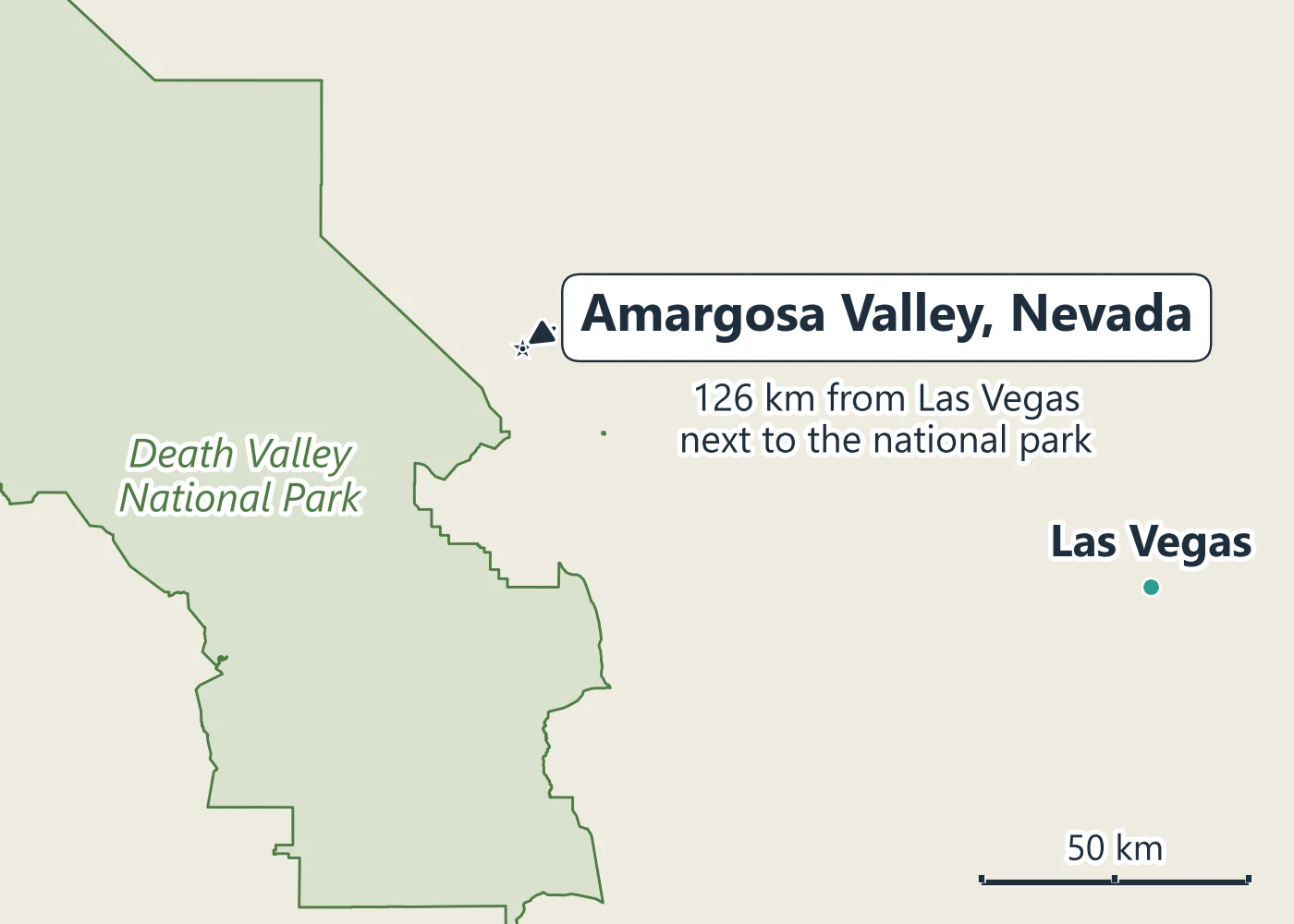
No sky-brightness measurement has been published for Amargosa Valley, Nevada. The tours observe outside Death Valley National Park, a Gold Tier International Dark Sky Park (DarkSky International, 2013). No Bortle class is estimated from satellite data.
Dark-sky designation
International Dark Sky Park, Gold Tier
The tours observe outside Death Valley National Park, a Gold Tier International Dark Sky Park (DarkSky International, 2013). Source, checked October 2026.
Elevation
Not published
No elevation published for the stargazing stop. Checked October 2026.
Best months for the Milky Way
May, Jun, Jul
Most core hours above 20° in full darkness, weighted by night cloud (core season April to August). Computed with JPL DE421 and NASA POWER, checked October 2026.
Death Valley National Park · Amargosa Valley · From Las Vegas
Death Valley Stargazing Tours: Sunset in the Park, Then the Desert Sky
The Death Valley tours leave the Strip around midday, see Badwater and Dante's View, watch the sunset, then stargaze after dark before the drive back. The park is a Gold Tier International Dark Sky Park; the featured tour does not name where it stops for the stars, and two others observe in Amargosa Valley, just outside the park.
From
US$249
per person
Free cancellation
- 4.8 / 5 324+ Reviews
- 10 Dark-Sky Places Compared on This Site
- Free Cancellation
The Experience
What the Death Valley Sunset and Starry Night Tour Includes
About 12 hours. Under-75s in good health only. Stargazing starts about 90 minutes after sunset and is not possible with a full or bright moon.
Highlights
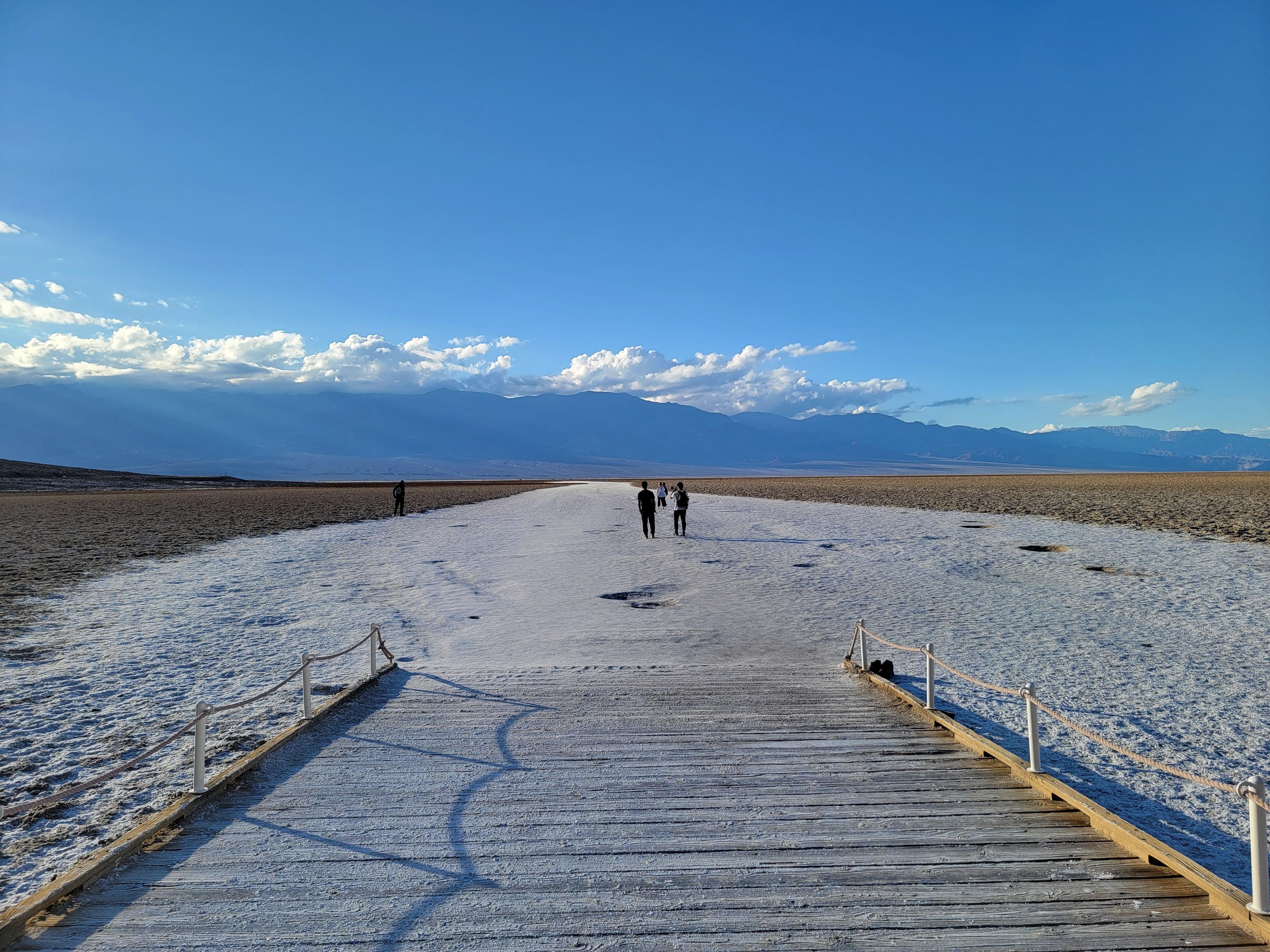
- Badwater Basin, 86 metres below sea level
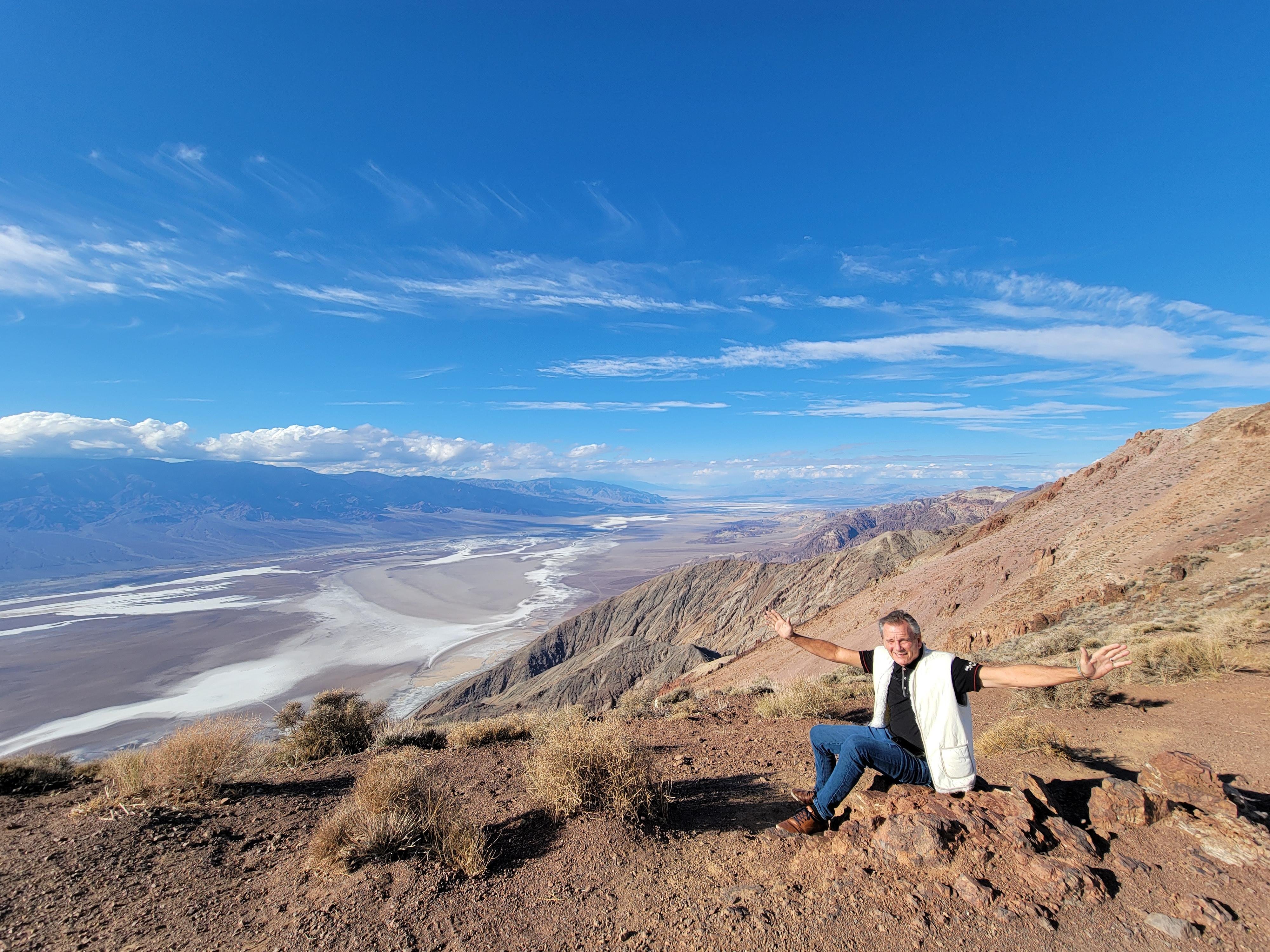
- Dante's View, Furnace Creek and the park by day
- Sunset in Death Valley, then stargazing after dark
- Pickup and drop-off at Strip hotels
- Park admission and bottled water included
What's Included
- Pickup & Drop-off at Hotels on the Las Vegas Strip
- National Park Admission Fees & Taxes
- Unlimited Bottled Water
How a Death Valley Stargazing Tour Works
From the Strip pickup to the stars and the drive home.
Pick a Dark Night
Book near the new moon: the operators say a full or bright moon leaves few stars. The night calendar on this page lists the dates.
Pickup on the Strip
The guide confirms the pickup the day before. It moves with the sunset, from about 8 am to 1:30 pm, and late guests count as no-shows.
The Park by Day
Dante's View, Furnace Creek, Badwater Basin and, on some tours, Artists Palette or Zabriskie Point for the sunset.
Stars After Dark
About 90 minutes after sunset the tour stops to stargaze, some in Amargosa Valley just outside the park, then drives back to Las Vegas.
Photo Gallery
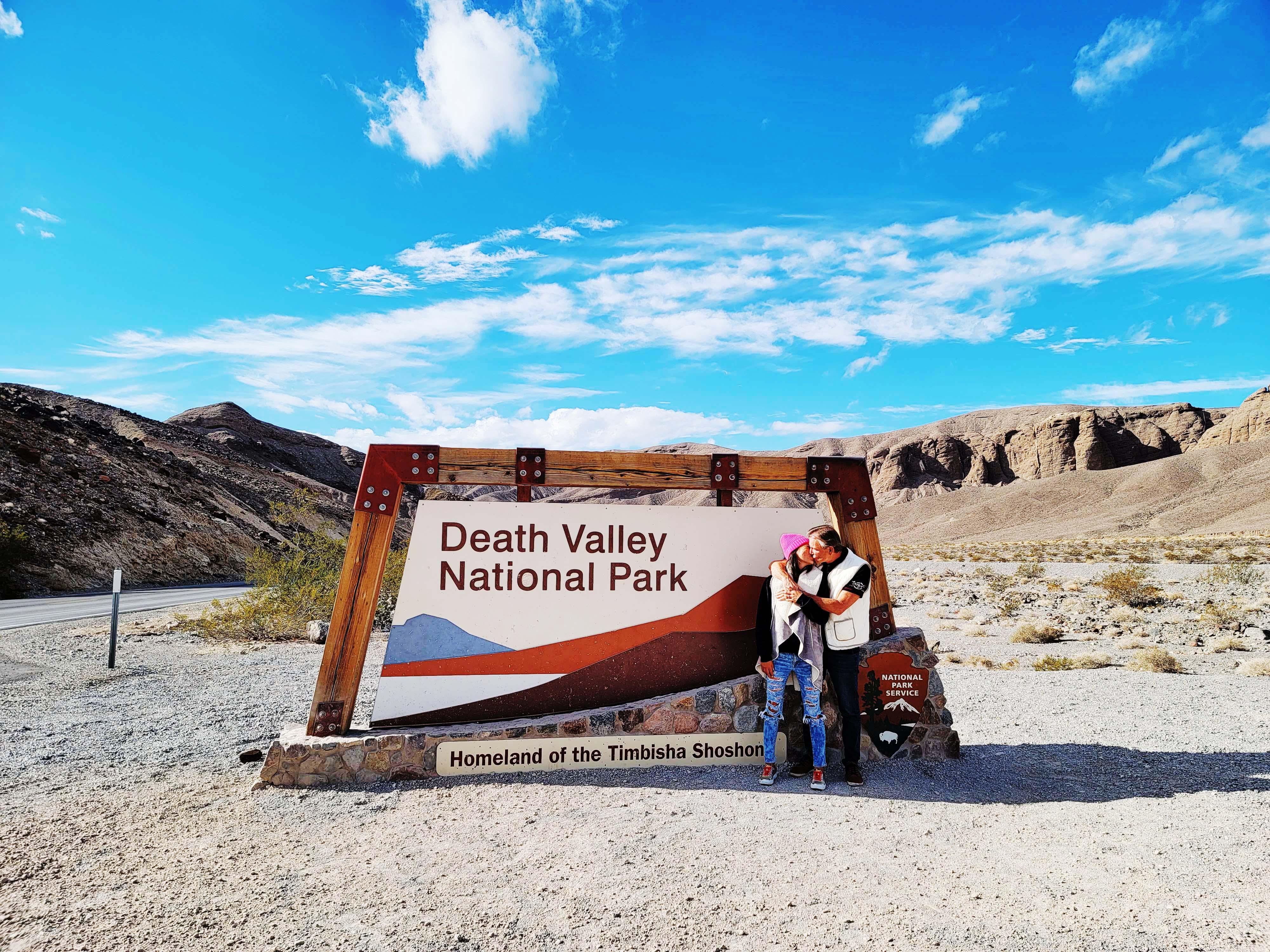
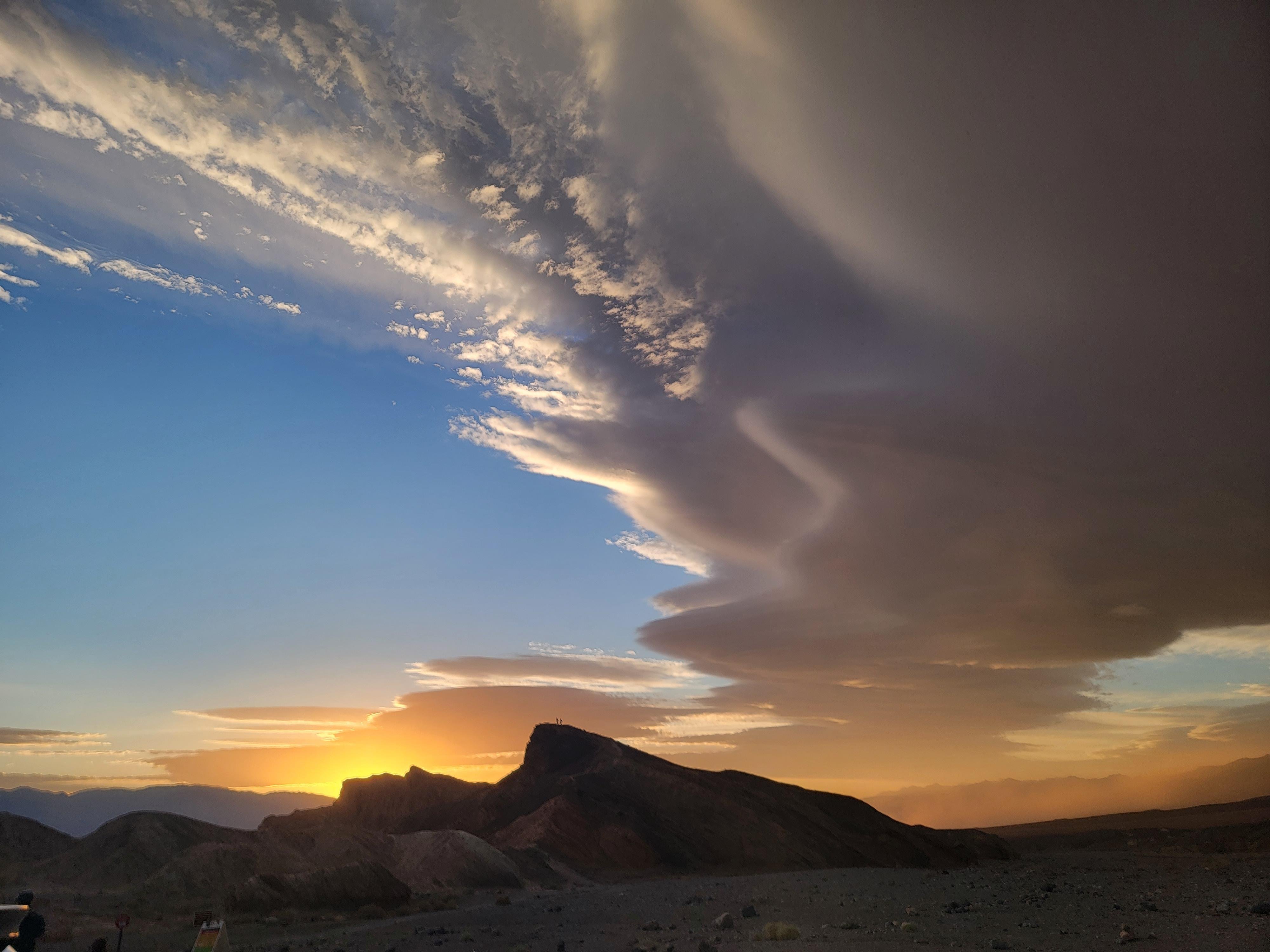
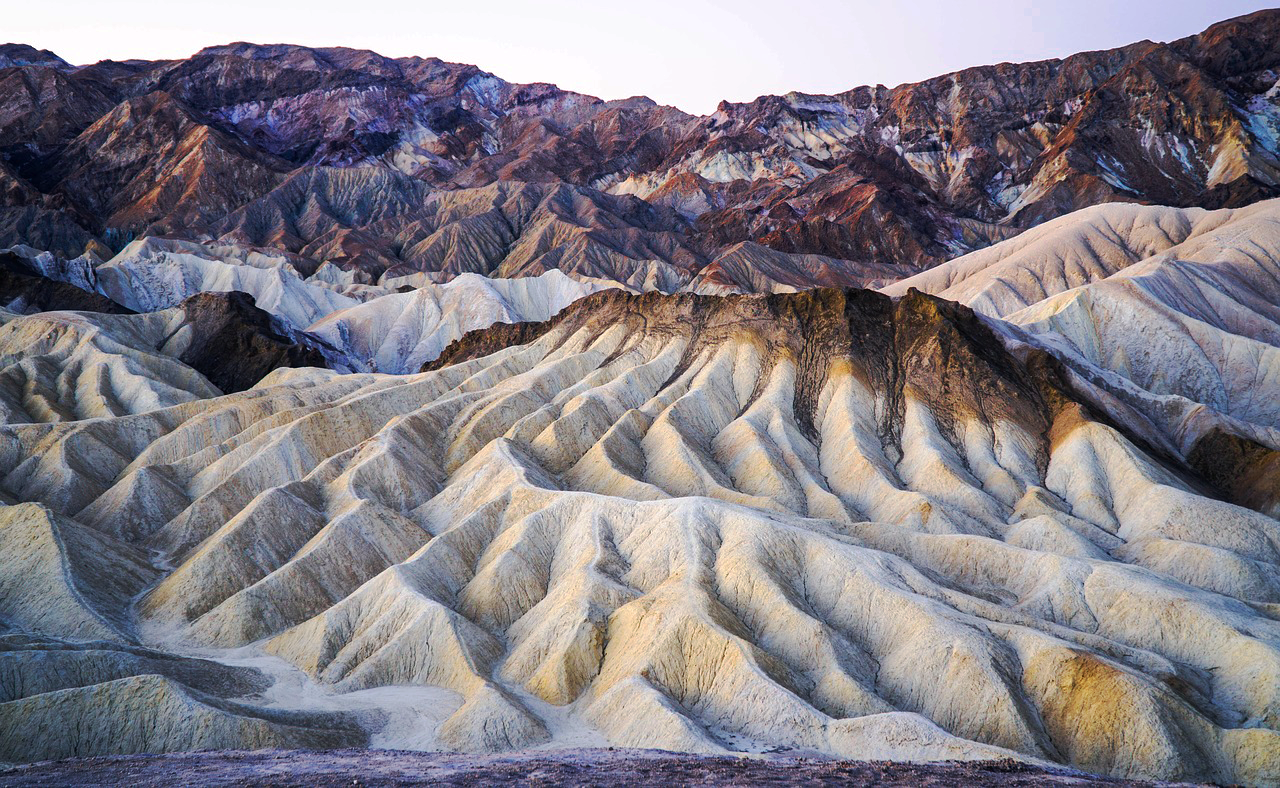
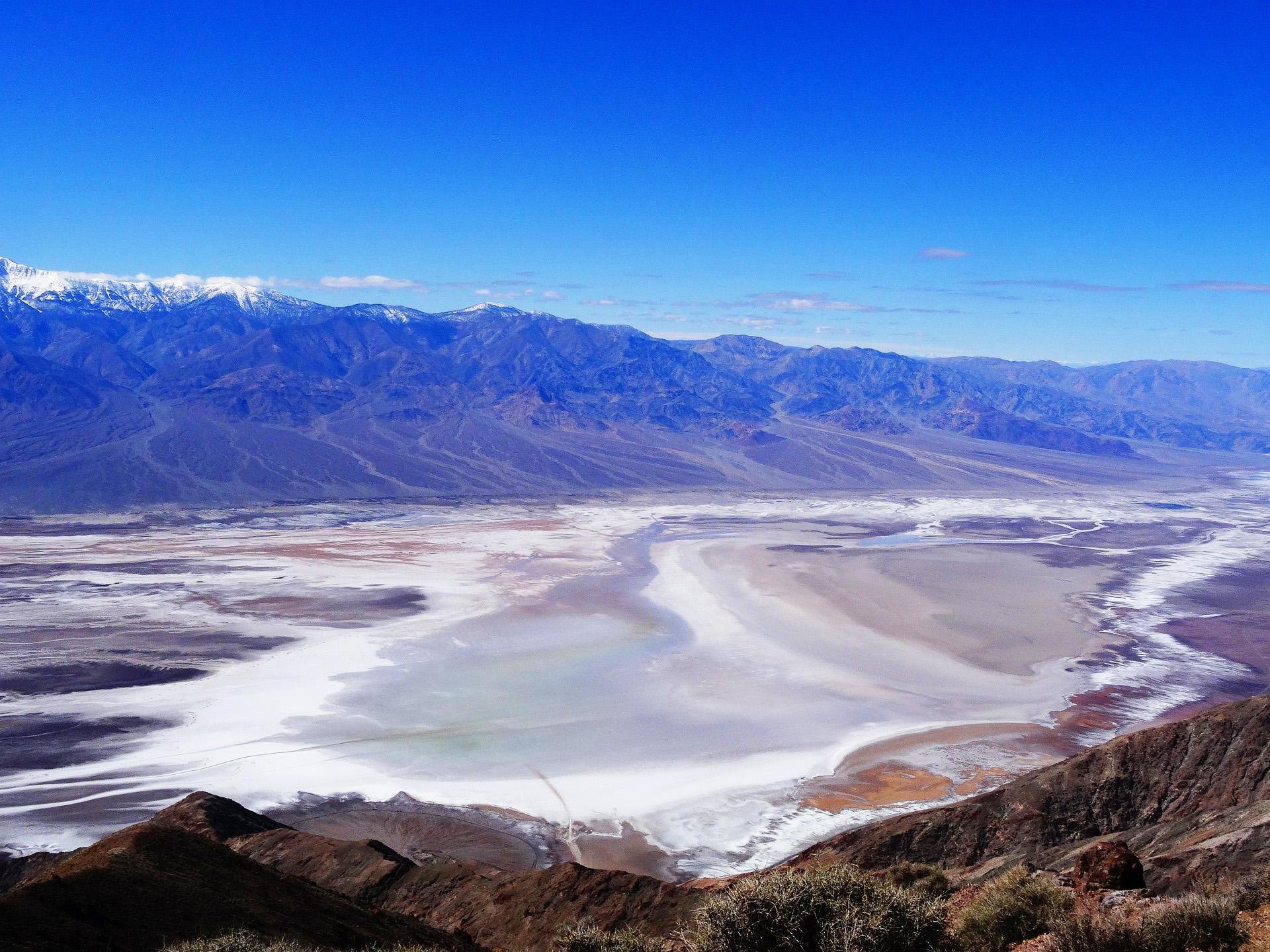
Death Valley, Day to Dark
Salt flats, badlands at sunset and the desert sky.
Book Your Experience
Check Availability & Prices
Select your preferred date and time. Cancel up to 24 hours in advance for a full refund.
What the Tour Brings, and What You Bring
Mytourstory LLC includes
- Pickup & Drop-off at Hotels on the Las Vegas Strip
From the tour's GetYourGuide listing, checked October 2026.
Bring
- Warm layers, a hat and gloves: the night is colder than the day, in every month
- A red light, or a phone set to a red screen: white light ruins your night vision
- Binoculars rather than your own telescope: they need no setup and show far more than your eyes
- Closed shoes for uneven ground in the dark
Month by month
When the Sky Is Darkest at Death Valley
Night cloud, Milky Way core hours and the next new moon in each month, at the observing site.
| Month | Night cloud | Full darkness | Milky Way core | Next new moon |
|---|---|---|---|---|
| January | 46% | 11 h | 0 h | 7 Jan 2027 |
| February | 47% | 10.2 h | 0 h | 6 Feb 2027 |
| March | 46% | 9.1 h | 0.3 h | 8 Mar 2027 |
| April | 42% | 7.8 h | 1.5 h | 6 Apr 2027 |
| May best | 37% | 6.4 h | 2.8 h | 6 May 2027 |
| June best | 28% | 5.7 h | 3.5 h | 4 Jun 2027 |
| July best | 40% | 6.1 h | 2.8 h | 3 Jul 2027 |
| August | 33% | 7.3 h | 1.4 h | 2 Aug 2027 |
| September | 23% | 8.7 h | 0.3 h | 29 Sep 2027 |
| October | 31% | 9.9 h | 0 h | 29 Oct 2027 |
| November | 40% | 10.8 h | 0 h | 8 Nov 2026 |
| December | 50% | 11.2 h | 0 h | 8 Dec 2026 |
Night cloud: NASA POWER climatology (CLOUD_AMT_NIGHT), January 2001 to December 2025, at the observing site's grid cell (994 m). Darkness and Milky Way hours: computed for 2027 with JPL DE421 via Skyfield (sun more than 18° below the horizon; galactic centre at least 20° up). No night temperatures shown: site elevation not published. Checked October 2026.
What you will see
The Sky Over Death Valley, Month by Month
Computed star charts for the observing site on new-moon nights, at the hour the tours are out. The Milky Way is drawn schematically.


Night calendar
Dark Nights Coming Up at Death Valley
The nights around a new moon are the darkest of the month. Dates are local to the observing site.
Next new moons
- 8 November 2026
- 8 December 2026
- 7 January 2027
- 6 February 2027
- 8 March 2027
- 6 April 2027
Meteor showers
- Leonids, peak night 17 November 2026 some moonlight
- Geminids, peak night 14 December 2026 some moonlight
- Ursids, peak night 22 December 2026 bright moon
- Quadrantids, peak night 3 January 2027 dark moon
- Lyrids, peak night 22 April 2027 bright moon
- Eta Aquariids, peak night 6 May 2027 dark moon
Milky Way season
Core season April to August. Best months: May, June and July.
Lunar eclipses
- 17 August 2027, 00:14 local: penumbral (a faint shading, easy to miss)
New moons, darkness and eclipse visibility: JPL DE421 via Skyfield. Meteor-shower peaks from the IAU Meteor Data Center's established-shower solar longitudes (Jopek & Kaňuchová); the peak night can shift by a day. Lunar eclipses: Eclipse Predictions by Fred Espenak, NASA/GSFC. Moon labels: under 25% lit = dark moon, under 60% = some moonlight. Checked October 2026.
Tour or on your own?
Death Valley on Your Own, or With a Tour?
- Will you drive about two hours each way from Las Vegas, the last of it on dark desert roads at night?
- Can you go without phone signal in much of the park, and carry your own water?
- Will you find a pull-out away from car headlights and wait 90 minutes after sunset for full dark?
Yes to all three
Go on your own
Drive into Death Valley National Park for the sunset and stay for the dark: it is a Gold Tier International Dark Sky Park, and the sky costs only the park entrance.
No to any of them
Book the tour
Strip pickup, the park's sights by day, the park fee, a guide, and someone else driving the desert home at midnight.
Check dates →Mytourstory vs. EMOTION TRIP vs. Discover it Yourself
Three stargazing trips from Las Vegas side by side. Prices as of October 2026.
| Feature | MOST REVIEWED Mytourstory, Death Valley Sunset and Starry Night | EMOTION TRIP, Death Valley Sunset and Stargazing | Discover it Yourself, Stargazing in the Mountains |
|---|---|---|---|
| Starting Price | From US$249/per person | From US$249 | From US$100 |
| Rating | 4.8/5 (319 reviews) | 5.0/5 (29 reviews) | 4.9/5 (49 reviews) |
| Length | About 12 hours | About 12 hours | 5 hours |
| Where You Stargaze | After sunset on the route (site not named) | Amargosa Valley, Nevada | Lovell Canyon, Spring Mountains |
| By Day | Dante's View, Furnace Creek, Badwater | Dante's View, Badwater, Zabriskie Point | No; an evening trip |
| Included | Strip pickup, park fees, water | Strip pickup, fees, water | Telescope, chairs, firewood, snacks |
| Age Limit | Under 75, good health | 5 to 75 | Not stated |
| Free Cancellation | Up to 24 hours ahead | Up to 24 hours ahead | Up to 24 hours ahead |
| Best For | The full park day | Zabriskie Point at sunset | A short, cheaper night out |
| Check Availability | View EMOTION TRIP | View the campfire night |
Other Stargazing Trips From Las Vegas
Another Death Valley day with the sunset at Zabriskie Point, a campfire night in the Spring Mountains, and a 19-hour Grand Canyon run.
The Death Valley Stargazing Guide
Which Death Valley Stargazing Tour to Book
Eight trips from Las Vegas compared on route, stops, age limits and price.
The Death Valley stargazing tour with the longest record is Mytourstory’s sunset and starry night tour: Strip pickup, Dante’s View, Furnace Creek and Badwater Basin by day, the sunset, then stargazing after dark, with park fees and water included, from US$249 a person as of October 2026, rated 4.8 from 324 reviews. EMOTION TRIP runs a near-identical day with the sunset at Zabriskie Point, rated 5.0 from 29 reviews, from US$249.
Check Death Valley tour dates →
Why Death Valley
Death Valley National Park was named a Gold Tier International Dark Sky Park in February 2013, the top tier, and was described then as the largest dark sky park in the world. The lights of Las Vegas still show on its eastern horizon. Two of the tours on this page stargaze in Amargosa Valley, Nevada, just outside the park’s eastern edge, on the way back towards Las Vegas.
The Las Vegas stargazing trips compared
| Tour (operator) | From | Rating (reviews) | Length | Route | Age limit |
|---|---|---|---|---|---|
| Death Valley sunset and starry night (Mytourstory) | US$249 | 4.8 (324) | 12 hours | Dante’s View, Badwater, sunset, stars | Under 75 |
| Death Valley sunset and stargazing (EMOTION TRIP) | US$249 | 5.0 (29) | 12 hours | Zabriskie Point sunset, Amargosa Valley stars | 5 to 75 |
| Death Valley sunset and stargazing (JC Tour) | US$235 | 5.0 (22) | 12 hours | Zabriskie Point sunset, Amargosa Valley stars | 5 to 75 |
| Death Valley stargazing and the Sphere (VIP Tour) | US$159 | 5.0 (13) | 1 day | Dante’s View, dunes, Badwater, the Sphere | Under 70 |
| Death Valley day trip with stargazing (iTravel USA) | US$399 | 4.7 (20) | 11 hours | Zabriskie Point, Mesquite dunes, stars | 5 and up |
| Stargazing in the mountains (Discover it Yourself) | US$100 | 4.9 (49) | 5 hours | Lovell Canyon, Spring Mountains | Not stated |
| Grand Canyon, stargazing and sunrise (Q Travel) | US$399 | 4.6 (30) | 19 hours | Black Canyon stars, Grand Canyon sunrise | 5 and up |
Prices, ratings and review counts as of October 2026; operators change prices, so treat them as the shape of the market, not a quote.
Who each one suits
Pick by how long a day you want:
The most reviewed
Mytourstory
The park by day, the sunset and the stars, with park fees and water included. Under-75s in good health.
Check dates →Zabriskie Point at sunset
EMOTION TRIP
The same day with the sunset at Zabriskie Point and stargazing in Amargosa Valley. Ages 5 to 75.
See this tour →A short night out
Discover it Yourself
A campfire night in Lovell Canyon in the Spring Mountains with a telescope, chairs and snacks; no hotel pickup.
See this tour →The twelve-hour Death Valley days all follow the same pattern: a late-morning pickup set by the sunset time, Dante’s View, Furnace Creek and Badwater Basin, a sunset stop, and stargazing about 90 minutes after sunset. Their limits matter: most take no one over 75 or with serious health conditions, and the guides confirm the pickup the day before. Mytourstory and JC Tour note that a bright or full moon leaves fewer stars.
VIP Tour is the cheapest Death Valley day, with onboard Wi-Fi and a stop at the Sphere, but it cancels free only up to 7 days ahead.
Discover it Yourself is not a park tour: a five-hour night in Lovell Canyon, in the Spring Mountains west of Las Vegas, with a campfire where fires are allowed, a telescope and camp gear. There are no facilities at the site.
The Grand Canyon run leaves Las Vegas overnight, stargazes at Black Canyon and catches the sunrise at the Grand Canyon, then Antelope Canyon and Horseshoe Bend: nineteen hours in all.
Heat, phones and the moon
Heat and water. Death Valley is among the hottest places in North America; the tours carry water, and you should bring a hat and sunscreen for the day part.
The moon. The operators say it plainly: a bright or full moon means fewer stars. The night calendar lists the next new moons.
For the other desert dark-sky park within reach of Los Angeles, see Joshua Tree stargazing, and for Utah’s national parks, Utah stargazing tours.
Guest Reviews
What Recent Guests Say
4.8/5
from 324 verified reviews
"Andrew was truly perfect, I could have asked for a better guide. Outstanding"
"An absolute gem of a tour, fully worth it and you go to all of the most scenic and picturesque points of Death Valley National Park. Andrew was an amazing guide, and a really great photographer as well. He is super knowledgeable, friendly, and attentive in all our needs. A great touch was that he had mats for us for the Starry NIght so we could lay on the ground, and was teaching us how to properly capture the night sky with our cameras. Thank you Andrew!!"
"A must-do trip when you’re in Vegas! Andrew was a 10/10 guide - he was cracking jokes all the time, knew so much about the Death Valley, took phenomenal photos of us, and was a great driver too. The sunset at Zabryski point and the stargazing are an experience I’ll never forget :) Totally recommend!"
"Amazing trip! Our tour guide Andrew was wonderful and really looked after us - highly recommended!!"
"We had a great time. Beautiful scenery. I'd definitely do it again."
"This tour was truly fascinating. Jason is a great tour guide, and his photos of us and the starry sky are amazing! This tour really has it all, from the blazing sunshine and heat in Death Valley to the beautiful sunset and fantastic starry sky. Highly recommended!"
"my husband and I were very happy with this tour. Our driver Brian was engaging with everyone. He ensured we had lots of comfort stops and took some great pictures for us. would highly recommend this tour."
Read all 324 verified reviews
See All ReviewsPick a Night, See the Price
Many stargazing tours on this site move you to another night if cloud cancels the session. Check the terms of the tour you pick before you pay. Starting from US$249 per person.
Check AvailabilityFAQ: Death Valley Stargazing
Where the tours stargaze, the moon, the long day and going on your own, with prices as of October 2026.
Anywhere in the park away from Furnace Creek's lights, or, on two of the tours, in Amargosa Valley just outside the park's eastern edge. The park is a Gold Tier International Dark Sky Park, so the open desert is dark. The tours compared above say where each one stops.
Yes: it was named a Gold Tier International Dark Sky Park in 2013, the top tier. The glow of Las Vegas shows on the eastern horizon, but the sky overhead is dark on a moonless night. See what the dark-sky designations mean.
About 12 hours. Pickup is set by the sunset time, between about 8 am and 1:30 pm, and stargazing starts about 90 minutes after sunset, before the two-hour drive back. The calendar shows the dates.
Yes. Mytourstory says stargazing may not be possible with a full or bright moon, and JC Tour that a bright moon means fewer stars. Pick a date near the new moon; the night calendar lists them.
Yes: most take no one over 75, and some no one under 5. Mytourstory and EMOTION TRIP take under-75s in good health; VIP Tour under-70s. Check the limit on the listing; the cards above link to each tour.
Not in much of the park. That is one reason the guided days suit visitors without a car or desert experience; on your own, carry water and a paper map. See the tour or on your own questions.
Both are certified dark sky parks; Death Valley holds the top Gold Tier, Joshua Tree the Silver Tier. Joshua Tree is closer to Los Angeles, Death Valley to Las Vegas. Compare Joshua Tree stargazing.
Not from the city itself; you need to drive out into the desert or the mountains. Discover it Yourself's campfire night goes to Lovell Canyon in the Spring Mountains, from about US$100 as of October 2026. See the trip cards.
No published measurement. No sky-brightness measurement has been published for Amargosa Valley, Nevada. The tours observe outside Death Valley National Park, a Gold Tier International Dark Sky Park (DarkSky International, 2013). No Bortle class is estimated from satellite data. Checked October 2026.
May, June, July. Those months combine the most Milky Way core hours with the least night cloud at the observing site: the core stands at least 20° up for an hour or more of full darkness from April to August. Core hours computed with JPL DE421 via Skyfield; night cloud from NASA POWER (2001-2025), checked October 2026.
8 November 2026, 8 December 2026, 7 January 2027. The nights either side of a new moon are the darkest of the month. Dates are local, computed with JPL DE421 via Skyfield, checked October 2026.
About 38% night cloud cover on average across the year. The clearest month is September (23%), the cloudiest December (50%). NASA POWER climatology, 2001-2025, checked October 2026.
Still have questions? Email us at info@beststargazing.com
Night-cloud and night-low climatology: NASA POWER Project, January 2001 to December 2025 · Tonight's cloud: data from MET Norway (CC BY 4.0) · Moon, darkness and Milky Way geometry: JPL DE421 via Skyfield · Lunar eclipses: Eclipse Predictions by Fred Espenak, NASA/GSFC · Meteor showers: IAU Meteor Data Center list of established showers · Sky data checked October 2026.